
1. The 8-12 Hour Challenge: Engineering Thermal Stability for the Beach
Engineering a beach cooler bag that reliably sustains an internal temperature for 8–12 hours requires an intimate understanding of thermodynamics and material science. Under direct sunlight, a bag is subjected to intense radiant energy that rapidly degrades the performance of substandard materials. Typical consumer-grade bags often experience “thermal collapse” after only three or four hours because they lack the necessary insulation thickness and structural airtightness required to combat high-ambient heat. Aimazing Bag has spent 26 years analyzing these failure points to ensure that our products do not just hold contents, but actively regulate the internal climate regardless of external exposure. A beach cooler bag designed for professional performance must overcome the dual threats of conduction and radiation, which requires moving beyond the basic fabric containers often found on mass-market shelves.
1.1 Why typical consumer-grade bags fail the 12-hour test
Standard bags fail because they are designed for temporary convenience rather than performance.
Insufficient Insulation: Thin foam cores allow heat to conduct rapidly through the walls.
Radiant Heat Penetration: Standard materials absorb sunlight rather than reflecting it.
Structural Leakage: Non-airtight zippers and poorly constructed seams create “hot spots” where warm air displaces cool air.
Material Degradation: Over time, low-quality foams compress and lose their thermal resistance properties, leading to a shortened useful life.
1.2 Setting the benchmark: What professional-grade performance looks like
Professional-grade performance is defined by consistency. A high-performance beach cooler bag maintains its temperature profile by utilizing a synergistic design where every layer, from the outer shell to the inner liner, contributes to a total insulation effect. We measure our performance against strict temperature decay curves in simulated 35°C environments to ensure the 8–12 hour goal is not a marketing claim but a verified physical reality.
2. Material Selection: The Core Components of Thermal Retention
2.1 Analyzing cooler bag insulation materials: From EPE foam to high-density PU
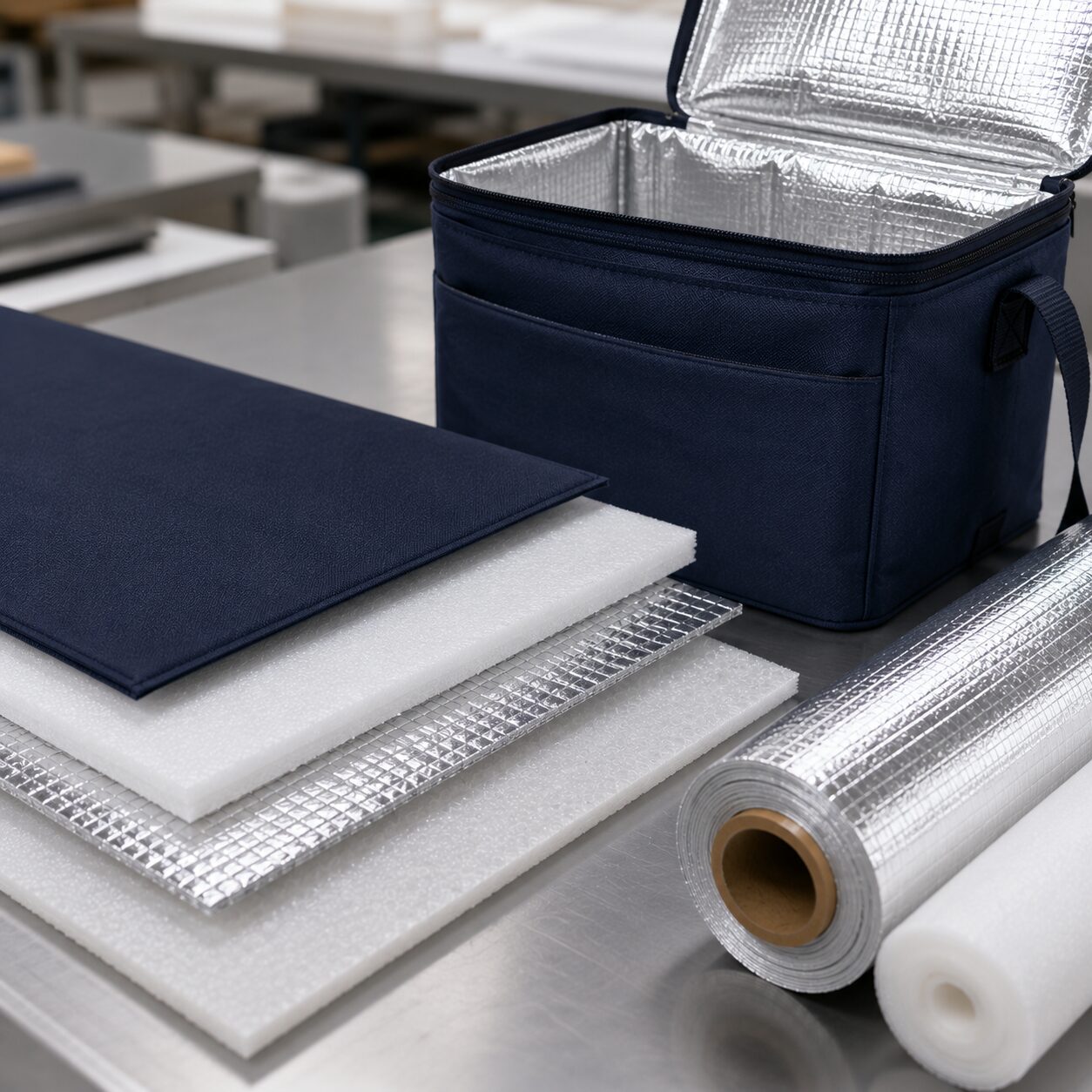
The efficacy of cooler bag insulation materials is the primary driver of product longevity. We utilize a range of advanced materials, each chosen for its specific thermal impedance. Expanded Polyethylene (EPE) foam provides excellent lightweight insulation for daily use, while high-density Polyurethane (PU) is selected for long-duration applications where structure and thickness are paramount. By matching the correct cooler bag insulation materials to the intended use case, we ensure the product remains both portable and highly efficient.
2.2 Why reflective barrier layers are essential for beach-side heat protection
At the beach, radiant heat from the sun is the most aggressive contributor to temperature spikes. We incorporate high-reflectivity metallized films as a core layer to bounce infrared energy back outward. This reflective barrier prevents heat from ever reaching the main insulation core. When you select the right cooler bag insulation materials, the inclusion of a reflective radiant barrier is what transforms a standard bag into a professional cooling solution capable of surviving the heat of a full beach day.
| Material Type | Primary Function | Performance Grade |
| EPE Foam | Bulk thermal resistance | Standard |
| PU Foam | Superior thermal impedance | High-Performance |
| Metallized Film | Radiant heat reflection | Essential/Professional |
| Outer Fabric | Physical protection | Durable/UV Resistant |
3. Structural Excellence: The Multi-Layer Cooler Bag Structure
3.1 Decoding the multi-layer cooler bag structure: How fabric, foil, and foam work in synergy
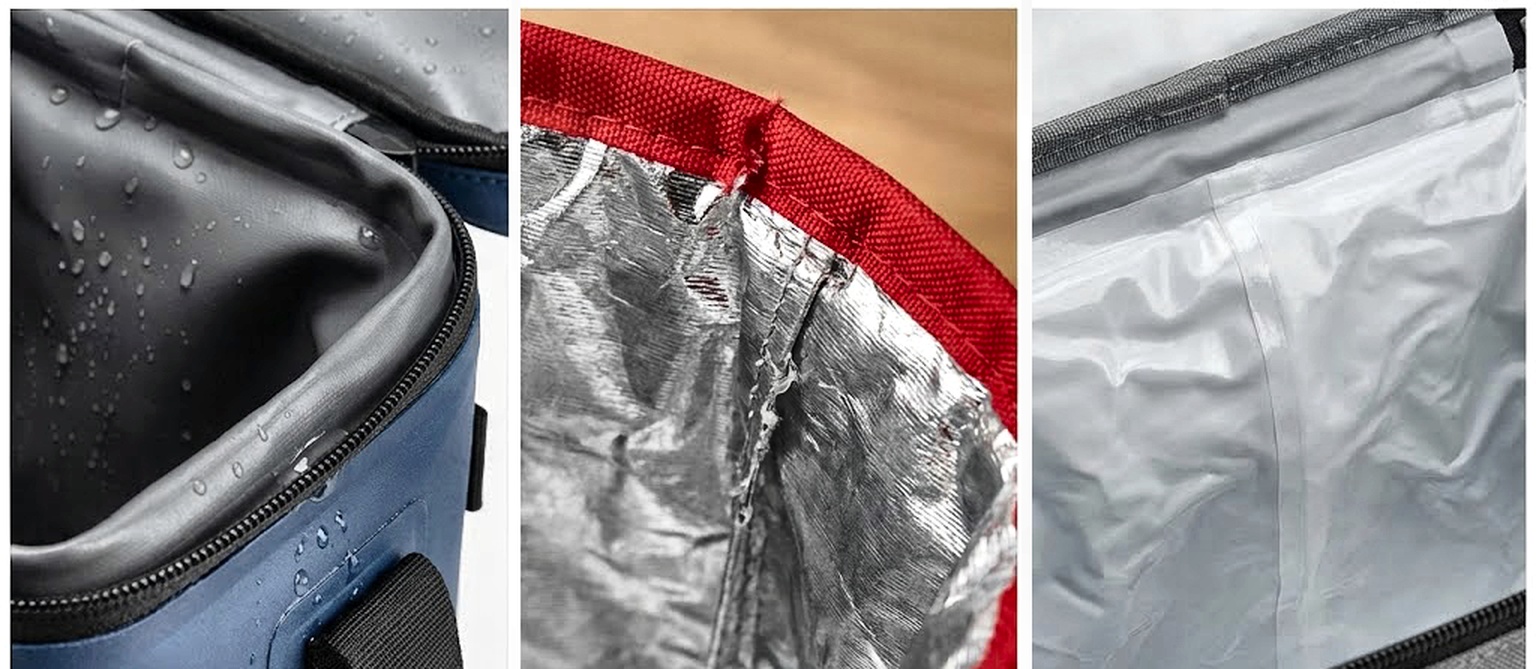
A multi-layer cooler bag structure is not just a stack of materials; it is an integrated system. The outer fabric provides the necessary durability to withstand rugged outdoor usage. The middle layer acts as a thermal buffer, while the innermost reflective layer works with the liner to contain cool air. This synergy is what defines a multi-layer cooler bag structure. Each layer is bonded using advanced laminating techniques that eliminate air gaps, ensuring the heat path is consistently blocked throughout the entire surface of the bag.
3.2 Why structural layers prevent heat bridging at the seams
Heat bridging usually occurs at the intersections of panels—the seams. In a poorly constructed bag, stitching creates holes that allow heat to travel directly into the interior. Our multi-layer cooler bag structure employs proprietary seam-bonding techniques that reinforce these critical areas. By ensuring the insulation remains continuous across the entire bag profile, we effectively eliminate thermal leaks and create a unified, cold-retaining chamber.
4. Sealing Technology: Where Thermal Leaks Are Stopped
4.1 Beyond zippers: Advanced cooler bag sealing technology for airtight insulation
The most advanced cooler bag sealing technology goes beyond simply closing a zipper. While high-tooth-count zippers are effective, they must be augmented with secondary seals or magnetic closures to create an airtight environment. We integrate precision-engineered gaskets and overlap flaps that ensure no hot air can be drawn into the bag when it is opened. This cooler bag sealing technology is the difference between a bag that holds cold for four hours and one that thrives for twelve.
4.2 How welded seams prevent liquid and air leakage in harsh coastal environments
Liquid leakage often coincides with thermal failure. When liquids leak, they carry heat energy out of the bag and destroy the insulation’s integrity. Our use of high-frequency (RF) welded seams for the internal liner creates a liquid-tight, airtight basin. By removing the need for traditional stitching in the cooler compartment, we utilize superior cooler bag sealing technology to prevent air migration, ensuring that the cold air remains captured within the bag’s structural matrix.
5. Why Brands Partner with an ODM Cooler Bag Factory
5.1 Turning R&D into retail success: How an ODM cooler bag factory optimizes your product line
Partnering with an experienced ODM cooler bag factory allows a brand to bypass the costly trial-and-error phase of thermal product development. We leverage our existing technical knowledge to help your brand define the ideal thermal profile for your target demographic. An ODM cooler bag factory acts as a technical extension of your team, ensuring that R&D investments translate into products that perform reliably on the retail shelf.
5.2 Customizing thermal solutions: Matching cooling performance to specific market needs
Different markets have different requirements. A bag designed for professional fishing requires different thermal engineering than one designed for luxury picnic storage. Our ODM services allow for deep customization of the insulation matrix, enabling you to optimize the price-to-performance ratio for your specific customers. Working with a dedicated ODM cooler bag factory ensures that your cooling performance is tailored exactly to the needs of your audience, enhancing brand loyalty.
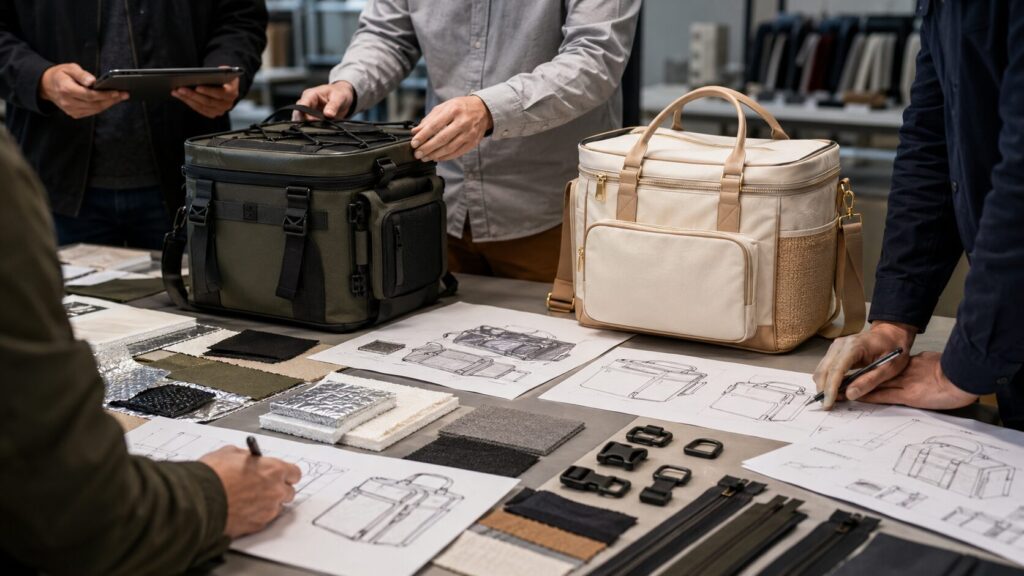
6. Factory Lab Standards: Validating 8–12 Hour Claims
6.1 The rigorous testing process: How we simulate the beach environment
Verification is the final step in our development process. We utilize environmental chambers to simulate the extreme heat of a beach, complete with full-spectrum UV lighting and high-humidity controls. We monitor internal temperatures using thermal sensors placed at multiple points, confirming that the temperature remains below the critical threshold for the full duration of the test.
6.2 Why Aimazing Bag’s technical documentation is your brand’s best assurance
Our technical documentation provides the data your brand needs to make credible performance claims. We supply our partners with full thermal decay curves, which serve as objective evidence of product excellence. When your marketing team claims an 8–12 hour performance standard, our data stands behind that claim, protecting your brand from accusations of misleading advertising.
7. Conclusion: Scaling Your Cooler Bag Business with Expertise
7.1 The strategic advantage of high-performance manufacturing
High-performance manufacturing provides a sustainable competitive advantage in the crowded cooler bag market. By consistently delivering bags that meet the 12-hour thermal retention benchmark, you secure a reputation for quality that drives repeat purchases.
7.2 Partner with us: Transforming advanced thermal concepts into high-margin products
Aimazing Bag is ready to assist in your next product launch. Our engineering team specializes in transforming complex thermal concepts into high-margin products. Contact us today to receive our latest thermal test reports and to start the OEM prototyping process.