
1. The Thermal Quality Paradox: Why Cheap Bulk Often Means Performance Failure
Procurement often hinges on the trade-off between volume, price, and performance. When evaluating thermal bag pricing factors, prioritize insulation density, sealing methods, and liner quality. Focusing solely on unit price often leads to compromised insulation—a primary factor affecting thermal bag cost. While low-density foam or poor seals lower upfront costs, they result in thermal loss, leakage, and higher long-term replacement expenses. Aimazing Bag has spent 26 years observing how these compromises devastate brand reputations, as a product that fails to protect its contents is merely a disposable liability. Sustainable procurement relies on understanding that the true cost of a bad product encompasses the original investment, return-related shipping, and the long-term loss of client trust.
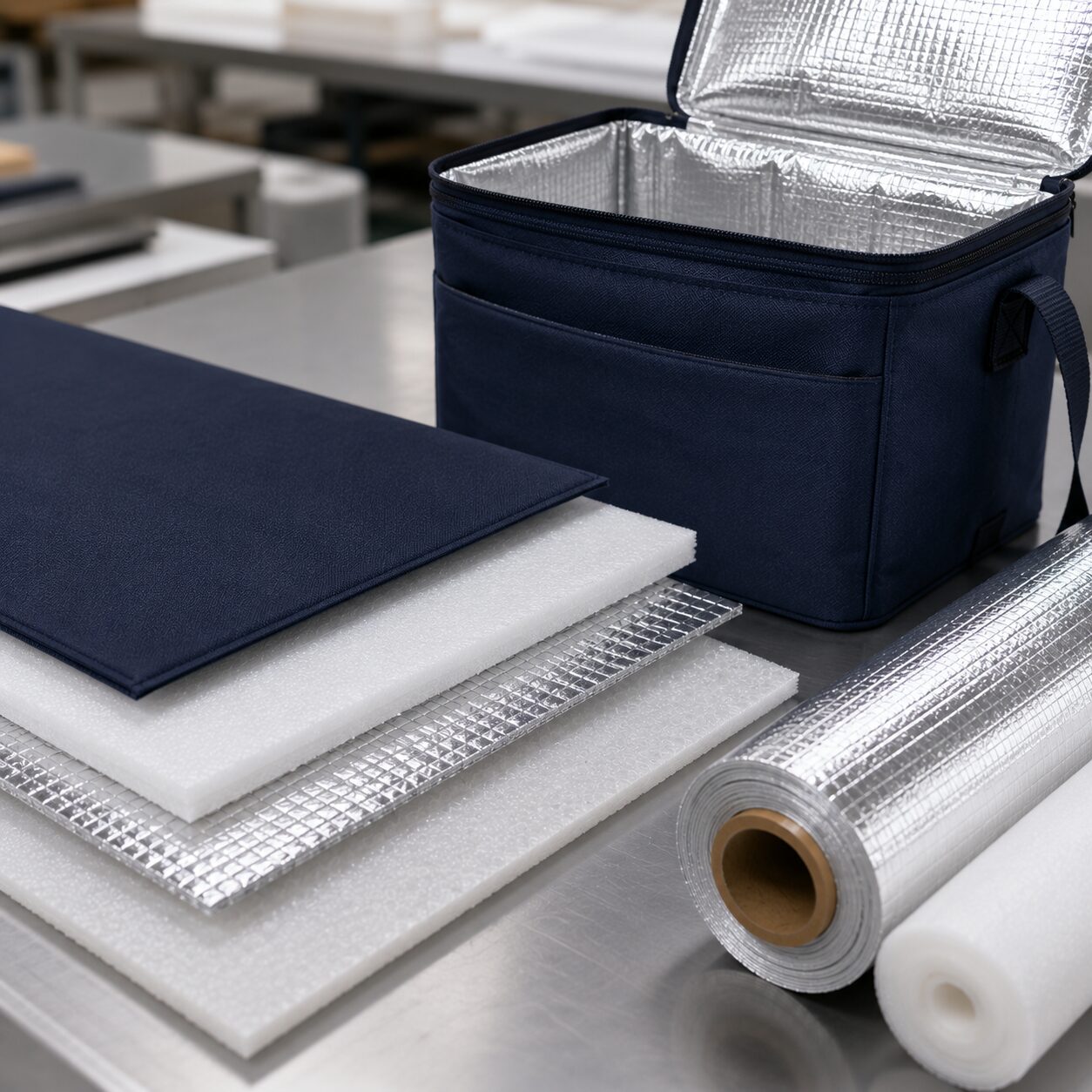
- Thermal Decay Resistance: Quality insulation requires a precise balance of material thickness and cell density to prevent heat transfer.
- B2B Reputation Risk: Selling a low-grade bag as a high-performance solution creates an immediate disconnect between brand promise and user experience.
- Total Cost of Ownership: Prioritizing long-term reliability over superficial unit price reductions ensures that your investment provides actual logistical value.
| Factor | Low-Cost Compromise | High-Performance Standard |
| Insulation | Recycled low-density foam | Virgin high-density PE foam |
| Structural Sealing | Traditional needle stitching | Precision RF seamless welding |
| Hardware | Lightweight plastic | Reinforced industrial-grade metal |
2. Deconstructing Thermal Bag Pricing Factors: What Drives Your BOM?
Understanding the primary thermal bag pricing factors is essential for any professional managing a high-volume supply chain.Understanding the factors affecting thermal bag cost—from textile grade to insulation thickness—allows procurement teams to optimize budgets without compromising performance. We provide a transparent BOM breakdown by material, labor, and hardware to isolate where value is truly added.
- Material Selection: Technical textiles, such as 600D polyester vs. standard nylon, carry significantly different price points and durability ratings.
- Insulation Thickness: The layering of radiant barriers and thermal foam is a primary driver of the production quote.
- Complexity of Construction: Detailed pocket configurations and specific hardware attachments increase labor overhead significantly.
3. Thermal Bag Cost Breakdown: Where Can You Actually Save?
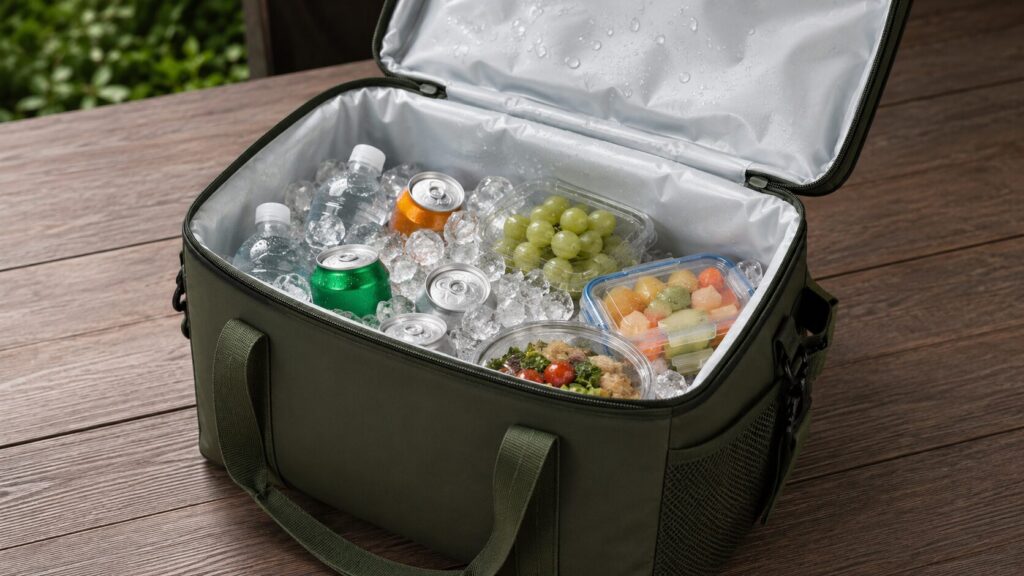
A transparent thermal bag cost breakdown often reveals that the best savings come from smarter engineering, not just swapping in cheaper materials. We audit your entire manufacturing process to strip out unnecessary overhead—like redundant layers or overly complex hardware—and replace them with streamlined, efficient design choices that don’t sacrifice quality. Analyzing the thermal bag cost breakdown enables a strategic approach to procurement, where efficiency is designed into the product from the prototype phase rather than attempted as a late-stage price reduction.
- Design Optimization: By simplifying complex sewing patterns, we trim labor time by 15–20%.
- Material Efficiency: We optimize how textiles are nested during the cutting phase to drastically cut down on scrap and waste.
- Total Lifecycle Value: Investing in rugged, top-tier hardware on the front end saves you from the cycle of costly repairs and replacements typical in heavy-duty use.
4. Extreme Compression Strategies: Engineering Efficiency for High Volume
Scaling logistics requires a sophisticated approach to thermal bag production cost, particularly regarding shipping and storage footprints. Our engineering team focuses on flat-pack designs that compress into high-density shipments, slashing your freight expenses. By using automated laser-cutting and robotic welding, we keep thermal bag production cost low while ensuring every single unit hits the same high-performance benchmarks as your initial sample.
Logistics Optimization: Designed for supply chain efficiency to minimize packaging costs via superior stacking density.
Flat-Pack Design: Smart folding geometry maximizes storage, saving up to 40% in container space.
Automation: Robotic assembly ensures consistency and eliminates human error across large-scale orders.

5. The Role of Innovation: What Affects Thermal Bag Price the Most?
When investigating what affects thermal bag price, the shift from traditional needlework to advanced sealing is the most influential innovation in modern manufacturing. Understanding what affects thermal bag price involves comparing the legacy costs of high-labor stitching against the capital efficiency of high-frequency welding. While the equipment investment for advanced sealing is higher, the long-term logistical efficiency and the elimination of leakage risks provide a superior return on investment for high-performance applications.
- Sealing Technology: Seamless construction eliminates the need for expensive waterproof linings, simplifying the bill of materials.
- Material Science: Next-generation insulation materials offer better thermal resistance with less physical thickness.
- Process Efficiency: Innovation allows for faster throughput, effectively diluting manufacturing overhead across the volume.
6. The Core Value: Why the Thermal Bag is the Heart of Your Logistics
For any professional operation, the thermal bag is not a disposable commodity but a foundational component of the cold chain. It serves as the last line of defense in protecting the quality and safety of frozen assets. Ensuring that high-volume orders maintain laboratory-grade insulation benchmarks is a commitment to the fundamental efficacy of your logistics network. When a thermal bag is treated as a critical investment, the focus shifts from finding the absolute lowest price to finding the highest performance per unit of expenditure.
- Logistical Security: Reliability in thermal regulation is the difference between a successful delivery and a total loss.
- Performance Benchmarks: Standardizing insulation testing ensures that every unit meets the requirements of a high-stakes cold chain.
- Brand Protection: A high-performing bag ensures your goods arrive in the same state they left, reinforcing customer confidence.
7. Scaling with Aimazing Bag: Engineering Performance at Scale
Aimazing Bag delivers a quarter-century of technical expertise to your high-volume supply chain, ensuring that your products are both high-performing and cost-optimized. We bridge the gap between design aspiration and mass production through rigorous engineering, ensuring that your thermal bag solutions are consistent, cost-effective, and safe for high-stakes cold chain transport. We invite you to partner with our team for a comprehensive production audit that slashes unnecessary costs while strictly maintaining your thermal performance standards.