
1. The Pricing Mystery: Decoding the 40% Quote Gap
Quote discrepancies in insulated grocery delivery bag production result from variable material specifications. Brands often see a 40% price gap between different factory quotes. This gap hides significant differences in material density and structural integrity. Factories offering lower prices often use low-grade fillers. They may also use thinner insulation materials. These shortcuts compromise the thermal performance of your product. You must audit the technical specifications in your Tech Pack. Compare foam density and liner quality across all bids. Do not rely on price alone for bulk procurement decisions. Precision engineering is essential for long-term supply chain success. Understanding these hidden costs protects your brand from poor performance.
- Cost Drivers: Material density and seam welding techniques drive the primary cost differences.
- Performance Impact: Cheaper quotes usually lead to higher return rates and customer complaints.
- Procurement Strategy: Always verify the specific density of the insulated grocery delivery bag insulation.
| Factor | Low-Quote Strategy | Aimazing Quality Standard |
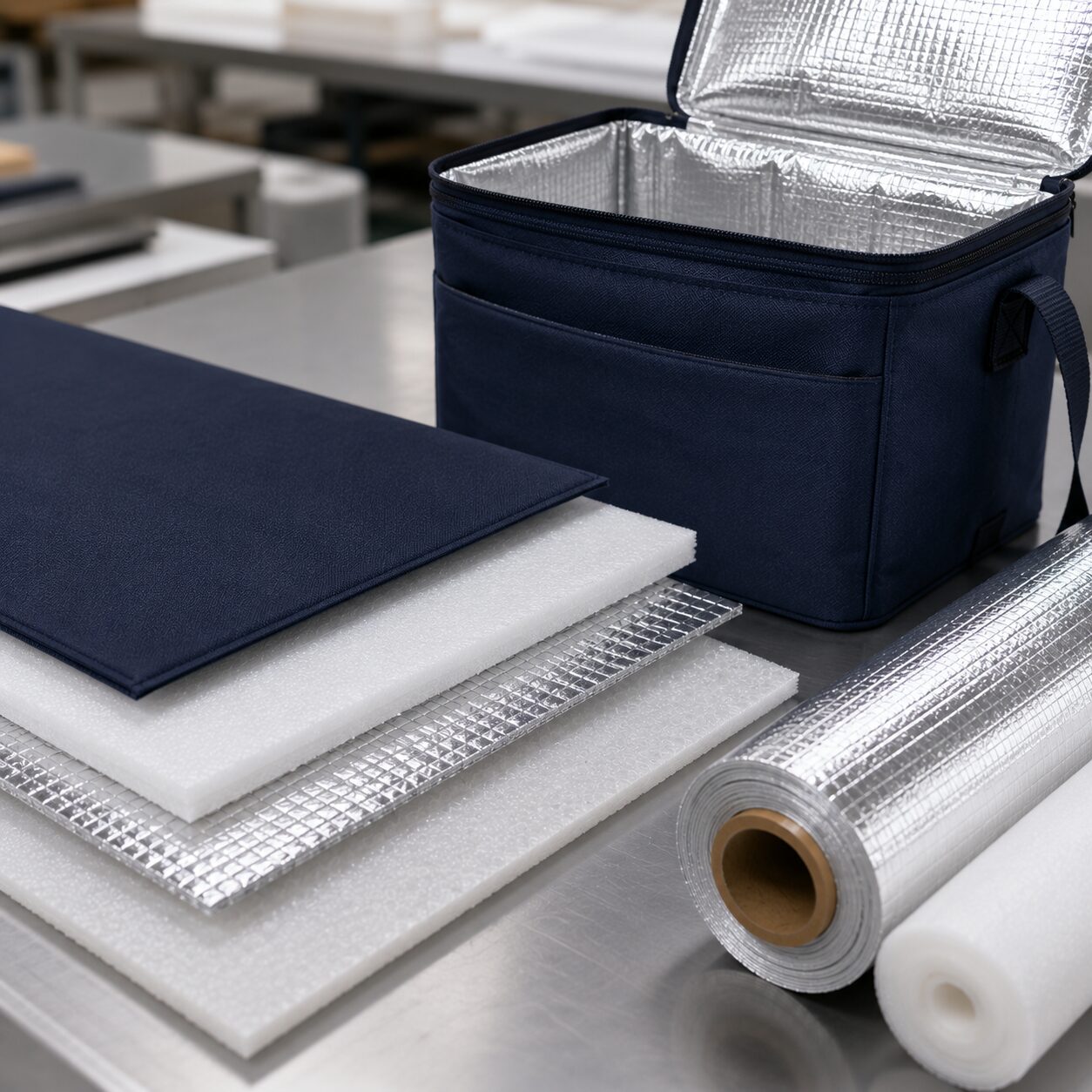
| Insulation | Low-density filler | High-density foam ($>20\text{kg/m}^3$) |
| Liner | Thin PVC | PEVA / Food-grade TPU |
| Seams | Standard stitch | RF-welded / Heat-pressed |
| Expected Life | Short-term use | Industrial-grade durability |
2. Thermal Engineering: High Density Insulation Foam vs. Cheap Fillers
Optimal cold-chain retention requires the use of high density insulation foam. Thermal decay occurs rapidly when factories use low-grade, porous fillers. These fillers fail to trap ambient air effectively. Your insulated grocery delivery bag must maintain internal temperatures for long delivery windows. High-density cores provide the structural resistance needed for repeated heavy use. They also prevent the bag from collapsing under the weight of frozen items. Engineering a product with high density insulation foam ensures thermal stability for your goods. It is the core difference between professional gear and mass-market waste.
- Conductivity: High-density structures reduce heat transfer through the bag walls significantly.
- Load Resistance: Dense foam maintains its shape and insulating properties under compression.
- Performance Longevity: Proper density ensures your bag performs consistently throughout its life cycle.
3. The Interior Crisis: Why Food-Safe Waterproof Lining is Non-Negotiable
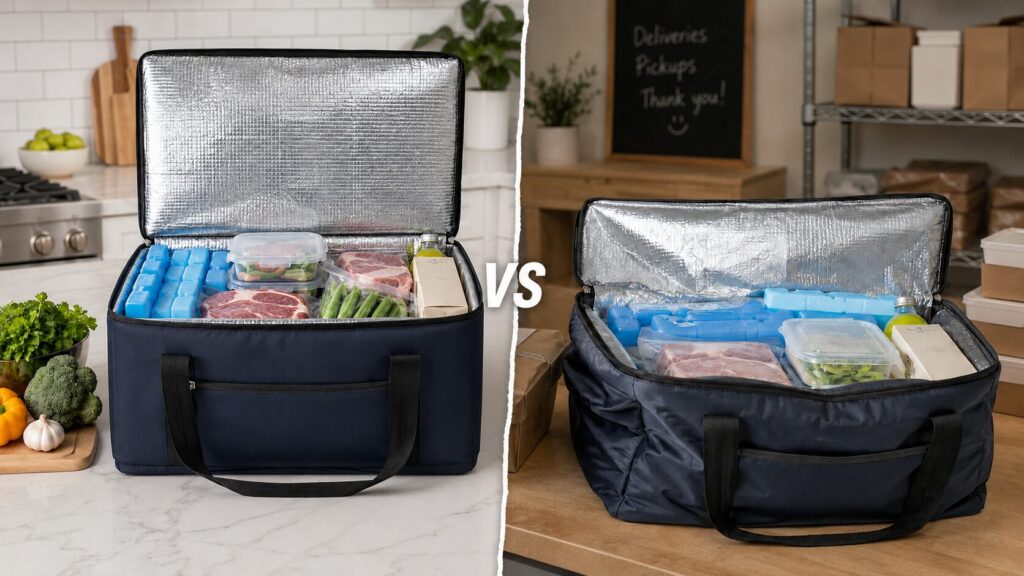
Every professional food delivery cooler bag requires a certified food-safe waterproof lining. Liners typically consist of laminated aluminum foil, separate aluminum film, or PEVA. Laminated foil simplifies production and reduces labor costs. Textured aluminum film provides an attractive and easy-to-clean finish. PEVA is generally the better option for waterproof performance. It can be heat-sealed to create a reliable interior structure. Aluminum film and PEVA come in various colors and thicknesses. Silver remains the most widely used choice in the industry. You must ensure your food-safe waterproof lining complies with international health standards.
- PEVA Advantage: It provides a smooth, flexible, and leakproof interior.
- Heat-Sealing: This technique creates an airtight seal that prevents moisture ingress.
- Compliance: Always request material safety certificates for your chosen interior liner.
4. Maximizing Performance: Best Practices for a Frozen Food Delivery Bag
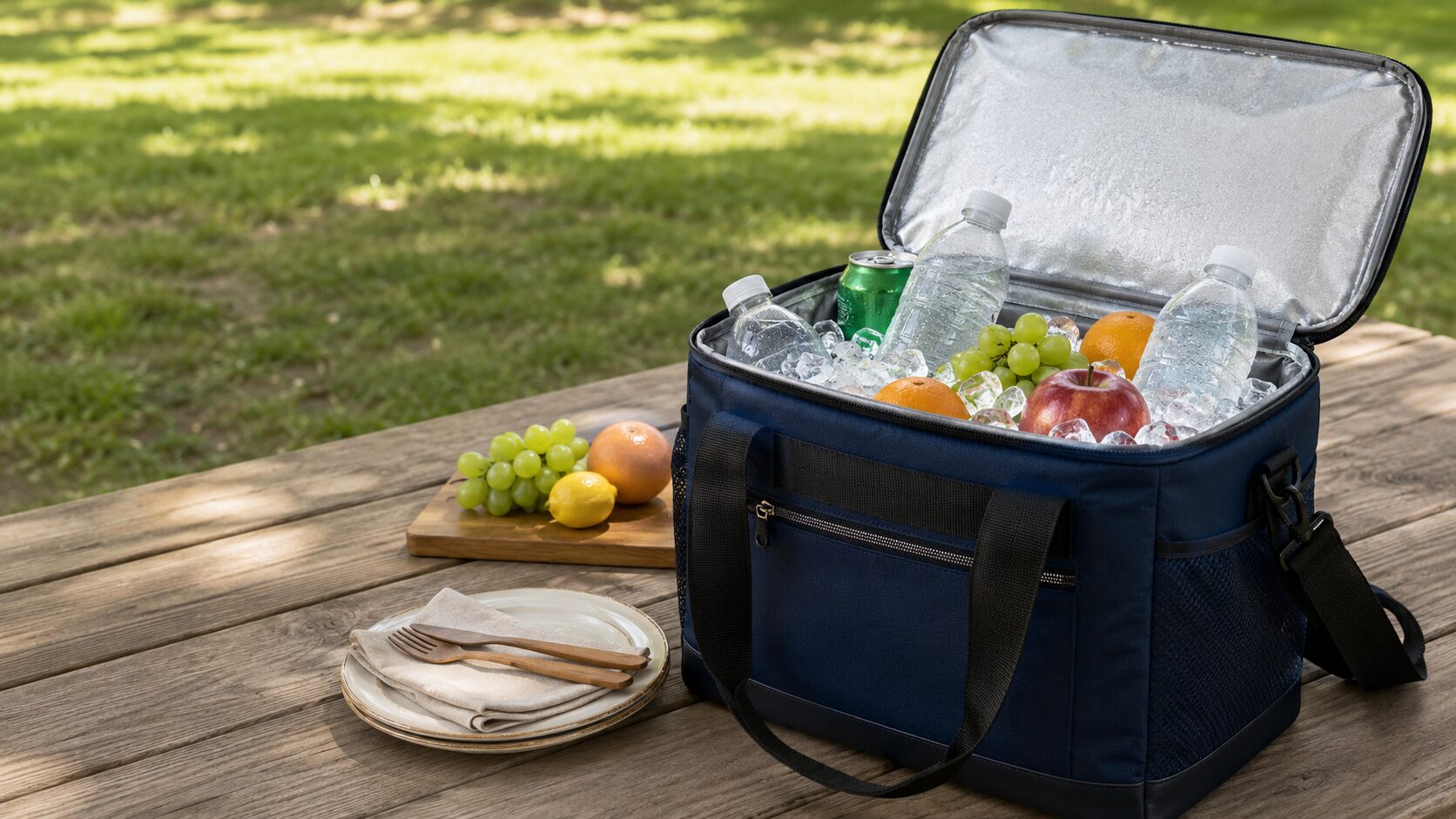
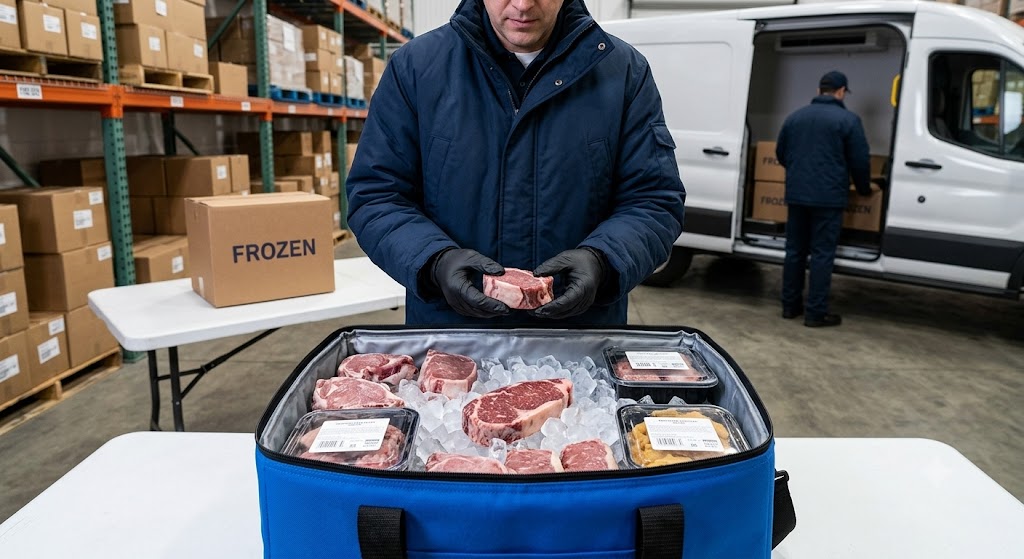
A high-performance frozen food delivery bag must withstand extreme thermal stress. We engineer the structural integrity of every food delivery cooler bag to survive repeated usage. A mass-market promotional cooler cannot compete with industrial-grade equipment. We utilize multi-layer composite structures in every frozen food delivery bag we build. These structures maximize the performance of your cold chain. Consistent delivery of frozen goods requires structural precision. Our manufacturing protocols ensure your brand identity remains secure.
- Structural Integrity: We use reinforced panels to ensure the bag keeps its shape during transit.
- Airtight Security: Specialized zippers prevent cold air from escaping during delivery operations.
- Testing Protocols: We perform thermal decay tests on every custom batch produced.
5. Structural Integrity: Why Tech Pack Accuracy Saves You Millions
Manufacturing precision directly impacts the thermal retention time of every insulated grocery delivery bag. You must prevent the “Thermal Bridge” effect in your design. Use advanced heat-pressing and welding techniques at every joint. Stitching alone often fails to provide a hermetic seal. Our factory prioritizes RF-welded seams to provide maximum protection for each insulated grocery delivery bag. This technical accuracy prevents millions in potential losses. It also reinforces the structural integrity of your delivery fleet. Precision in the Tech Pack prevents costly mistakes during mass production.
- Thermal Bridges: We eliminate exposed needle holes through advanced heat-pressing.
- Welded Seams: RF-welding creates a seamless bond that is inherently waterproof.
- Batch Accuracy: We maintain strict adherence to your structural requirements for every unit.
6. The Aimazing Advantage: Engineering Excellence & Supply Chain Resilience
Manufacturing success is built on long-term client retention and structural reliability. We are proud to support 100+ clients for over 10 years. We support 500+ for over 5 years and 200+ for over 3 years. This high level of customer loyalty serves as the bedrock for global brands. They transition their supply chains to our 26-year manufacturing base. We function as an extension of your product development team. We ensure your production scales smoothly. Global leaders choose our engineering pedigree to solve thermal decay problems.
- Experience: Our 26-year history provides deep insight into functional bag engineering.
- Consistency: Our proven manufacturing protocols ensure every unit meets the same performance benchmarks.
- Partnership: We offer customized cooperation solutions including ODM, OEM, Private Label, and Brand Incubation.
7. Scaling with Confidence: Your Partner in Cold-Chain Logistics
We transform complex requirements into stable, high-performance production batches. Custom orders are produced and shipped in 5–7 days with flexible production arrangements. We also offer light customization of logos and colors for any order. We invite your team to request our structural thermal test report. Schedule a design audit for your next cold-chain batch today. Eliminate hidden costs and ensure 100% quality compliance. Partner with an expert manufacturer that balances patented innovation with proven reliability.