
1. The Core of Thermal Performance: What Is the Best Insulation for a Cooler?
Thermal efficiency begins with core material selection. Modern users demand extended ice retention times. Global brand managers prioritize verified cooling metrics. Low-grade thermal gear fails under high ambient temperatures. Professional manufacturing requires rigorous structural engineering. End-users evaluate performance based on actual ice preservation hours. High-grade cooler insulation dictates market success. Our factory integrates advanced thermal testing protocols. Every production batch undergoes strict temperature decay monitoring.
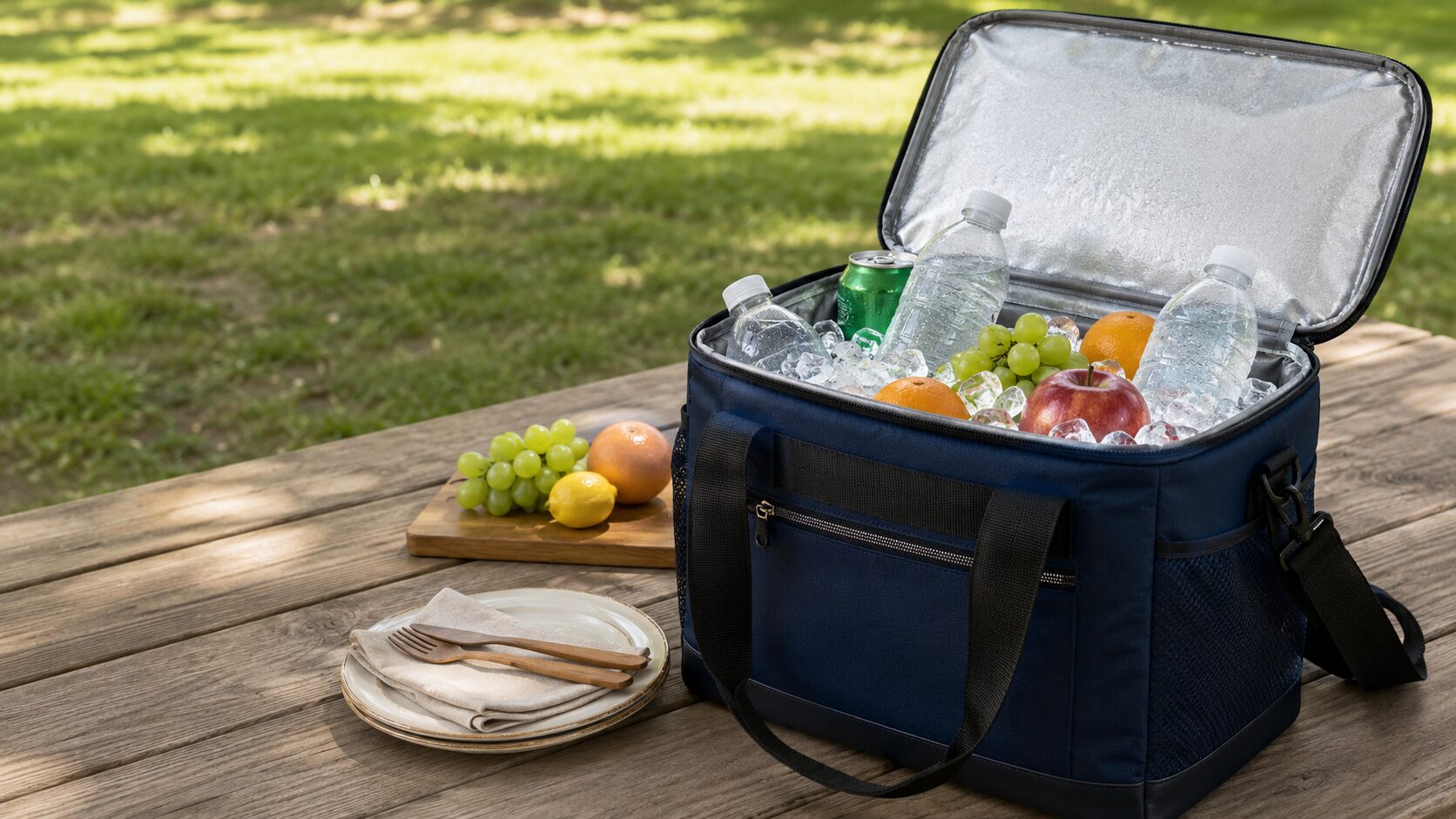
Quality assurance teams verify internal thermal baselines daily to ensure the insulation for a cooler prevents premature ice melting, as brand reputation relies entirely on consistent thermal performance. By backing advanced insulation for a cooler layers—which block external radiant heat—with verifiable laboratory test reports, precise heat transfer coefficient calculations, and professional manufacturing standards, brands can eliminate supply chain inconsistencies, protect their equity, and guarantee long-term customer satisfaction.
| Performance Metric | Laboratory Test Method | Industry Standard |
| Ice Retention | Ambient chamber exposure test | Minimum 48 hours at 30°C |
| Thermal Decay | Digital thermocouple logging | Linear temperature rise curve |
| Heat Flux | Guarded hot plate apparatus | Maximum suppression rate |
2. Material Science: Choosing the Right Thermal Insulation Fabric for Cooler Bags
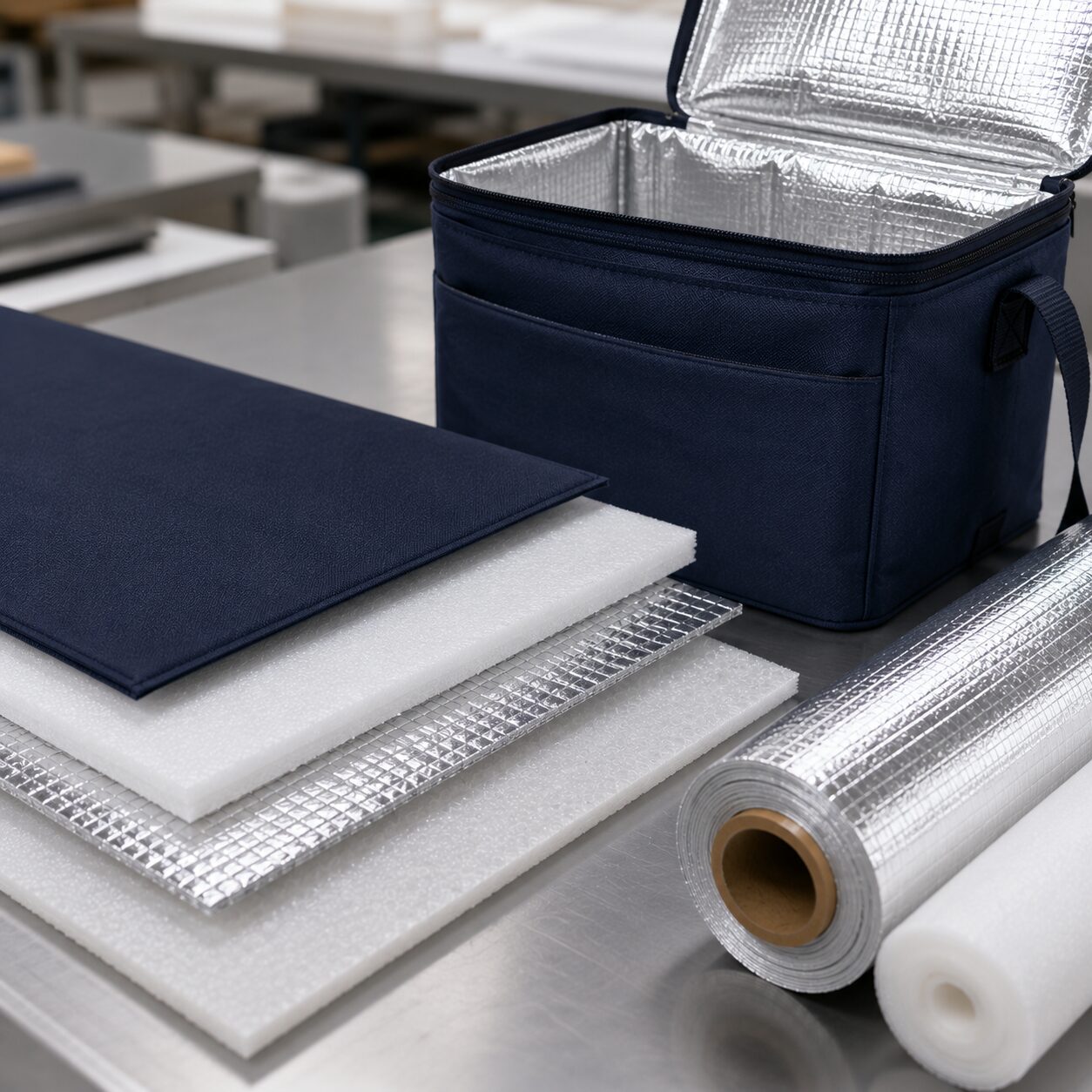
Thermal performance relies heavily on exterior textile choices. Durable outer shells protect internal reflective layers. Advanced Oxford weaves block external radiant energy. PU coatings add essential weather resistance. Sourcing high-performance thermal insulation fabric for cooler bags ensures durability. Our factory tests textile reflectivity rigorously. High-density outer fabrics resist surface abrasion. Specialized coatings prevent solar heat absorption. Material engineers evaluate fabric tear strength constantly. Reinforced outer shells protect internal cooler insulation layers.
Selecting the correct textile prevents premature structural wear and ensures that every insulation for a cooler delivers reliable, long-lasting performance. Quality control teams inspect every fabric roll to guarantee uniform thermal protection, while global brands demand certified weather-resistant materials backed by advanced fabrication techniques and reliable manufacturing protocols that eliminate environmental degradation risks.
- High-denier Oxford weaves resist heavy external friction.
- Reflective exterior coatings deflect direct solar radiation.
- Advanced PU laminations block wind and moisture penetration.
- Quality assurance teams test fabric tensile strength daily.
3. The Power Within: Foam Insulation and Density Dynamics
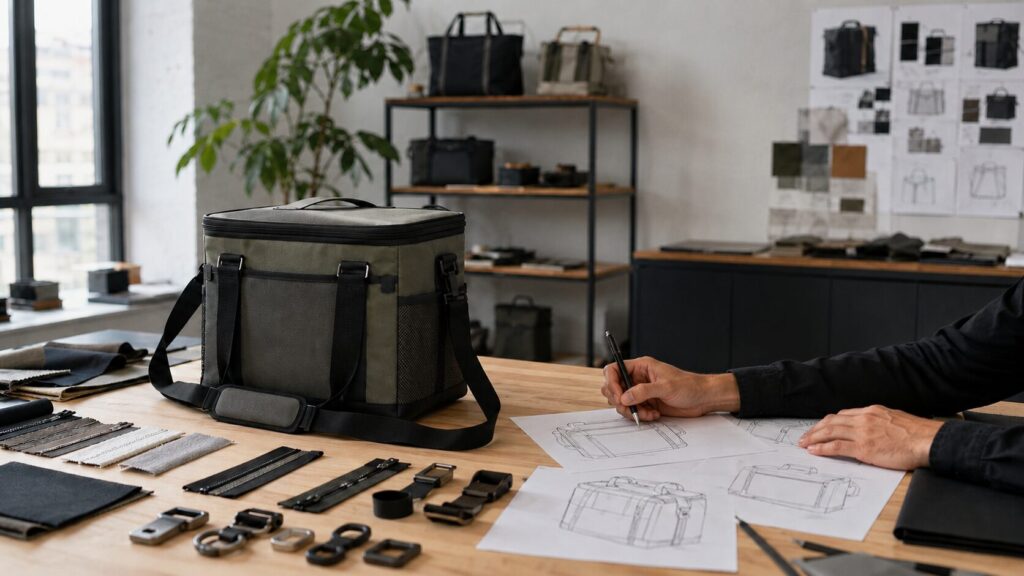
Conductive heat transfer slows down through dense foam. Selecting appropriate foam insulation for cooler architectures is critical. Foam thickness directly influences thermal retention duration. Standard cooler bags utilize EPE foam layers. Common thicknesses range from 3 to 10 millimeters. Medical-grade transport containers often utilize 20 millimeters. Thicker foam barriers reduce internal temperature fluctuations. Our factory calculates optimal foam density parameters. High-density configurations prevent rapid thermal degradation.
Engineers balance flexibility and structural rigidity carefully to ensure that every thermal insulation fabric for cooler bags, cooler insulation, and insulation for a cooler performs at its absolute peak. Proper foam insertion eliminates internal air pockets, while consistent material density ensures even cooling distribution across the entire compartment. Bulk manufacturing requires precise automated cutting, and dedicated quality control teams verify foam thickness tolerances at every stage of production. By selecting correct foam specifications and engineered structural components, brands can maximize cooling hours, protect against thermal loss, and rely on robust insulation architecture to prevent commercial product returns.
- High-density EPE foam minimizes conductive heat transfer.
- Optimal thickness selection balances weight and performance.
- Precision cutting ensures seamless interior panel fits.
- Automated lamination prevents internal air gap formation.
4. Structural Integrity: Why Cooler Insulation Foam Dictates Real-World Results
Real-world performance depends on core structural resilience. Heavy loads compress low-grade thermal barriers easily. High-grade cooler insulation foam maintains its shape. Resilient core structures prevent thermal bridging effects. Structural collapse destroys internal temperature retention. Our factory tests foam compression recovery rates. Reinforced core structures withstand heavy weight pressure. Proper cell structuring blocks multi-directional heat flow.
Quality assurance protocols strictly monitor foam elasticity and structural recovery to ensure that every thermal insulation fabric for cooler bags and advanced insulation for a cooler maintains its integrity over time. Durable insulation prevents barrier thinning under heavy loads, while engineering precision guarantees long-term product reliability across demanding environments. Because global retail partners demand crush-resistant structures, our factory utilizes consistent foaming techniques to eliminate weak point zones and protect thermal barrier integrity. Selecting premium closed-cell foam not only guarantees real-world performance consistency and extended ice retention, but also safeguards brand reputation in competitive retail markets.
- Closed-cell foam structures prevent moisture absorption.
- High compression recovery maintains core thickness under loads.
- Rigid internal bracing stops structural panel sagging.
- Advanced thermal bridging elimination protects seam junctions.
5. Lining Up Success: Insulated Cooler Liner Materials and Waterproofing
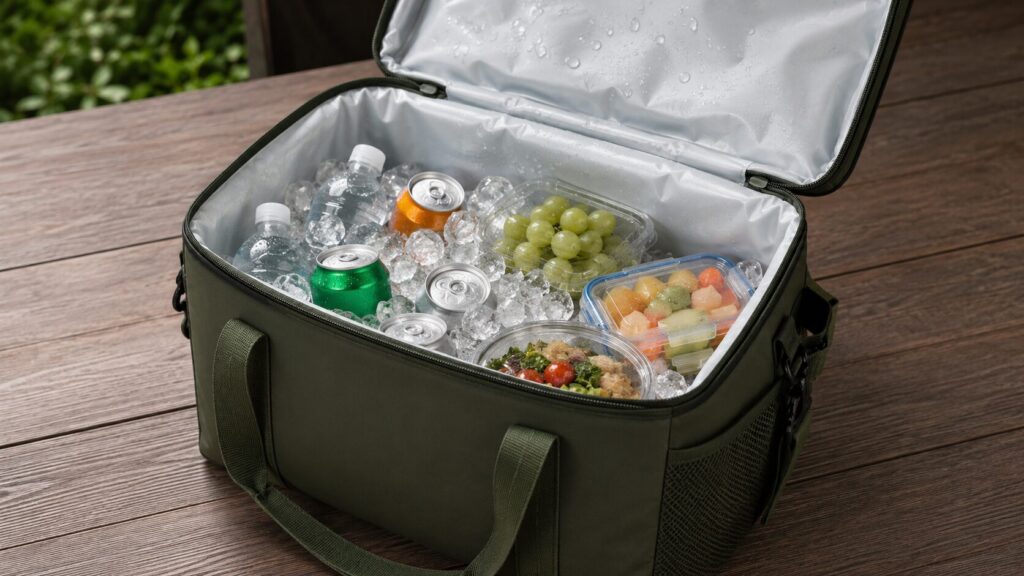
Interior lining selection determines overall moisture control. Foil barriers differ significantly from polymer membranes. Sourcing proper insulated cooler liner materials prevents leaks. Aluminum foil reflects radiant heat effectively. Flexible polymer membranes enable seamless heat-welding. Loose ice melting requires 100% waterproof construction. Traditional stitching creates vulnerable needle puncture holes. Heat-welded PEVA creates unified watertight vessels. Our factory utilizes high-frequency welding technology. Seamless linings prevent liquid seepage completely. Quality control teams perform rigorous water pressure tests. Proper lining integration protects internal insulation foam. Selecting advanced polymers guarantees zero moisture escape. Reliable waterproofing protects brand reputation globally.
- High-frequency welding melts polymer sheets into solid barriers.
- Flexible PEVA liners accommodate shifting ice blocks safely.
- Seamless interior construction eliminates all needle holes.
- Reinforced bottom panels protect liners from sharp edges.
6. Custom Manufacturing Standards: What OEM Buyers Must Specify
OEM projects require strict technical specification protocols. Professional manufacturing facilities execute rigorous prototyping. Thermal decay testing validates initial design concepts. Production scaling demands absolute material consistency. Dedicated engineering teams review client tech packs. Automated equipment ensures precise component assembly. Comprehensive traceability tracks every raw material batch. Quality control personnel monitor active production lines. Clear manufacturing standards eliminate unexpected defects. Strategic factory partnerships secure stable pricing models. Technical consulting optimizes product cost structures. Sourcing experienced OEM partners ensures market triumph.
- Detailed tech pack reviews prevent production misalignments.
- Prototyping phases validate thermal decay limits.
- Automated assembly lines guarantee mass-production consistency.
- Comprehensive traceability tracks raw material batch origins.
7. The Aimazing Advantage: Engineering Excellence in Thermal Solutions
Aimazing Bag operates as a trusted OEM manufacturer. Every thermal bag reflects uncompromising engineering standards. Advanced foam structures deliver superior thermal performance. Precision lining technologies ensure absolute leak protection. Dedicated production lines match exact client specifications. Factory direct sourcing eliminates unnecessary middleman costs. Professional technical support teams assist global partners. Request our material selection guide today. We deliver reliable supply chains for international brands. Our manufacturing expertise elevates your product line.