
1. The Sourcing Blind Spot: Why Isolated Bag Seam Failures Surface Too Late
Bulk production failures occur frequently when brand managers mistake hand-crafted prototypes for standardized manufacturing outcomes. Global retail buyers learn that lab-grade prototypes conceal structural vulnerabilities that emerge only during multi-thousand-unit industrial assembly runs. Selecting robust underlying materials guarantees that every manufactured unit withstands prolonged usage without suffering structural deformation. Industrial procurement teams must evaluate core textile engineering before launching any custom insulated bag line. Vet specialized isolated bag manufacturers carefully to prevent costly discrepancies between initial golden samples and final mass-produced inventory. Transparent raw material certifications ensure that fabric tensile strengths match exact laboratory testing thresholds without distributor dilution. Sourcing through an OEM partner guarantees precise control over heavy-duty webbing strength and production tolerances. Digital tech packs transform into tangible retail items rapidly because engineering teams communicate modifications instantly without bureaucratic lag. Industrial manufacturing scale allows emerging brands to maximize profit margins while maintaining absolute delivery reliability across massive international inventory volumes.
| Sourcing Dimension | Traditional Trading Approach | Direct OEM Manufacturer Approach |
| Supply Chain Transparency | Low visibility with multiple intermediaries | Complete oversight from raw material to bulk delivery |
| Cost Efficiency | Higher baseline pricing due to agent markups | Optimized production costs and maximum profit margins |
| Prototyping Agility | Slow sample turnaround with communication gaps | Rapid tech pack execution and direct engineering support |
2. Thermal Engineering: The Role of Advanced Insulation for Cooler Performance
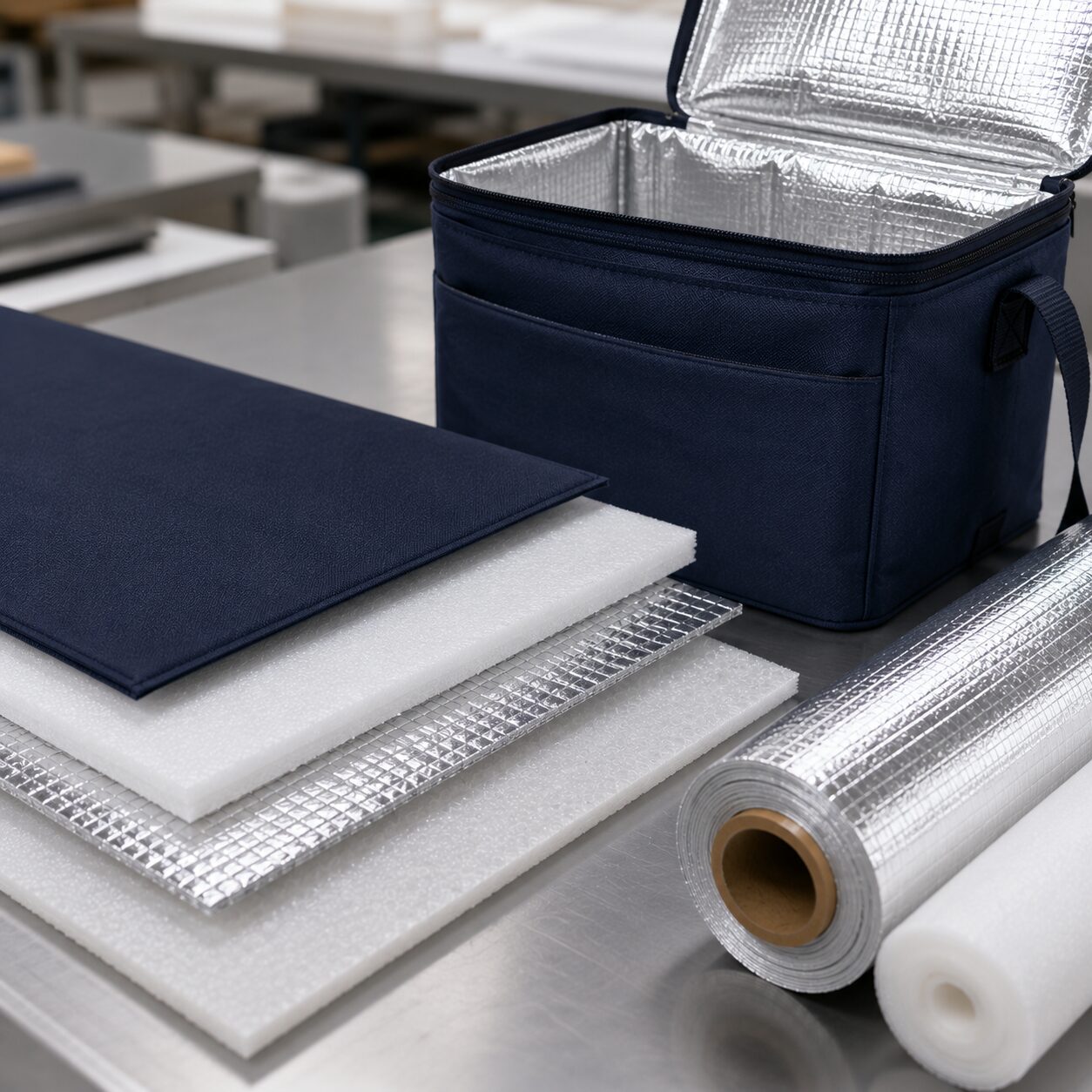
Conductive heat transfer is minimized when high-density EPE foam layers prevent ambient temperature from invading the internal storage chamber. Closed-cell foam thickness matches specific commercial distribution requirements to block thermal energy effectively. Sourcing proper insulation for cooler designs maintains structural integrity without sagging or compressing prematurely under heavy loads. Factory engineers evaluate textile denier weights to confirm that exterior woven panels resist environmental moisture and ultraviolet radiation. Industrial lamination presses bond outer synthetic textiles securely to breathable inner foam layers without generating bubbling defects. Techs constantly dial in the heat settings all shift long to keep those molecular fusion points locked in for your isolated bag. Meanwhile, inventory managers log every single lot number so they can trace parts if anything acts up, and supply chain coordinators keep a buffer stock of certified hardware on hand to make sure the assembly lines never grind to a halt.
- Conduction block: High-density polyethylene foam cores provide a structural thermal barrier against conductive ground and vehicle contact heat.
- Structural loft: Precision density tuning prevents insulation compression under heavy static load conditions during transport.
- Radiant reflection: Multi-layered radiant barrier films reflect external solar energy away from sensitive commercial food shipments.

3. The Anatomy of a Leak: Why Stitched Linings Fail in Customizable Cooler Bags
Traditional stitching punctures waterproof layers, turning melting ice into a structural leak inside high-volume customizable cooler bags. Needle holes create active liquid leakage pathways that ruin thermal barriers and compromise external carton integrity. Overcoming manufacturing vulnerabilities requires replacing single-needle stitching with automated thermal bonding techniques. Factory production lines must adopt advanced lamination processes to bond inner films securely to supporting fabric substrates. QC directors use pneumatic chambers to test seam burst limits so they know the isolated bag can handle heavy pressure without failing. Automated cutting tables keep the panels lined up right, allowing the welding heads to lay down even heat across every single joint. On top of that, assembly happens in a cleanroom to keep airborne dust from messing with the polymer bonding agents while everything is getting sealed up.
- Needle hole elimination: Removing traditional stitch holes prevents melting ice water from leaking through internal compartment walls.
- Lamination bonding: Industrial processes fuse inner waterproof films permanently to supportive textile substrates.
- Burst pressure auditing: Pneumatic testing chambers verify that seam structures withstand intense hydraulic pressure without failing.
4. Waterproof Superiority: Engineering Heat-Sealed Linings for Custom Freezer Bags
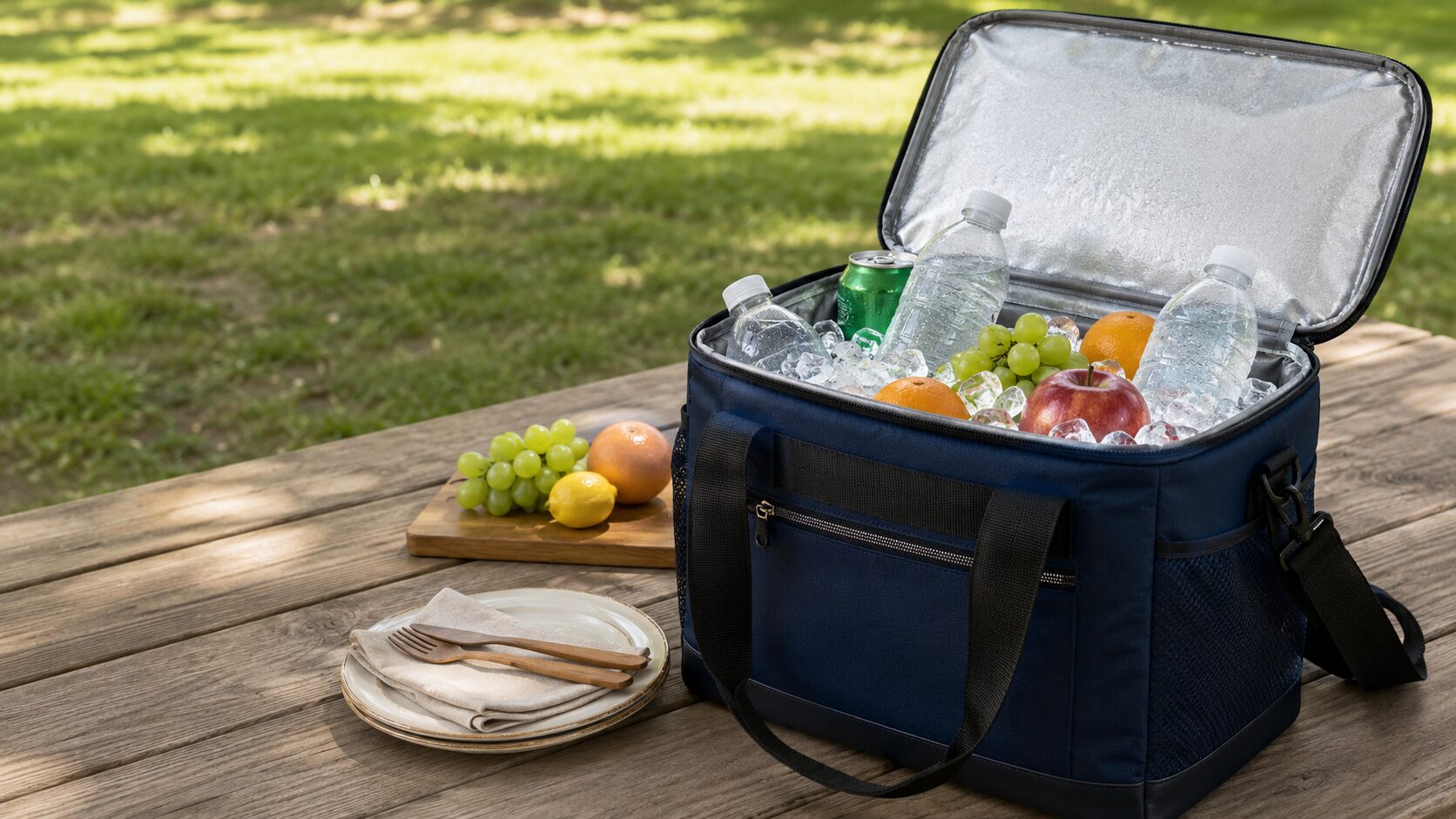
Replacing thread with thermal fusion creates a 100% watertight vessel inside every commercial custom freezer bag. High-frequency radio waves weld polymer sheets into seamless, monolithic compartments capable of holding loose ice indefinitely. Ensuring long-term reliability requires selecting commercial-grade polymer thickness that withstands aggressive sanitization agents and heavy beverage cans. Factory auditors verify polymer thickness measurements using digital micrometers to ensure puncture resistance against jagged ice cubes. Specialized antimicrobial additives inhibit mold proliferation inside closed compartments following exposure to spilled organic beverage contents. Production engineers optimize radio wave frequency generators to prevent thermal degradation of surrounding textile reinforcing layers during assembly. Automated optical inspection systems scan internal compartment welds for microscopic pinhole defects before final product packaging stages.
- High-frequency welding: Radio-frequency fusion melts polymer sheets together into a completely seamless, watertight inner vessel.
- Puncture resistance: Commercial-grade polymer thickness withstands sharp ice cubes and heavy beverage containers without tearing.
- Sanitation durability: Smooth interior surfaces resist staining and withstand aggressive chemical sanitization agents easily.
5. Branding and Utility: Designing Personalized Insulated Bags for Retail Success
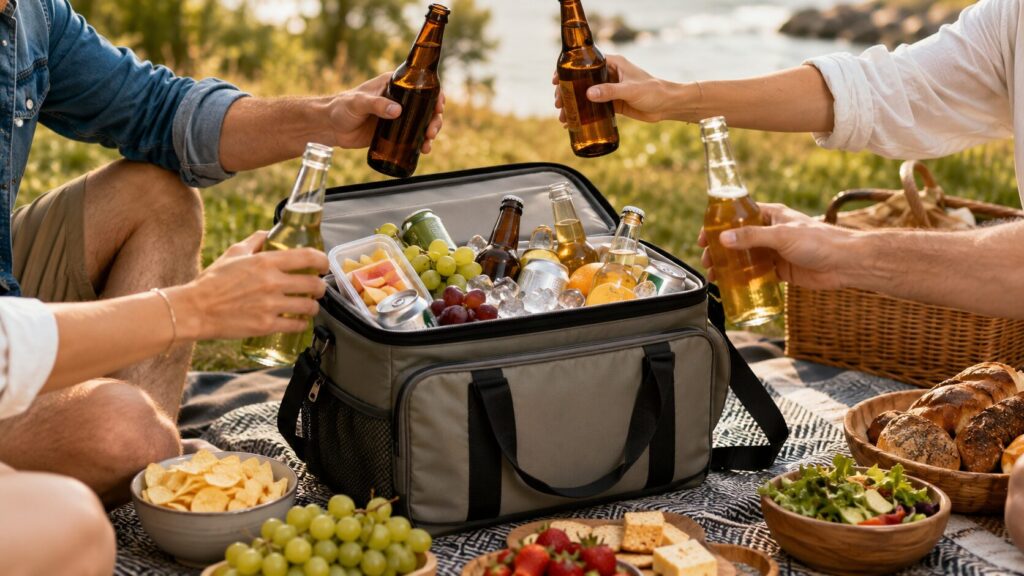
Integrating reinforced webbing, custom embroidery, and waterproof zipper garages seamlessly elevates the market appeal of personalized insulated bags. Offering durable retail products drives higher customer lifetime value and lower return rates across competitive global channels. Factory designers configure computerized sewing machines to maintain uniform stitch density across thousands of commercial units. Industrial lamination presses bond outer synthetic textiles securely to rubber core layers without generating bubbling defects. Master technicians calibrate temperature controllers constantly to maintain optimal molecular fusion thresholds throughout daily manufacturing shifts. Raw material inventory managers track lot numbers meticulously to trace component origins in case of unexpected performance variances. Supply chain coordinators maintain buffer stocks of certified hardware components to prevent seasonal assembly line bottlenecks.
- Aesthetic integration: Seamless hardware placement combines functional security with premium brand visual appeal.
- Customer retention: Durable retail construction reduces product return rates and drives higher lifetime brand value.
- Stitch uniformity: Computerized sewing template guidance guarantees identical stitch density across commercial production batches.
6. Scaling Production: Quality Assurance for Personalized Insulated Cooler Bags
Simulating multi-hour ice retention, zipper tension, and pull-point durability during bulk runs ensures flawless performance for personalized insulated cooler bags. Partnering with a direct OEM manufacturer ensures your finished inventory matches approved master samples down to the millimeter. Factory testing technicians subject random production samples to multi-hour thermal decay chambers and heavy-weight drop tests. Environmental chamber operators record internal temperature fluctuations continuously while external ambient heaters mimic severe summer heatwaves. Ergonomic testing equipment measures grip resistance to ensure user comfort during extended outdoor carrying tasks. Metal detector checkpoints scan finished cartons strictly to eliminate stray sewing needles or manufacturing debris prior to export. Final audit reports provide retail clients with complete transparency regarding batch compliance metrics and engineering test results.
- Stress-testing protocols: Multi-hour thermal chambers and drop-impact audits verify bulk product durability before export shipping.
- Master sample alignment: Direct OEM manufacturing oversight guarantees that mass-produced batches match approved prototypes perfectly.
- Batch transparency: Comprehensive audit reports provide retail clients with complete verification of compliance and test metrics.
7. The Aimazing Advantage: Engineering Excellence in Thermal Solutions
Aimazing Bag delivers robust manufacturing support for global thermal accessory brands worldwide as an established direct factory partner. We combine advanced heat-welded linings and precision insulation structures to deliver high-performance coolers for global brands. Contact our dedicated engineering team today to review technical specifications and schedule your commercial production.