
1. The Thermal Protection Imperative: Why Engineering an Insulated Insulin Travel Case Demands Precision Physics
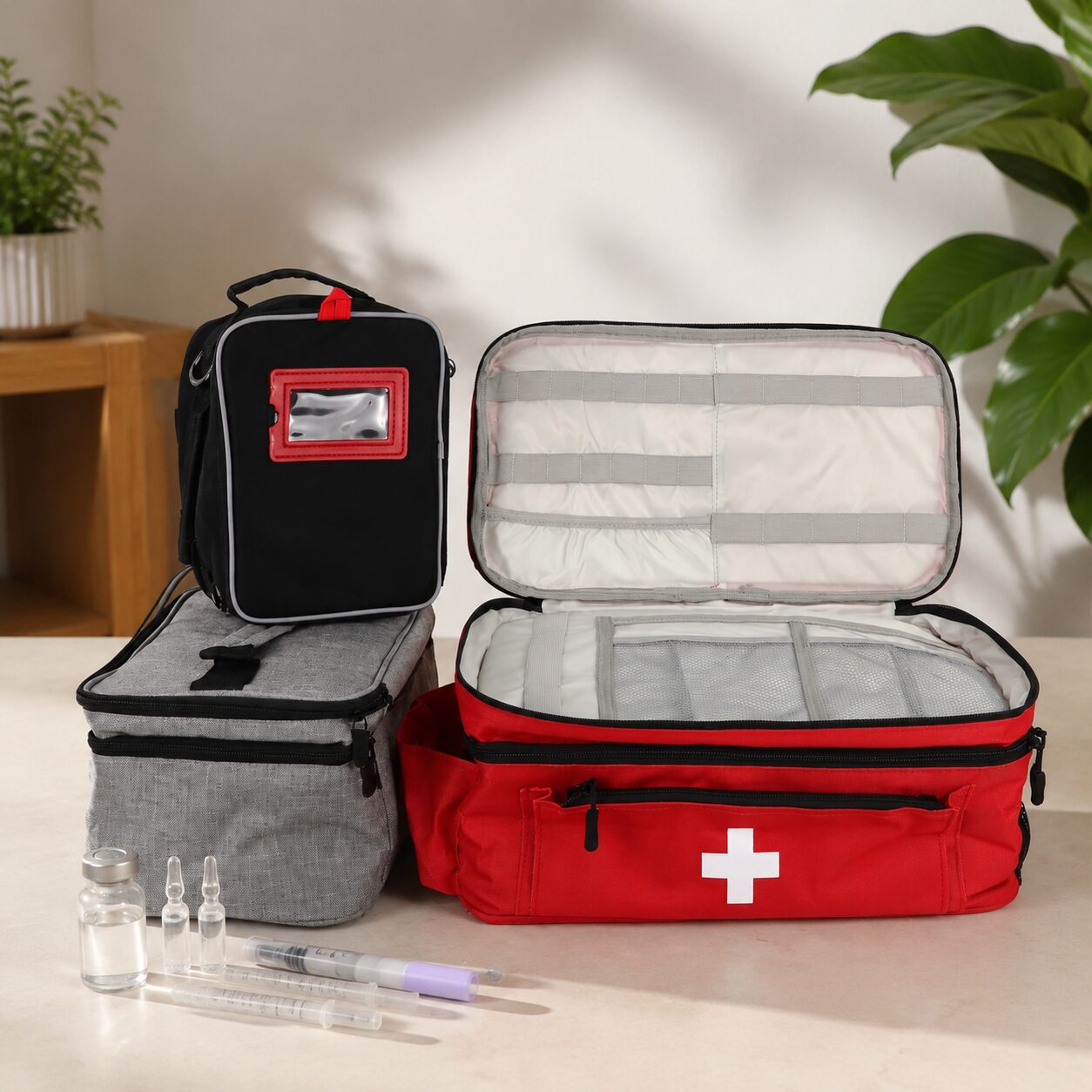
Crafting a reliable insulated insulin travel case requires engineering an advanced, high-performance thermal shield that completely isolates delicate protein formulas from extreme environmental temperature fluctuations. Because exposure to intense heat breaks down vital chemical bonds and ruins insulin efficacy within hours, uncompromising temperature defense becomes an absolute priority for manufacturers. Top-tier medical carriers shut down heat transfer entirely by seamlessly fusing dense core insulation with certified radiant barriers, effortlessly meeting strict international pharmaceutical shipping regulations. Furthermore, every single custom insulated insulin travel case undergoes intense thermal and physical stress validation in our laboratory before the factory greenlights full-scale production runs.
- Conduction Resistance: High-density core foams stop direct heat transfer through contact.
- Radiant Reflection: Metallic foil layers deflect infrared solar radiation away from the payload cavity.
- Structural Integrity: Rigid insulation layers protect fragile glass vials from physical impact shocks.
2. Radiant Barrier Liners: Sourcing and Integrating High-Performance Reflective Foils
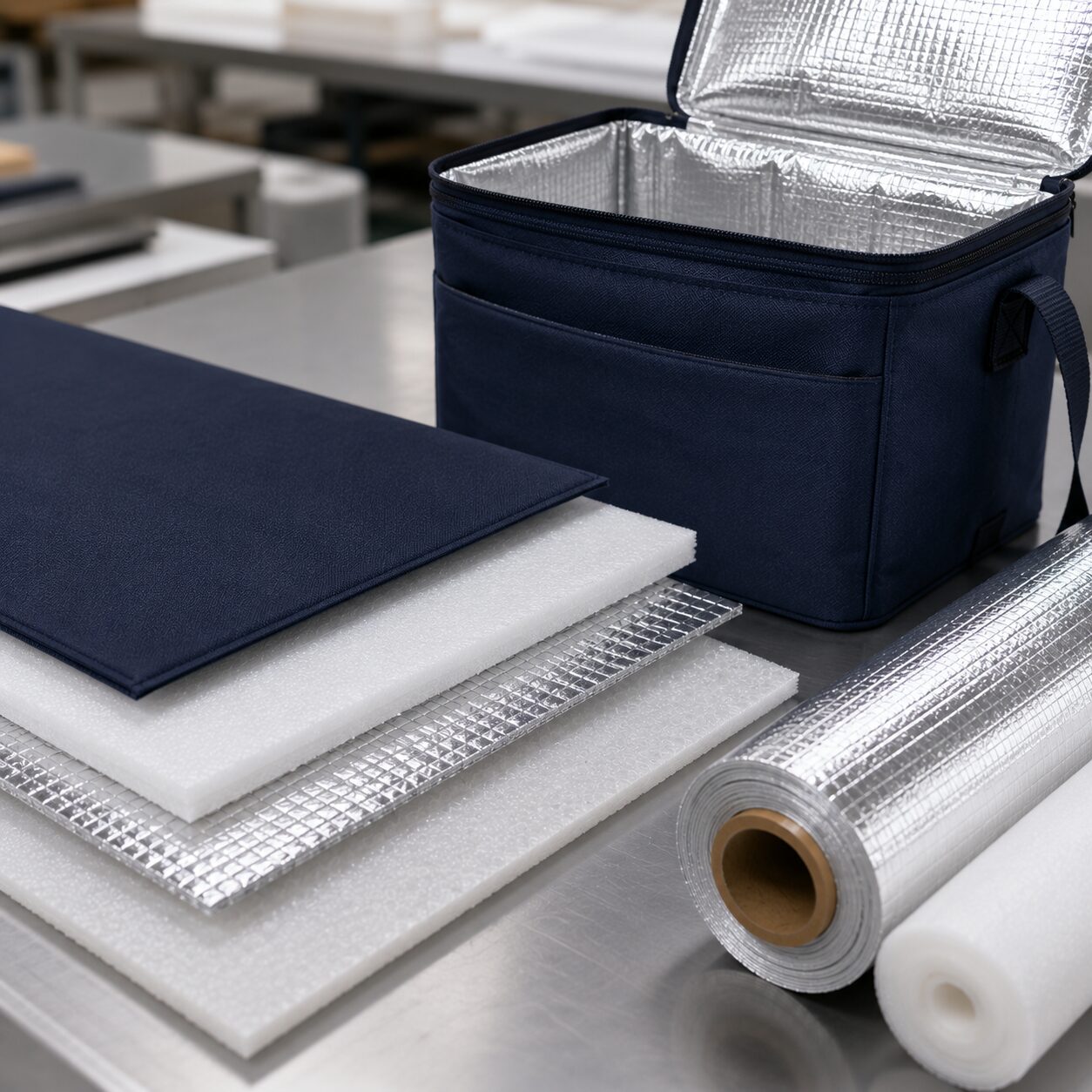
Multi-layer aluminum foils and advanced micro-perforated radiant liners work together to reflect up to 95% of infrared thermal energy. This helps keep protein medications safe from extreme outdoor heat during transport. The cases use tear-resistant medical-grade PEVA composites. These materials handle loading of accessories, rough handling and abrasive pen clips without damage. This ensures structural durability and long life for every high-performance insulated insulin travel case. Heavy-duty reinforced scrim layers add protection. They stop wear and prevent material breakdown during intensive daily use. This improves term thermal retention and supports reliable cold-chain performance. Each custom insulated travel case, for insulin pens is built to meet the needs of pharmaceutical markets.
- Reflectivity Index: Aluminum foils reflect up to 95 percent of incoming radiant heat.
- Scrim Reinforcement: Internal woven layers prevent puncture damage from sharp pen tips.
- Flex Fatigue Resistance: Flexible PEVA matrices survive thousands of bending cycles without cracking.

3. Foam Core Architecture: Selecting Closed-Cell Insulation for Maximum Thermal Retention
Selecting the absolute best foam core materials ensures that portable medical kits maintain both robust structural rigidity and superior temperature retention over long journeys. Advanced closed-cell insulation materials strategically trap nitrogen gas inside isolated pockets to actively restrict thermal transfer, while sourcing specialists meticulously evaluate thermal conductivity coefficients to determine the optimal wall thickness for compact travel goods. Expanded polyethylene provides lightweight structural cushioning alongside exceptional moisture defense for daily commuter cases, whereas high-grade polyurethane foam delivers elite thermal resistance values for maximum climate control. Engineers masterfully balance maximum thermal efficiency against portable ergonomics by deploying specialized bound-edge assemblies and overlapping thermal flaps to seal stitch holes and eliminate conductive leaks across every premium insulated insulin travel case.
| Insulation Material | Thermal Conductivity (W/m⋅K) | Density (kg/m3) | Primary Soft-Goods Application |
| Expanded Polyethylene (EPE) | 0.034 | 30 – 45 | Lightweight daily commuter travel cases |
| Polyurethane (PU) Foam | 0.024 | 40 – 60 | High-performance medical transport bags |
4. Phase-Change Integration: Docking Bio-Gel Packs Safely Inside the Travel Kit
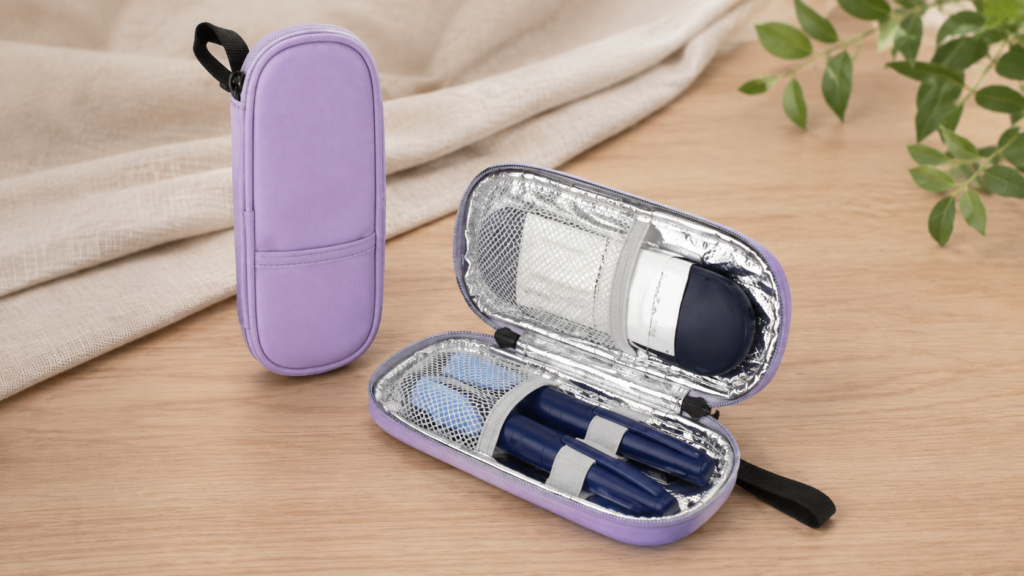
Phase-change materials supply the necessary cooling capacity to maintain safe storage temperatures during extended journeys. Direct contact between freezing gel packs and liquid insulin causes immediate protein destruction. Sourcing engineers design specialized internal separation barriers to isolate sub-zero coolants safely. Designing dedicated mesh internal pockets isolates sub-zero bio-gel packs away from direct insulin pen contact because liquid insulin freezes at sub-zero temperatures and loses therapeutic potency permanently. Integrating a specialized insulin pen travel case design with a ventilated fabric buffer zone allows chilled air to circulate without freezing the payload. Balancing mass ratios between phase-change materials and internal payload volume ensures multi-hour transit stability while verifying that internal temperatures remain locked within the 2°C to 8°C pharmaceutical window, functioning as a reliable insulin pen travel case cooler.
- Thermal Buffer Zone: Ventilated mesh pockets prevent direct contact with sub-zero coolants.
- Mass Ratio Calibration: Coolant weight is scaled precisely to internal cavity payload volume.
- Cold-Chain Window: Internal sensors verify stable maintenance within the 2°C to 8°C pharmaceutical range.
5. Rigorous Temperature-Test Planning: Validating Performance Before Mass Production
Put mock-ups through rigorous climate testing to stress-test their thermal limits before greenlighting full-scale manufacturing. Technicians drop prototypes into active thermal chambers dialed to oppressive tarmac heat while sensors map every degree of internal drift. These stress tests simulate brutal 35°C to 40°C summer travel conditions, forcing units to hold safe internal cooling thresholds for hours without any electrical assistance. Multi-point data logging near closure tracks and base seams maps out exact temperature curves to prove the build meets rigorous pharmaceutical transit standards for every insulated insulin travel case.
- Chamber Stress Testing: Prototypes undergo sustained 40°C thermal exposure simulations.
- Multi-Point Logging: Sensors track temperature gradients across vulnerable zipper and base zones.
- Pharmaceutical Benchmarks: Internal logs must prove compliance with strict transit stability standards.
6. Industrial Manufacturing Excellence: Partnering with Aimazing Bag for Medical Soft-Goods OEM
Industrial manufacturing execution requires precise digital file translation and strict quality control on hologram-level floor assemblies. Aimazing Bag delivers advanced soft-goods manufacturing solutions ensuring flawless execution of complex thermal specifications. Specialized high-frequency welding techniques eliminate traditional needle puncture holes across insulated chambers. Converting digital thermal tech packs into physical prototypes requires exact insulation layering and precise pattern cutting where sourcing teams establish strict tolerance matrices to prevent assembly drift. Utilizing a high-performance insulated insulin pen case layout paired with high-frequency radio-frequency welding and ultrasonic bonding eliminates needle-hole thermal leaks across insulation chambers by replacing traditional sewing with seamless waterproof layers. Partnering with a specialized OEM manufacturer ensures uncompromising quality standards worldwide, especially when fabricating any high-grade insulin pen travel case.