
1. The Anatomy of a Medical Thermal Spec: Why Writing a Clear OEM Blueprint for a Thermal Bag for Insulin Matters
Translating strict pharmaceutical temperature stability into textile engineering metrics requires bridging the gap between clinical storage rules and practical soft-goods manufacturing parameters. Brand developers sourcing a thermal bag for insulin must convert abstract biochemical requirements into measurable physical specifications that factory technicians can execute without ambiguity. Establishing a comprehensive technical brief prevents costly sampling iterations by eliminating miscommunications on the factory floor before bulk material cutting commences. Professional original equipment manufacturers rely on exact numerical tolerances for material density, layer thickness, and seam construction to guarantee predictable cold-chain performance across global distribution channels. Designing a reliable thermal bag for insulin layout minimizes production risks for medical accessory brands.
- Clinical Translation: Pharmaceutical cold-chain rules are converted into millimeter-accurate soft-goods engineering parameters.
- Cost Avoidance: Comprehensive technical briefs prevent expensive sampling delays and eliminate shop-floor miscommunications.
- Numerical Tolerances: Exact material density and layer thickness specifications ensure predictable thermal performance.
2. Specifying Insulation Layers: Choosing the Right Materials for an Insulated Bag for Insulin Pen
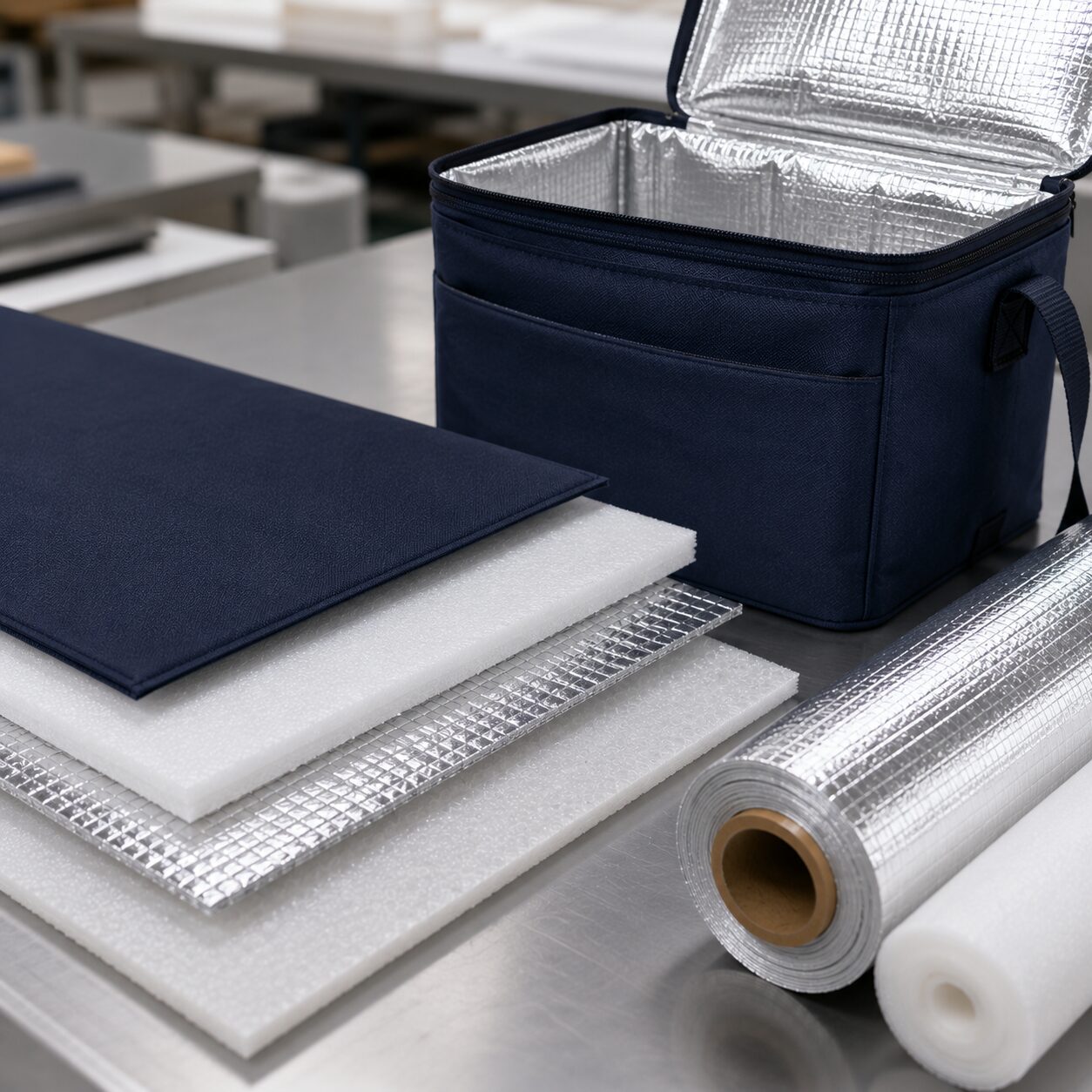
Defining thermal conductivity coefficients and thickness ratios establishes precise performance benchmarks for micro-perforated radiant barrier foils and high-density EPE foams. Engineering teams drafting specifications for an insulated bag for insulin pen must mandate low heat-transfer coefficients to block exterior thermal radiation effectively. Eliminating cold-bridge vulnerabilities across zipper tracks and seams requires specifying bound-edge construction and overlapping thermal flaps in all production blueprints. Standardizing these insulation parameters ensures that finished medical soft goods maintain internal microclimates during extended transit delays. Furthermore, evaluating every custom thermal bag for insulin prototype ensures strict adherence to clinical cold-chain thresholds.
- Thermal Conductivity: Low heat-transfer coefficients ensure radiant barrier foils block exterior thermal radiation efficiently.
- Cold-Bridge Elimination: Bound-edge construction and overlapping thermal flaps prevent heat leakage across zipper tracks.
- Performance Benchmarks: High-density EPE foams maintain internal microclimates during extended transit delays.
3. Defining Moisture and Barrier Controls in an Insulated Pouch for Insulin
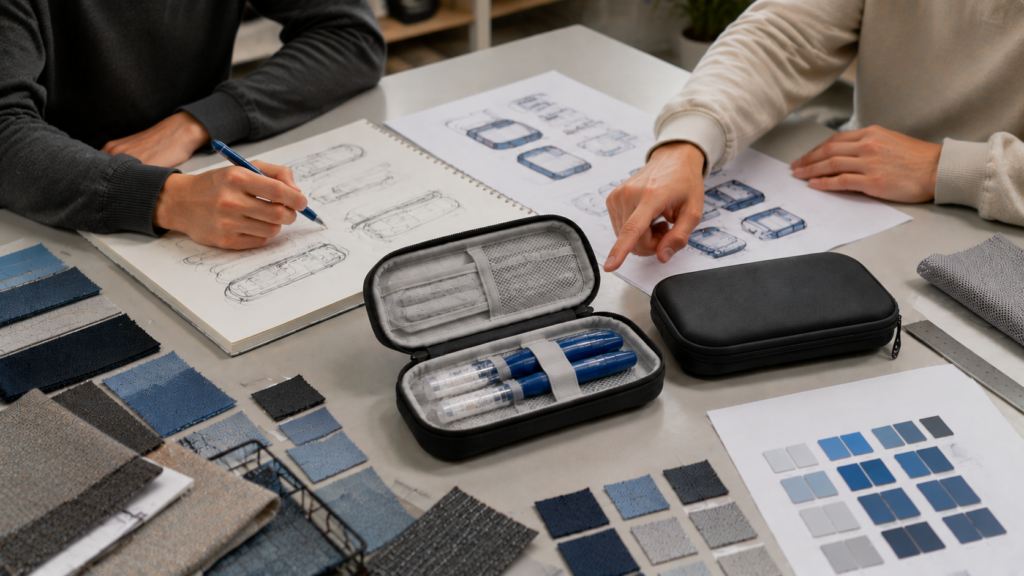
Selecting medical-grade interior laminates and wipe-clean PEVA films prevents internal condensation moisture from seeping into core insulation layers over time. Specifications for an insulated pouch for insulin must require non-porous, antimicrobial interior surfaces that resist humidity degradation and inhibit bacterial growth. Mandating ultrasonic edge-sealing instead of traditional needle stitching protects the internal payload from ambient humidity by eliminating micro-punctures along load-bearing boundaries. These rigorous moisture-barrier standards ensure long-term hygiene and structural integrity in demanding medical environments. Integrating an advanced insulated bag for insulin pen into a product line enhances overall user confidence.
- Medical-Grade Laminates: Non-porous interior skins block moisture from creeping into the core insulation layers, stopping humidity damage in its tracks.
- Antimicrobial PEVA: Wipe-down interior films put a stop to bacterial growth, keeping the storage compartment fresh and hygienic trip after trip.
- Welded Seam Integrity: Ultrasonic edge-bonding skips needle holes entirely, locking out ambient moisture to keep sensitive cargo bone-dry.
4. Structural Rigidity and Impact Defense in an Insulated Case for Insulin Pen
Semi-rigid EVA thermal panel integration provides essential crush-resistance benchmarks to protect fragile glass insulin cartridges during rough baggage handling. Engineering blueprints for an insulated case for insulin pen must specify rigorous drop-test parameters and deflection limits under heavy external pressure loads. Detailing exact internal elastic retention matrices and micro-vibration dampening rules prevents internal components from shifting or fracturing during active transport. Incorporating these structural defenses guarantees absolute physical protection alongside advanced thermal regulation. Designing a durable insulated pouch for insulin prevents internal mold accumulation.
- EVA Thermal Panels: Semi-rigid panel integration establishes strict crush-resistance benchmarks for fragile glass cartridges.
- Deflection Limits: Engineering blueprints enforce strict pressure tolerances to survive aggressive baggage handling.
- Vibration Dampening: Precision elastic retention matrices prevent internal components from shifting or fracturing.
5. Detailing Phase-Change Integration and Cooling Media for a Bag for Insulin
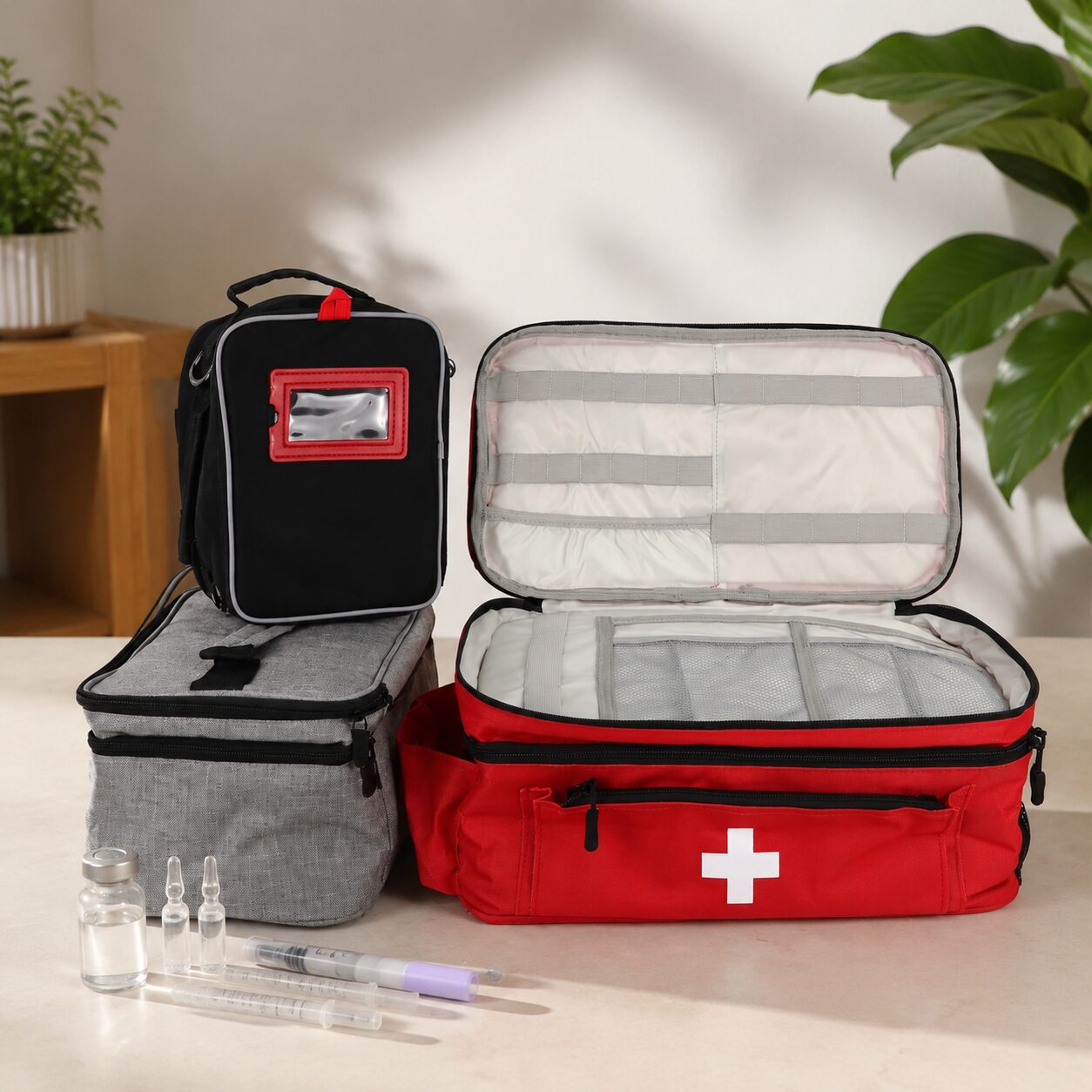
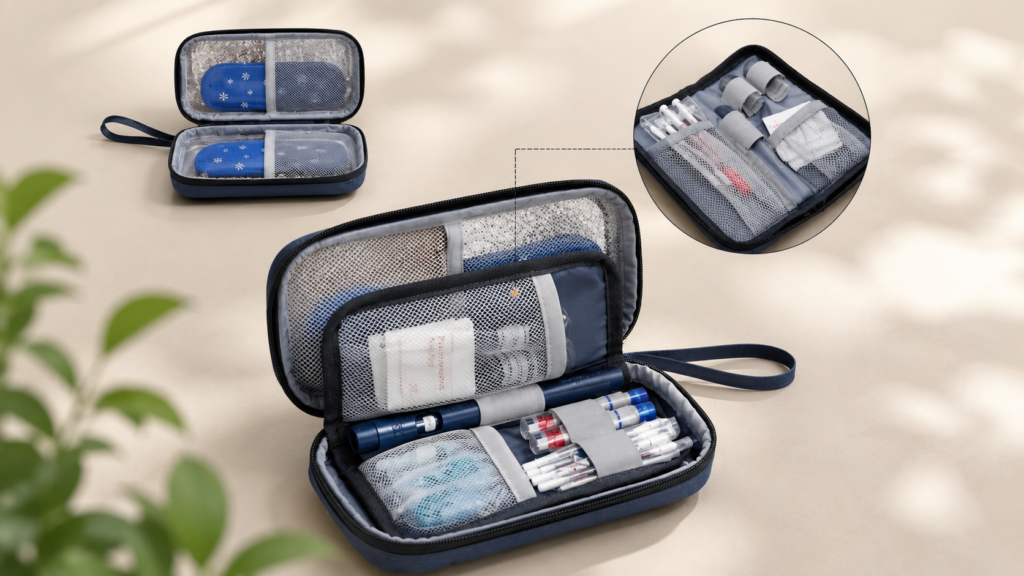
Bio-gel pack pocket dimensions require precise specification rules to ensure sub-zero cooling media never touch delicate peptide structures directly. Contract documentation for a commercial bag for insulin must establish mandatory environmental chamber testing clauses to verify multi-hour thermal retention metrics across every production run. Standardizing cooling media placement safeguards pharmaceutical efficacy by maintaining steady internal temperatures without risking localized freezing damage. Detailed phase-change integration protocols form the core of reliable medical accessory manufacturing. Sourcing a high-performance insulated bag for insulin pen guarantees superior thermal defense.
| Specification Parameter | Technical Requirement | Quality Assurance Objective |
| Pocket Isolation | Dedicated internal mesh with thermal barrier | Prevent direct-contact freezing shock |
| Chamber Testing | Environmental assay across 12 to 36 hours | Verify multi-hour cold-chain envelope |
| Media Placement | Calibrated gel pack positioning slots | Maintain steady internal temperature equilibrium |
6. Standardizing Auxiliary Thermal Components: Specifying an Ice Bag for Insulin
Requiring certified, non-toxic, puncture-resistant gel pack enclosures within the master component specification matrix ensures absolute patient safety during transit. Optimizing mass ratios between cooling media and internal payload ensures the supplied ice bag for insulin maintains optimal thermal equilibrium without adding excessive weight to personal travel kits. Standardizing auxiliary thermal components simplifies inventory management and guarantees consistent cooling capacity across diverse wholesale retail markets. Manufacturing an elite insulated case for insulin pen demands precision engineering on every production batch.
- Safety Certifications: Certified non-toxic gel enclosures guarantee absolute patient safety during travel use.
- Puncture Resistance: Heavy-duty exterior films prevent fluid leakage under extreme pressure spikes.
- Mass Ratio Optimization: Balanced cooling media weights maintain thermal equilibrium without adding excess bulk.
7. Executing the OEM Contract: Quality Control Protocols and Batch Inspection
Establishing pre-production golden sample sign-off procedures locks in exact material lots, stitch densities, and thermal test results before full-scale container manufacturing begins. Partnering with an experienced manufacturer like Aimazing Bag guarantees zero-defect medical soft goods through rigorous multi-stage quality control audits and batch traceability. Executing comprehensive quality control protocols ensures strict compliance with your performance specifications across global wholesale shipments, protecting brand reputation and patient health. Sourcing any custom thermal bag for insulin or manufacturing an advanced bag for insulin becomes seamless through this rigorous OEM partnership model.