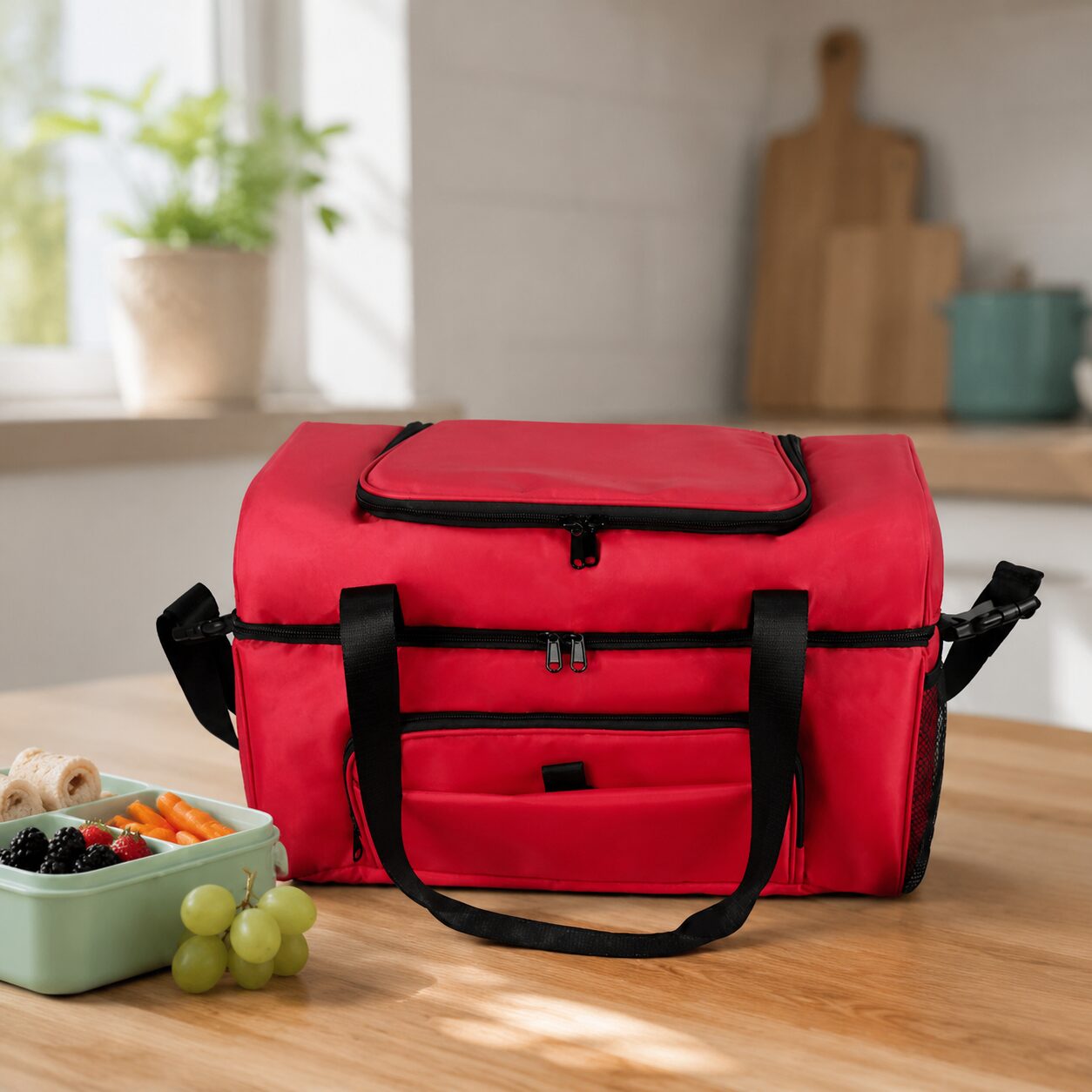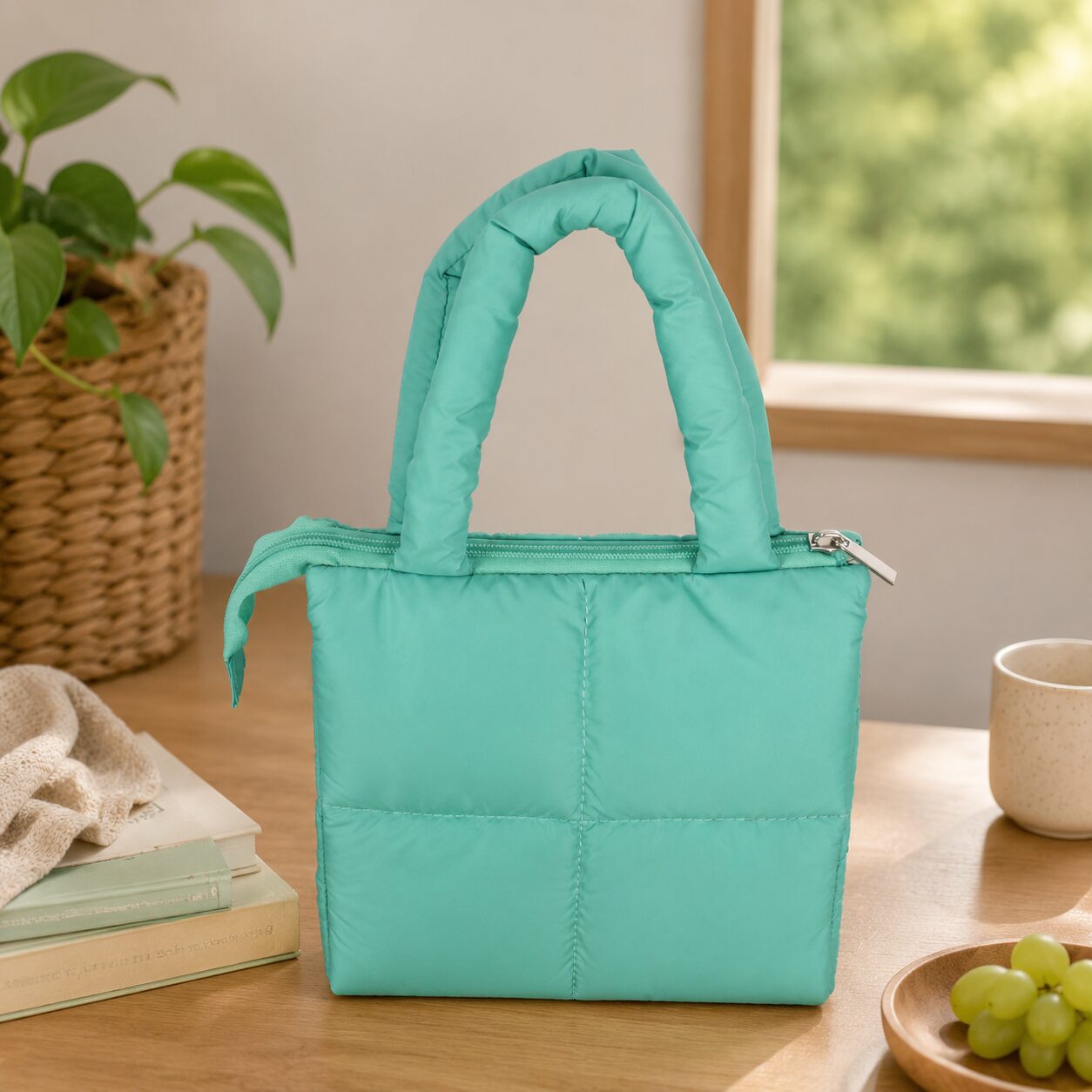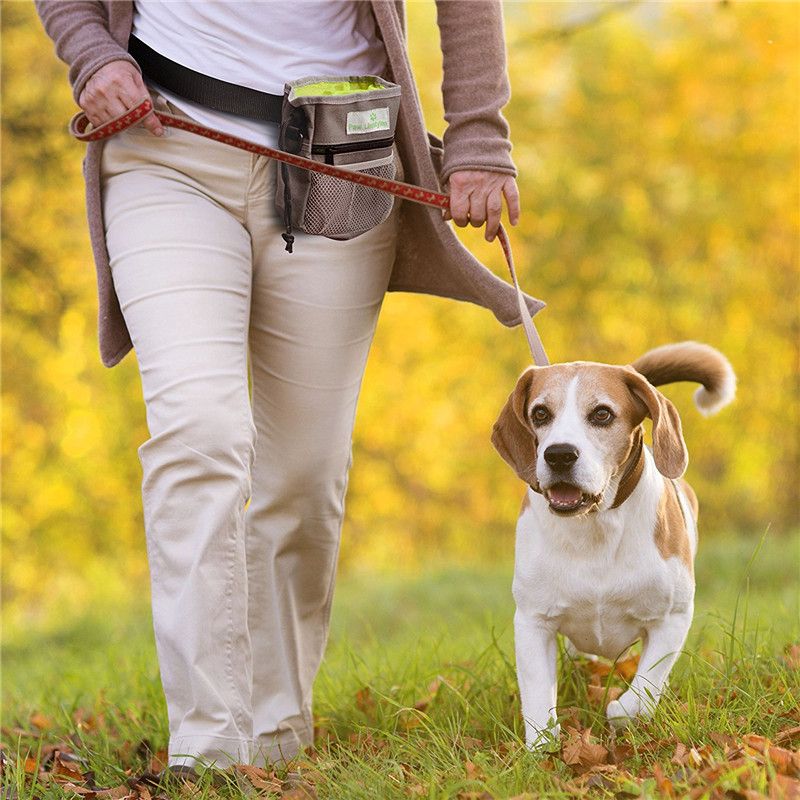

Building a great cool bag picnic bag comes down to a lot more than sewing together some insulated fabric and slapping a shoulder strap on it. If your insulation is too thin, drinks are lukewarm by noon; if you use basic stitched seams inside instead of high-frequency welded liners, melted ice water leaks right into the car trunk; and if the bottom isn’t reinforced, the whole bag sags and rips under the weight of a few heavy beverage cans. For outdoor brands and wholesale buyers, hitting that sweet spot between solid ice retention, real leak-proof durability, comfortable carrying, and clean retail styling is what actually prevents bad reviews and expensive customer returns. In this guide, we strip away the marketing fluff and break down the real factory engineering behind high-retention insulation cores, RF-welded waterproof tubs, load-bearing bases, and practical OEM customization options so you can develop an insulated cooler line that holds up in the field and delivers healthy retail margins.
1. Thermal Physics: Engineering High-Retention Soft Coolers for Outdoor Brands
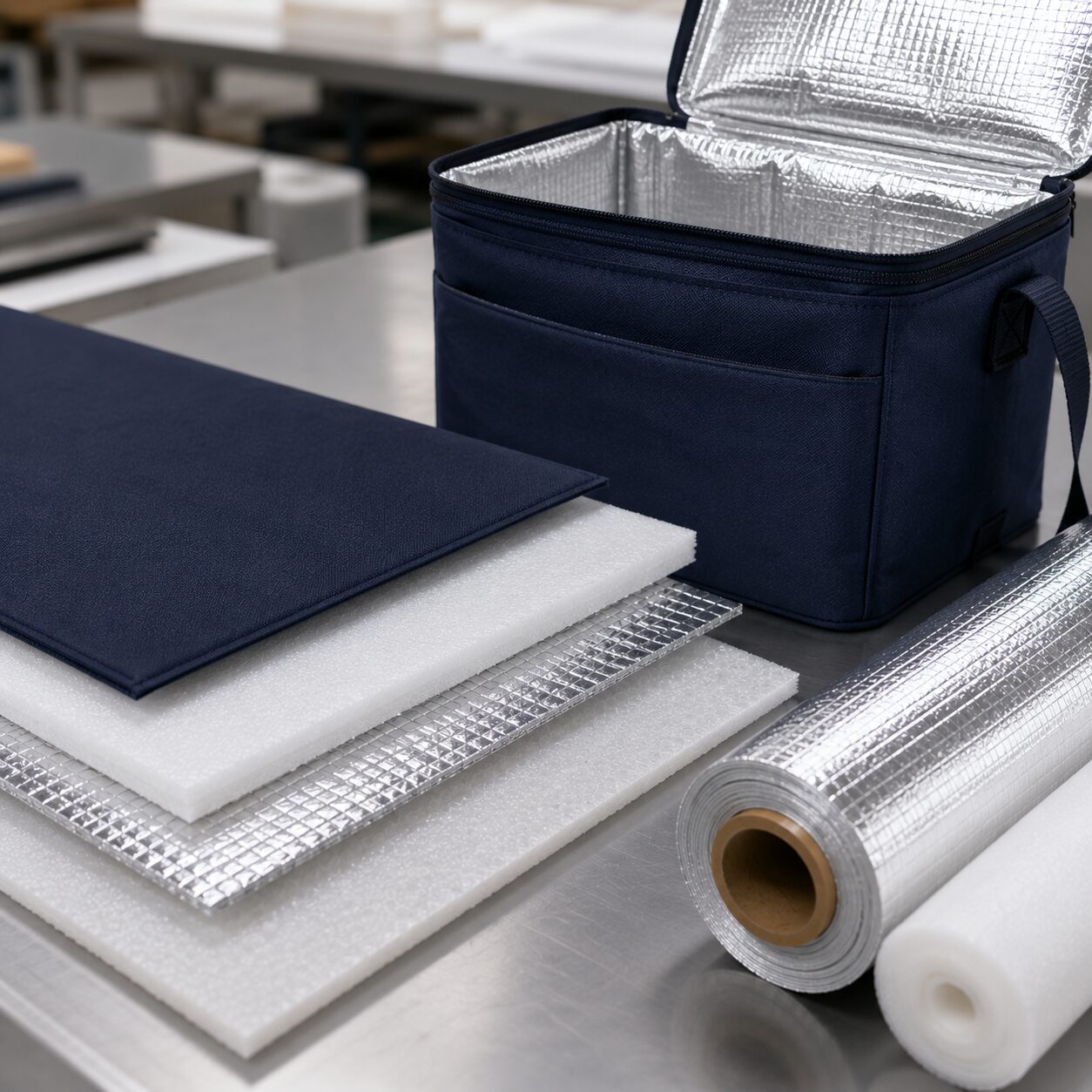
Arresting conductive radiative thermal energy exchange requires engineering high-retention soft coolers deploying multi-layer insulation matrices where sourcing a premium cool bag picnic bag demands closed-cell polyethylene foam creating micro-pockets trapping air. Aluminum foil radiant barriers reflect infrared radiation away, maintaining safe food storage temperatures and developing an insulated picnic cooler bag. Specialized bound-edge construction and waterproof zippers eliminate cold-bridge vulnerabilities. Professional manufacturers deploy polyurethane-coated airtight closures and insulated internal drafting walls to seal microclimates completely. Factory technicians calibrate multi-head sewing machines to guarantee absolute dimensional consistency across every production batch, preventing premature seam failure and fabric delamination. Advanced soft-goods engineering transforms basic fabric panels into high-performance commercial assets for growing wholesale distributors.
- Conductive Thermal Arrest: Closed-cell polyethylene foam structures block molecular heat transfer through physical separation layers, maintaining chilled interior microclimates during outdoor excursions.
- Radiant Energy Reflection: Micro-perforated metallic foil laminates deflect ambient solar radiation and external heat sources away from sensitive food compartments.
- Microclimate Sealing Protocols: Bounded perimeter edge construction and waterproof zippers eliminate thermal leakage pathways at structural panel junctions.
2. Fluid Containment: Sourcing Leak-Proof Picnic Coolers with Welded Liners
Sourcing leak-proof product lines necessitates high-frequency radio frequency welding replacing needle stitching, eliminating fluid leakage paths and preventing melted ice water from seeping into structural core foams to protect cool bag picnic bag integrity. RF welding melts thermoplastic polyurethane and PEVA inner layers, forming seamless waterproof vessels that guarantee absolute liquid containment and transform an ordinary picnic bag with cooler into elite tactical gear. Sourcing directors specify FDA-compliant TPU and PEVA inner membranes to secure food-contact safety and effortless cleanability, elevating the best cooler bag for picnic above generic alternatives. Completely sealed internal environments prevent core foam saturation and unpleasant bacterial growth while withstanding abrasion from sharp ice cubes and metal containers.
| Fabrication Metric | Engineering Specification | Commercial Retail Benefit |
| Seam Fusion Technology | High-frequency radio frequency welding | Eliminates needle puncture holes stopping melted ice water internal leakage |
| Inner Membrane Material | FDA-compliant thermoplastic polyurethane | Secures food-contact safety providing effortless wipe-down post-trip cleanability |
| Puncture Resistance | Heavy-gauge polymer film extrusion | Withstands aggressive abrasion sharp cutlery metallic beverage containers |
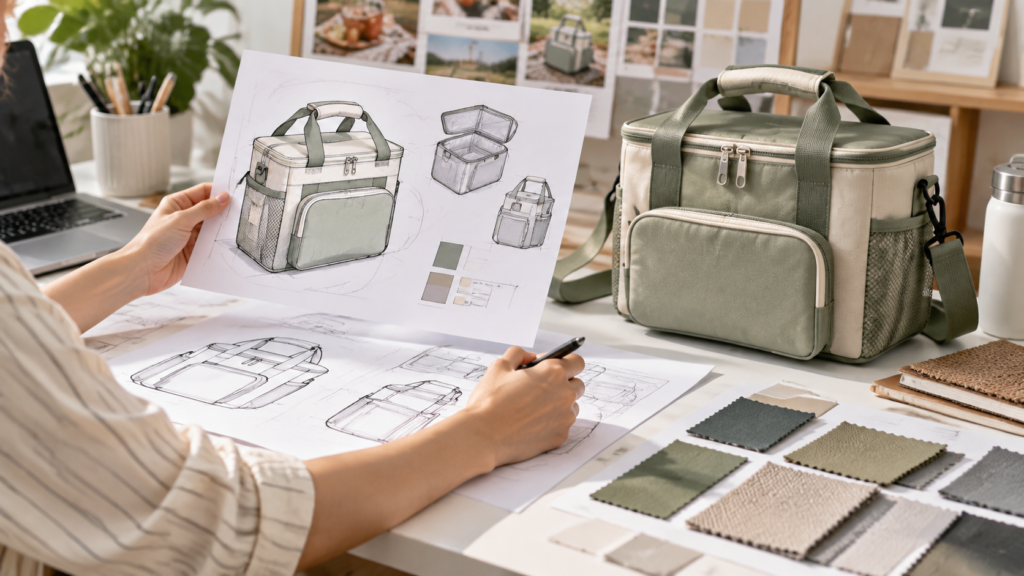
3. Volumetric Scaling: Designing Large Soft Coolers for Group Excursions
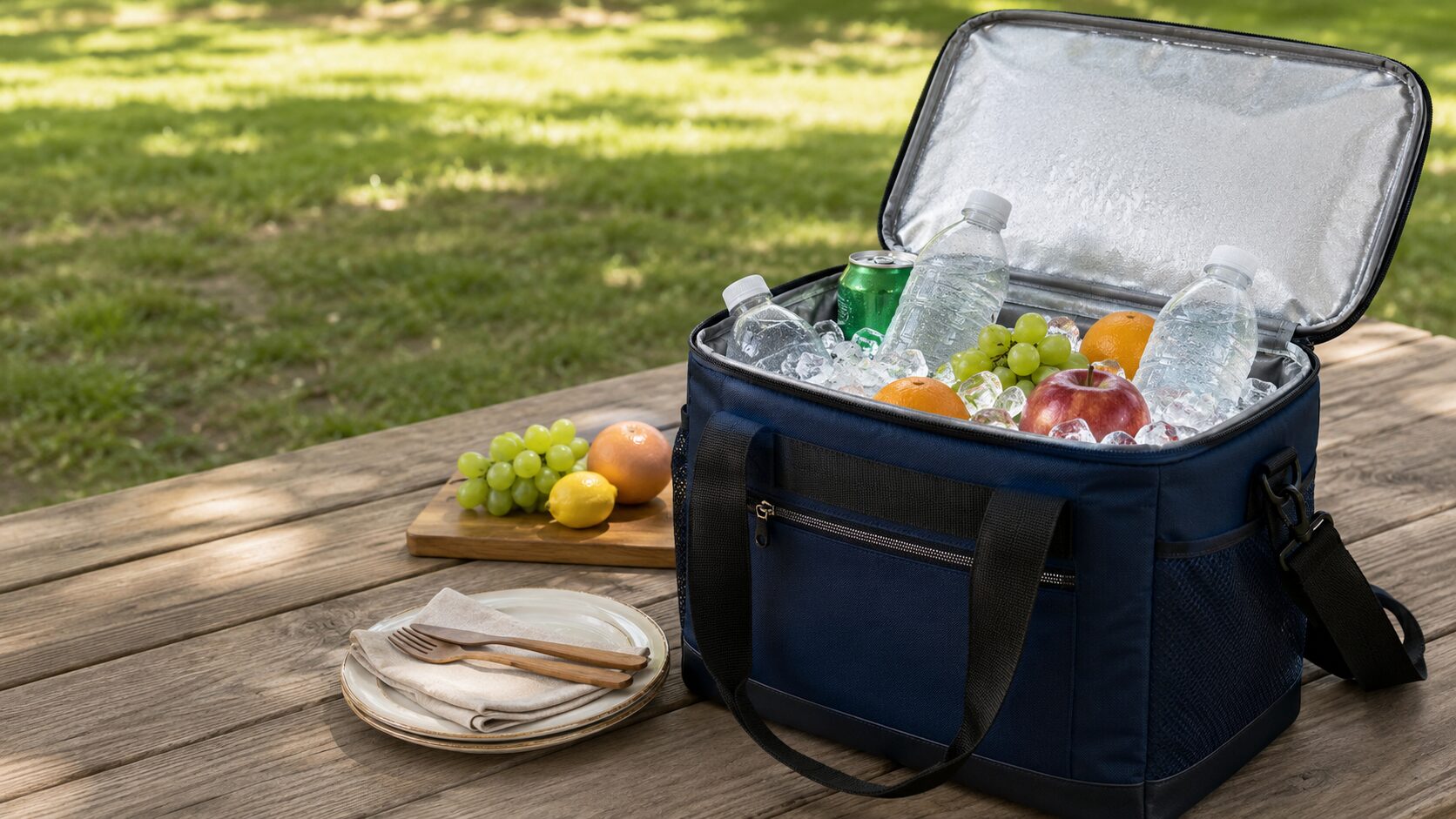
Designing large soft coolers requires balancing internal liter capacity with structural anti-sag base reinforcement to prevent bottom deformation and frame distortion when hauling heavy beverage inventories across rugged terrain, protecting the overall cool bag picnic bag architecture. Heavy payloads exert immense downward pressure, forcing sourcing engineers to integrate rigid high-density polyethylene bottom boards that distribute weight evenly. Sourcing managers specify contoured dual-density foam shoulder straps and reinforced grab handles to reduce handler fatigue. Engineered structural framing supports high liter capacities without collapse, elevating the consumer retail experience and driving brand growth. Maximizing wholesale margins requires strict volumetric freight optimization and collapsible architecture, with innovative soft-sided structures folding flat effortlessly to minimize landed inventory costs.
- Weight Distribution Dynamics: Rigid internal high-density polyethylene floor boards prevent bottom sagging under heavy beverage loads, maintaining structural aesthetics.
- Ergonomic Load Balancing: Contoured dual-density foam shoulder harnesses relieve physical strain during extended carrying intervals by aligning heavy payloads with the center of gravity.
- Structural Grab Reinforcement: Multi-pass box-stitching configurations secure grab handles against heavy lifting stress and prevent fabric tearing.
4. Heavy-Duty Transport: Engineering a Portable Ice Chest Bag for Rugged Environments
Engineering heavy-duty portable ice chests relies on high-denier ballistic nylon face fabrics and puncture-resistant outer shells to shield internal insulation envelopes against abrasion from sharp rocks and brush, extending cool bag picnic bag longevity. Sourcing directors select tightly woven synthetic yarns coated with hydrophobic water-repellent treatments, creating an indestructible insulated picnic cooler bag. Integrating custom hardware loading, D-ring anchoring, and tie-down strap geometry secures payloads firmly during off-road transport and marine excursions. Forged aluminum D-rings and heavy-duty webbing loops integrated directly into the main chassis ensure that an advanced picnic basket cooler bag maintains engineered tie-down geometry, eliminating load shifting during transit and driving continuous wholesale reorders.
| Material Component | Technical Specification | Operational Defense Function |
| Exterior Face Fabric | High-denier ballistic synthetic nylon | Shields internal insulation envelopes abrasion sharp rocks dense wilderness brush |
| Surface Coating | Durable hydrophobic water-repellent treatment | Sheds driving rain muddy splashes maintaining dry external chassis weight |
| Anchoring Hardware | Forged aluminum tie-down D-rings | Prevents payload shifting truck beds marine decks high-impact transit |
5. All-Weather Defense: Manufacturing a Waterproof Cooler Backpack
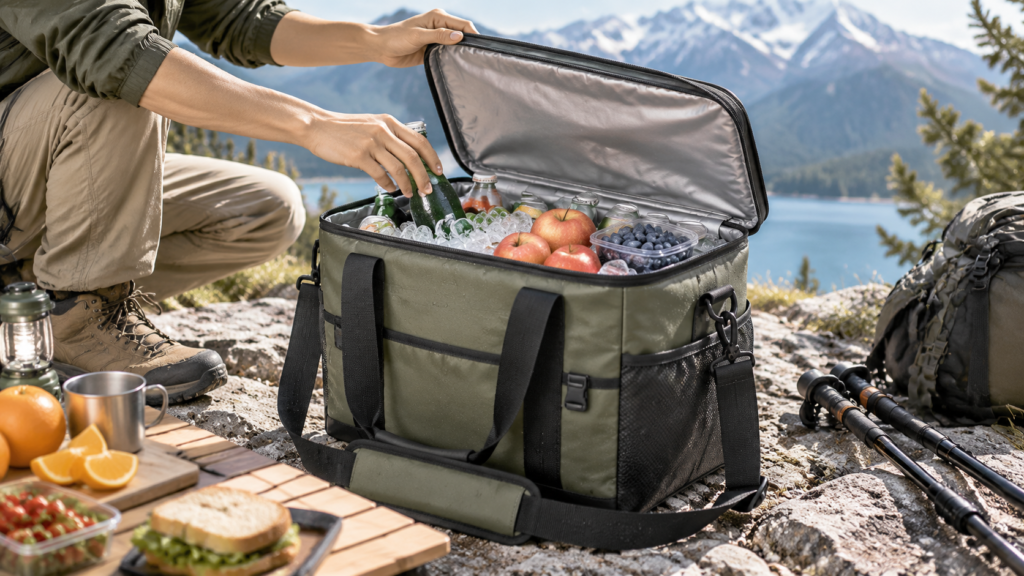
Manufacturing waterproof cooler backpacks involves applying hydrophobic textile coatings and integrating submersible-grade zippers to protect sensitive electronics, dry goods, and thermal payloads against torrential downpours, defining elite cool bag picnic bag performance metrics. Sourcing teams mandate TPU face laminates that repel water on contact, while airtight zipper teeth block moisture infiltration completely during accidental submersion, maintaining dry internal microclimates and distinguishing a premium picnic bag with cooler. Molded EVA foam panels featuring integrated air-channel ventilation promote cooling airflow across the wearer’s back, establishing the best cooler bag for picnic by merging thermal comfort with ergonomic support. Advanced TPU face laminates shed driving rain instantly, while fashion-forward custom hardware and sophisticated contrast piping elevate overall aesthetic sophistication.
- Hydrophobic Textile Shielding: Advanced thermoplastic polyurethane face laminates repel driving rain and heavy water splashes instantly, protecting internal cargo.
- Submersible Moisture Blocking: Airtight submersible-grade zipper teeth block moisture infiltration during accidental submersion events, securing dry internal microclimates completely.
- Air-Channel Spinal Ventilation: Molded EVA foam back pads promote continuous cooling airflow, reducing perspiration and heat concentration during strenuous trekking.
6. Rigorous Quality Control and Thermal Validation Standards
Executing destructive pull-force evaluations and cyclic load testing on reinforced handles, shoulder straps, and bottom seams ensures absolute structural reliability under heavy loads, verifying every commercial cool bag picnic bag production batch before global distribution. Sourcing laboratories mount finished cooler samples onto automated hydraulic test rigs simulating thousands of repetitive lifting cycles, confirming that multi-pass box-stitching maintains certified breaking limits. Sourcing technicians pack trial samples with standardized ice packs and monitor internal temperatures using digital data loggers inside environmental test chambers, producing a certified large picnic cooler bag that meets commercial temperature curves. Partnering with established soft-goods manufacturing infrastructure protects brand equity by maintaining strict dimensional tolerances across high-volume production runs.
| Quality Assurance Protocol | Testing Methodology | Commercial Risk Mitigation |
| Cyclic Load Testing | Automated hydraulic tension rig simulation | Verifies multi-pass box-stitching maintains certified breaking limits maximum cargo weight |
| Thermal Retention Auditing | Environmental chamber multi-point data logging | Guarantees internal insulation layers perform flawlessly simulated summer heat conditions |
| Pre-Shipment Verification | Multi-stage acceptable quality limit inspections | Eliminates field failure risks ensuring consistent zero-defect performance export orders |
7. Sourcing Strategies and Customization Frameworks for Brand Growth
Establishing comprehensive digital tech packs detailing exact dimensions, thermal layer mappings, and material grade standards eliminates costly sample iterations and ensures absolute batch consistency across global manufacturing runs, scaling your cool bag picnic bag portfolio effortlessly. Sourcing partners collaborate with engineering teams at Aimazing Bag to generate precise vector specifications, accelerating prototyping and guaranteeing predictable manufacturing outcomes for growing outdoor lifestyle brands seeking a competitive picnic basket cooler bag. Leveraging low-MOQ pilot flexibility, multi-stage AQL quality audits, and dedicated project management secures long-term supply chain stability and fixed material pricing while advanced CAD software links directly to automated laser cutting tables to minimize raw material waste.