
Outdoor dining sounds simple until food, drinks, tableware, and other essentials need to be transported across a park or campsite. For brands developing outdoor products, the real challenge is finding the right balance between carrying capacity, mobility, cooling performance, and convenient storage.
A well-designed product should be easy to pull, practical to organize, and comfortable to use. This guide looks at the manufacturing decisions behind those features, with practical advice for brands, wholesalers, and distributors planning their next OEM project.
1. Frame Design: Building a Picnic Trolley for Everyday Loads
The frame is the foundation of a reliable picnic trolley. It supports the cooler compartment, transfers weight to the wheels, and keeps the structure stable during movement.
For manufacturers, choosing the frame material is only the beginning. The frame geometry, joint connections, axle position, and folding mechanism all affect how the finished product performs.
Choosing Between Aluminum and Steel
Aluminum is often considered for lightweight, portable designs, while steel may offer a cost-effective alternative where additional weight is acceptable. Both materials can work well when the tube dimensions, connections, and surface treatments are properly specified.
At Aimazing, we recommend starting with the intended carrying load rather than choosing the thickest available frame.
For example, 12 standard 330 mL beverage cans contain approximately 4 kg of liquid alone. Once the cans, food, ice packs, and tableware are included, the load increases further.
This is a calculated loading example, not a measured payload rating for a finished product.
A practical picnic trolley bag design should therefore consider:
- Frame joints: Reinforcement around hinges, handle connections, and the axle mounting area.
- Weight distribution: A balanced loading position that reduces unwanted tipping.
- Folding stability: Secure locking mechanisms that prevent accidental collapse.
- Load requirements: A clearly defined maximum payload verified through physical sample testing.
The goal is not to make every frame as heavy as possible. It is to use the right structure for the expected load while keeping the product convenient to transport and store.
2. Wheel Selection: What Makes Outdoor Transport Easier?
A picnic trolley on wheels needs to perform beyond smooth indoor flooring. Depending on the intended market, customers may use it on paved walkways, park grass, gravel paths, or compacted soil.
Wheel design can make a noticeable difference, particularly when the trolley is fully loaded.
Wheel Diameter, Width, and Materials
Larger wheels can generally handle small obstacles more easily than smaller ones. Wheel width, tread design, material hardness, and axle construction also influence rolling performance.
For custom development, several options are worth discussing.
| Wheel Design | Typical Application | Design Consideration |
|---|---|---|
| Compact wheels | Pavement and short trips | Lightweight and easier to pack |
| Larger-diameter wheels | Grass and uneven pathways | Better obstacle clearance |
| Wide-profile wheels | Soft ground and selected beach conditions | Ground pressure and rolling resistance |
| Removable wheels | Travel and compact storage | Attachment reliability and assembly |
There is no single wheel diameter that works best for every surface. Even an 8-inch wheel may struggle in loose, deep sand if its width, tread, or loading is unsuitable.
From a sourcing perspective, we suggest testing the complete trolley on the surfaces your customers are most likely to encounter.
The wheel assembly should also be assessed for axle movement, fastening security, noise, and rolling resistance under the intended load.
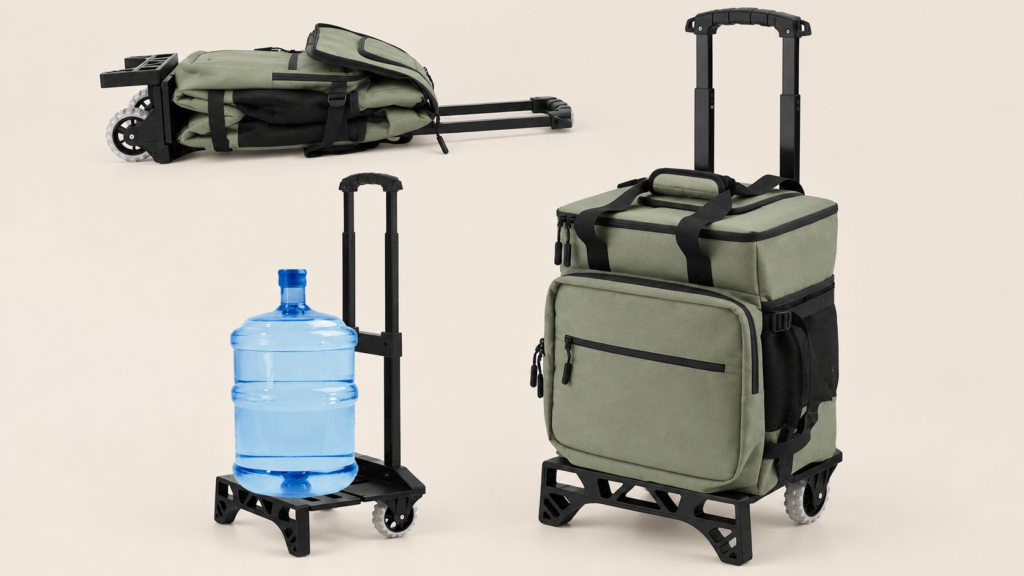
3. Detachable Cooler Bag: Insulation, Lining, and Attachment Design
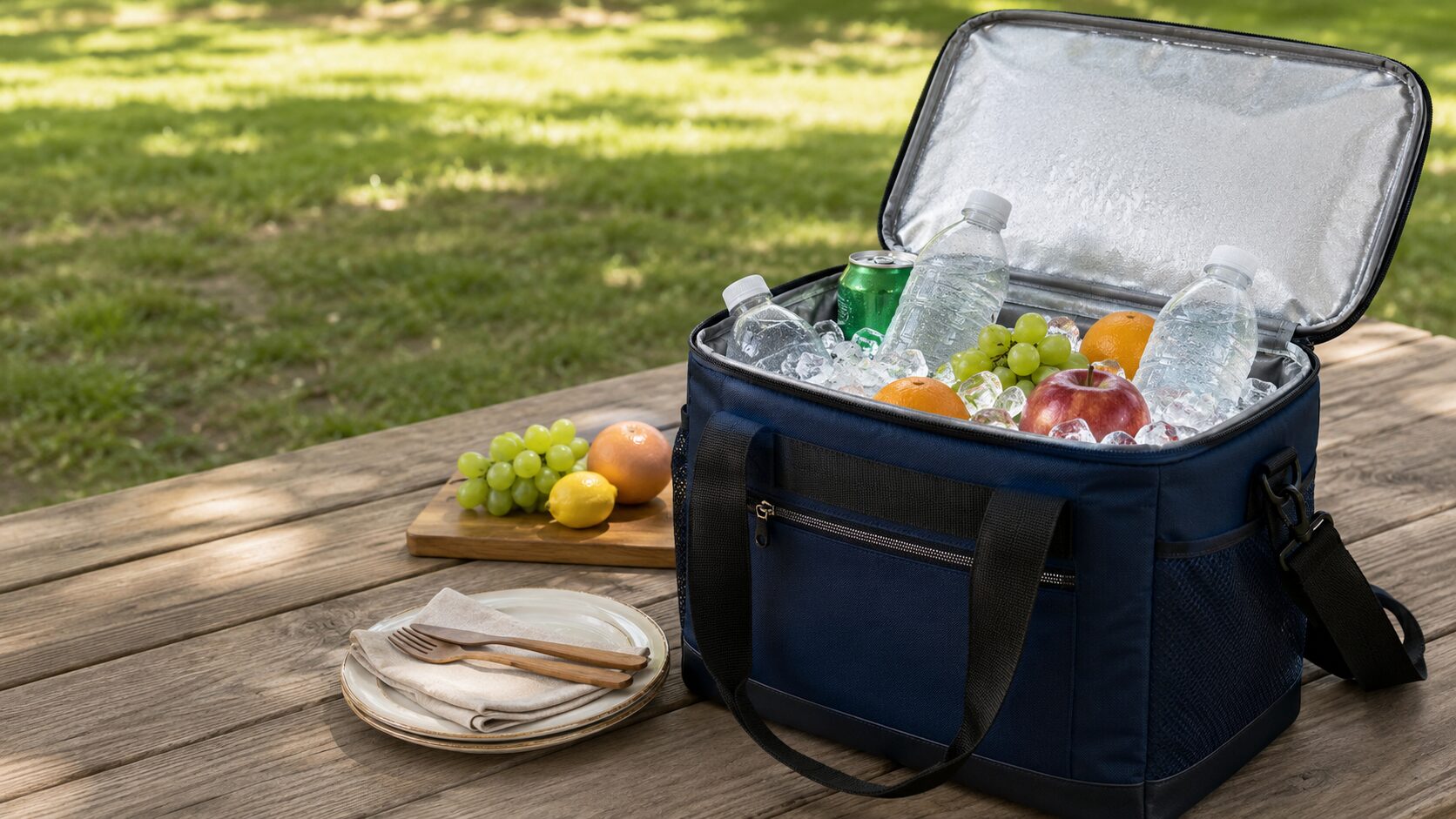
The insulated compartment is what distinguishes a picnic trolley cooler bag from an ordinary utility cart.
A detachable design can make cleaning, storage, and transportation easier. However, the cooler must remain securely connected to the frame while the trolley is moving.
Selecting the Right Insulation Structure
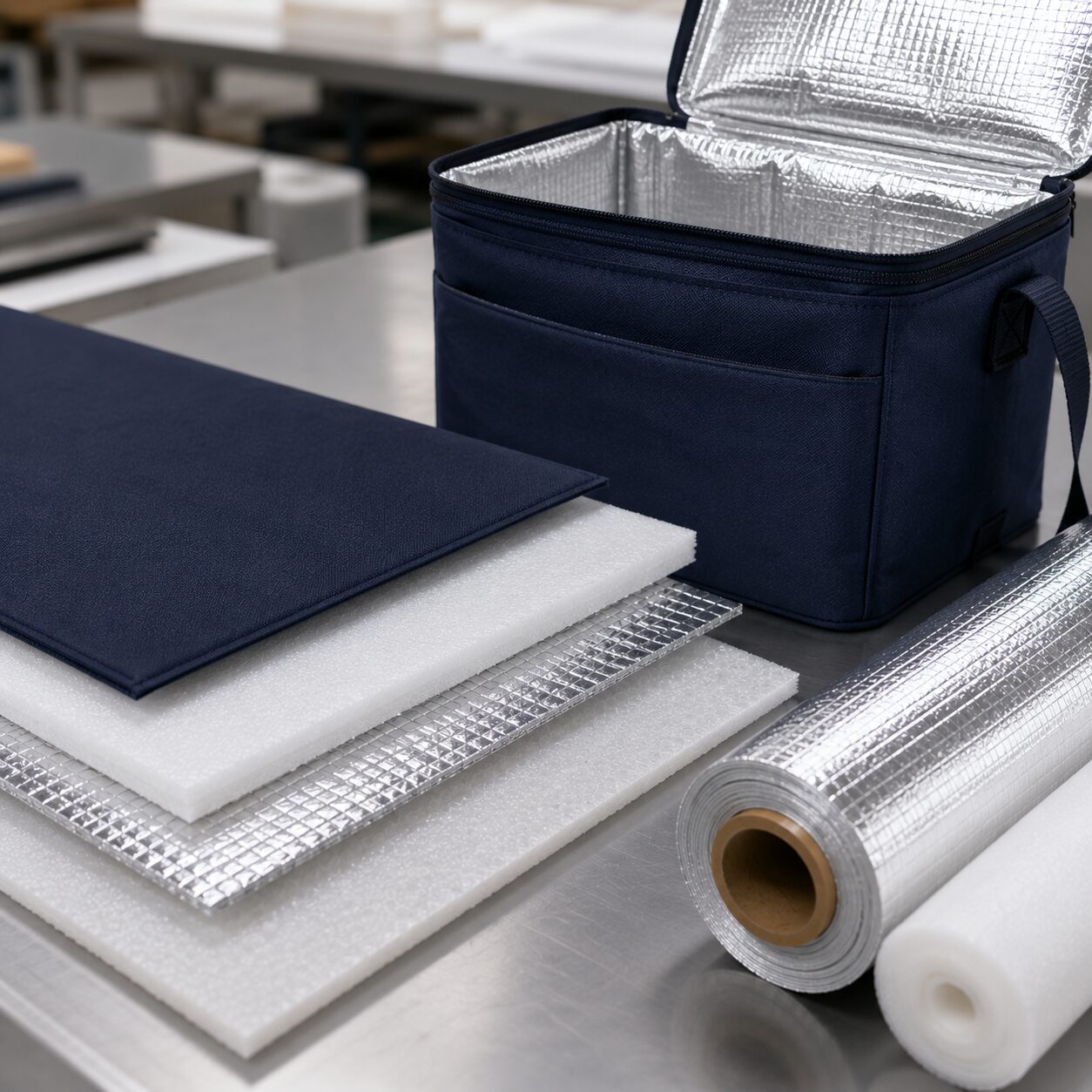
For our custom picnic bag collection, Aimazing offers common EPE foam insulation thicknesses of 3 mm, 5 mm, 8 mm, and 10 mm.
These are actual material options published on our product website, rather than estimated performance figures.
The appropriate choice depends on bag dimensions, thermal requirements, weight, and budget.
| Insulation Option | Design Direction |
|---|---|
| 3 mm EPE foam | Lightweight designs with modest insulation requirements |
| 5 mm EPE foam | General-purpose insulated outdoor bags |
| 8 mm EPE foam | Projects requiring a thicker insulation layer |
| 10 mm EPE foam | Larger or more insulation-focused designs |
Thicker foam can help reduce heat transfer, but it does not automatically guarantee a particular cooling duration. The zipper, lining, bag opening frequency, ambient temperature, and quantity of ice packs must also be considered.
Leak Resistance and Cleaning
PEVA is widely used for lightweight, easy-to-clean cooler linings. For projects requiring stronger liquid containment, compatible thermoplastic liners and heat-welded construction can be evaluated.
It is important to distinguish between a water-resistant fabric and a leakproof finished compartment. A welded liner still needs to be checked at its seams, corners, and closure.
Food safety is another practical consideration.
According to FoodSafety.gov, perishable food in a cooler should be maintained at 40°F (4°C) or below.
That temperature is a food-storage guideline, not a claim that an insulated bag can achieve it without sufficient ice packs or other cold sources.
For brands developing products intended to carry perishable food, we recommend evaluating cooling performance under realistic loading and outdoor conditions.
Detachable Mounting Systems
Hook-and-loop straps, adjustable webbing, buckles, or purpose-designed frame attachments can allow the cooler body to be removed.
The best solution should be easy for customers to operate while preventing excessive movement during transport.
A detachable design also offers another advantage: the insulated compartment can be cleaned or stored separately from the wheeled frame.
4. Picnic Bag Trolley Set: Storage That Adds Retail Value
For lifestyle brands, a picnic bag trolley set can offer more than chilled storage.
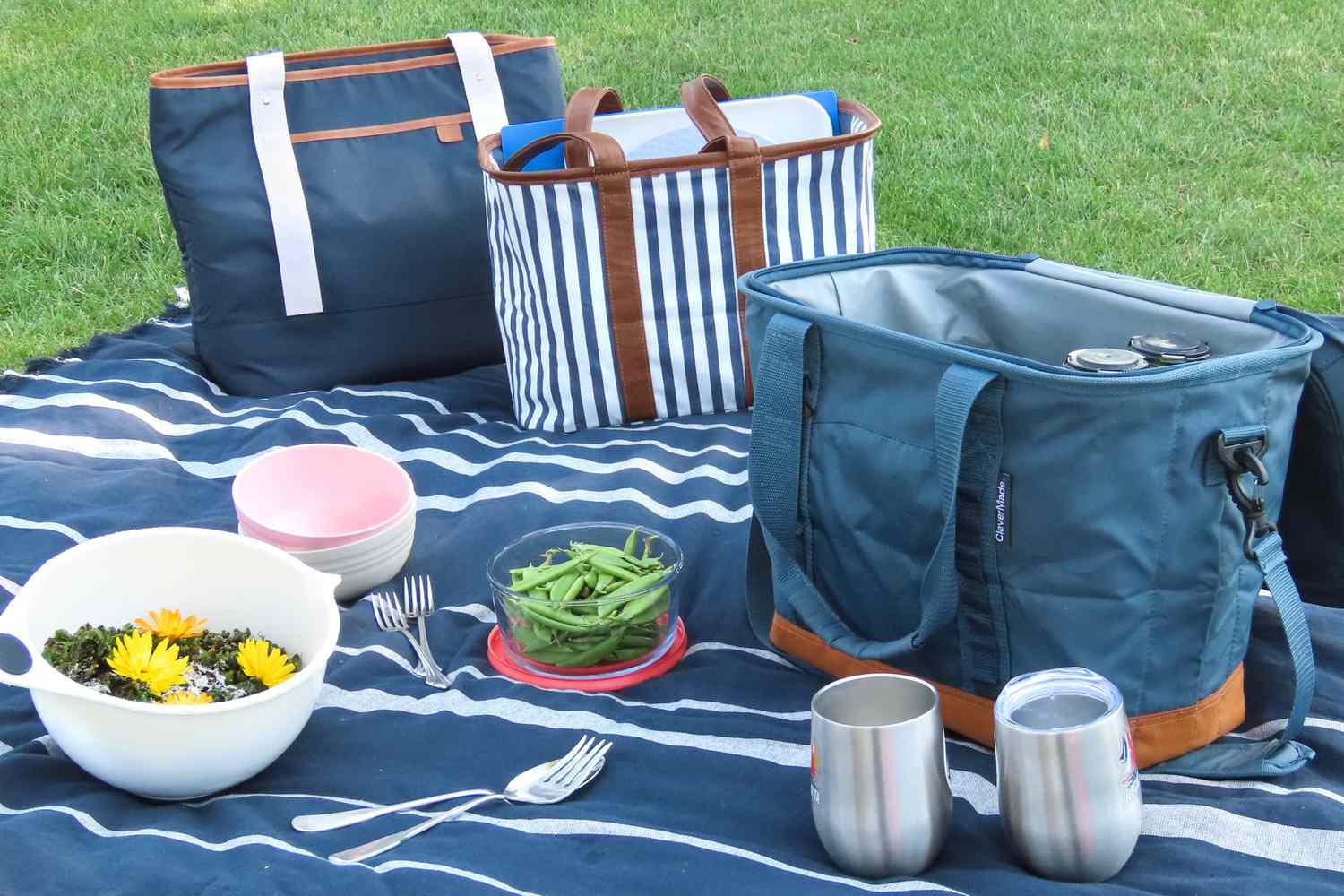
Customers may also want space for cutlery, plates, drinking glasses, a blanket, and other outdoor dining essentials. Bringing these functions together can create a more complete retail product.
However, adding too many accessories may increase the total weight, packaging volume, and production cost.
We recommend choosing accessories according to the target customer rather than including every available feature.
Practical Storage Features
Separated compartments: Keeping tableware away from condensation and ice packs helps maintain organization and makes cleaning easier.
Bottle and glass protection: Padded dividers or elastic holders reduce movement during transport. For brands building wine-focused outdoor collections, our custom wine bag range provides related examples of insulated storage and bottle organization.
Blanket attachment: External straps can hold a rolled blanket without taking up space inside the cooler.
Removable accessories: Detachable pouches and dividers give customers more flexibility and may simplify cleaning.
A well-organized set should make outdoor dining more convenient without adding unnecessary complexity.
5. Outer Materials, Handle Design, and Foldable Storage
Material selection influences both product durability and brand positioning.
For a wheeled picnic cooler trolley bag, common choices include polyester Oxford fabric, nylon, coated textiles, and reinforced bottom panels.
Polyester is often suitable for cost-conscious retail programs, while selected nylon fabrics may be preferred for lighter or more premium products.
Water-resistant coatings can also help protect the exterior during normal outdoor use.
Details That Buyers Should Evaluate
The lower section of the bag deserves particular attention because it may be exposed to damp grass, mud, and repeated contact with the frame.
A reinforced or wipe-clean base can make maintenance easier, while secure attachment points help distribute the weight between the fabric body and trolley structure.
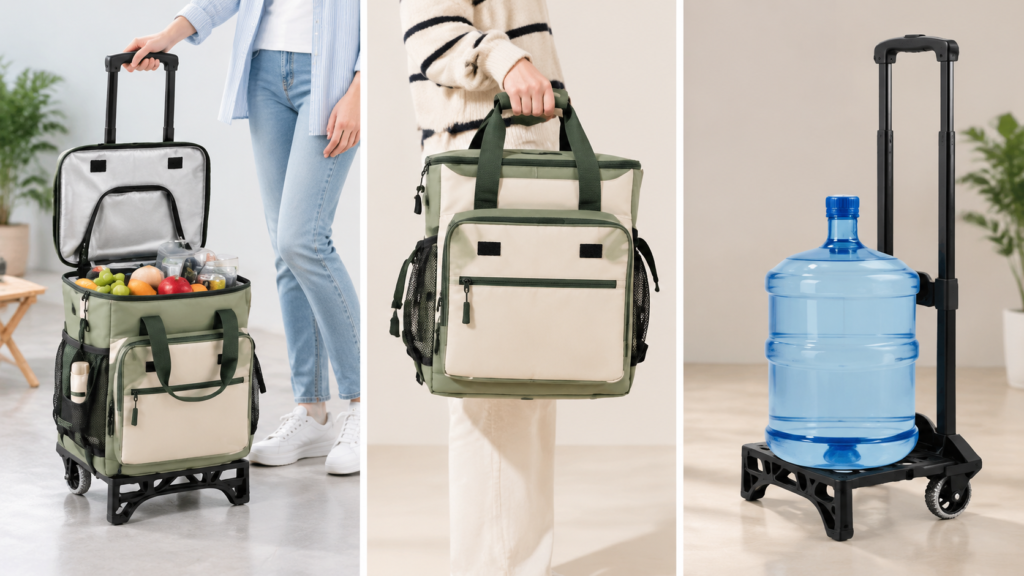
Handle height is another important factor. A telescopic handle should suit the intended user group and lock securely at its operating positions.
For export projects, we also encourage buyers to consider the folded dimensions.
A compact design may reduce storage and shipping volume, but the folding mechanism should not compromise the product’s stability or ease of assembly.
These decisions are best reviewed together before finalizing the sample.
6. Quality Control: What Should Be Tested Before Bulk Production?
Quality inspection should cover the complete product rather than the cooler bag and trolley frame separately.
At Aimazing, our bag manufacturing quality-control approach includes material inspection, production checks, and finished-product evaluation. For wheeled designs, additional tests should be agreed upon according to the frame construction and hardware specifications.
The following checks are especially useful during product development.
| Testing Area | Suggested Evaluation | What It Helps Verify |
|---|---|---|
| Frame strength | Static loading at the agreed payload | Deformation and connection stability |
| Wheel durability | Loaded rolling tests on selected surfaces | Wheel wear, axle movement, and rolling performance |
| Handle mechanism | Repeated extension and locking | Reliability of telescopic components |
| Folding joints | Repeated folding and unfolding | Hinge wear and locking security |
| Cooler lining | Water-containment testing | Leakage at seams and corners |
| Insulation | Temperature logging under controlled conditions | Cooling performance for the specified application |
These are recommended evaluation methods, not published pass results for a specific Aimazing trolley model.
Test loads, cycle counts, temperature conditions, and acceptance criteria should be agreed upon before testing.
Our quality control process provides additional information about how we approach product inspection and manufacturing consistency.
For wholesale buyers, this matters because an attractive sample alone cannot demonstrate long-term durability. The approved product should also be repeatable in bulk production.
7. Manufacturing Data: What Aimazing Can Offer OEM Buyers
Choosing a manufacturing partner also means understanding the materials, development process, and production requirements available for your project.
Aimazing’s manufacturing roots date back to 2000, with OEM and ODM experience across functional and insulated bag categories.
Rather than relying on broad performance promises, we prefer to discuss specifications that can be confirmed before sampling.
| Manufacturing Detail | Aimazing Reference |
|---|---|
| Manufacturing background | Since 2000 |
| Common EPE foam options | 3, 5, 8, and 10 mm |
| Standard custom bag MOQ | Starting from 100 pieces |
| Standard soft-bag sampling target | 3–5 days after specifications are confirmed |
| Customization scope | Materials, dimensions, insulation, branding, compartments, and packaging |
These figures describe our general bag manufacturing capabilities. Complex trolley structures, customized metal frames, or newly developed hardware may require different minimum quantities and longer sampling schedules.
We recommend confirming those requirements during the initial project review.
8. OEM Development: From Product Concept to Approved Sample
Developing a successful custom product requires cooperation between the buyer and the manufacturing team.
At Aimazing, we work with brands, wholesalers, and distributors to turn product requirements into practical manufacturing specifications.
For wheeled cooler projects, we recommend the following development sequence:
- Define the intended application. Confirm the target customer, expected load, terrain, insulation requirements, and retail positioning.
- Review the design. Evaluate dimensions, cooler construction, trolley hardware, wheel options, and estimated packaging volume.
- Develop the sample. Check material combinations, attachment systems, visual appearance, and usability.
- Verify performance. Review the agreed loading, mobility, lining, and cooling requirements before approving the final specification.
- Confirm bulk production. Finalize the approved sample, quality criteria, packaging, quantity, and production schedule.
In our existing cooler bag case studies, one customer project was finalized after two sampling rounds, during which the insulation structure, base support, and lining details were refined.
Although that case involved a different cooler bag design, it illustrates an important part of our development approach: practical improvements often become clear during sampling rather than at the initial design stage.
We see our role as more than producing a product from a drawing. As a manufacturing and development partner, we help buyers review design choices, identify potential production challenges, and refine the details before moving into larger orders.
Conclusion: Choosing the Right Picnic Trolley Design for Your Market
A successful picnic trolley combines practical mobility, suitable carrying capacity, reliable insulation, and thoughtful storage.
The strongest design is not necessarily the one with the thickest frame, largest wheels, or most accessories. It is the one that meets the needs of its intended users without unnecessary cost or complexity.
For brands developing a new product line, clear specifications and sample testing are essential before mass production.
With manufacturing experience dating back to 2000, Aimazing supports custom insulated bag development through material selection, structural design, sampling, and OEM production.
Planning a custom outdoor cooler project?
Contact Aimazing to discuss your design, target market, estimated order quantity, and required features. Our team can help you evaluate the options and develop a practical solution for your brand.