
Traveling with valuable bottles can be stressful, especially when luggage is exposed to sudden movements, pressure, and unpredictable handling. Whether bringing home a special purchase from a vineyard or preparing drinks for a weekend getaway, proper packaging makes a significant difference.
Ordinary shopping totes and decorative gift carriers may look attractive, but they often lack the internal support needed for transportation. Protective padding, secure bottle positioning, and thoughtful compartment layouts can help reduce damage risks while improving convenience. For brands and retailers, these design details also create opportunities to develop more functional and differentiated products.
1. Why Wine Travel Bags Need More Than Basic Bottle Storage
Modern wine travel bags are designed to solve several problems simultaneously: protecting fragile glass, organizing bottles, maintaining convenient portability, and fitting different travel scenarios. Their construction should reflect how customers actually transport and use their purchases.
For example, a wine bottle travel bag intended for weekend trips requires different features from a decorative carrier used for gifting. Travelers may need a compact structure that fits inside a suitcase, while winery visitors may prefer a lightweight shoulder bag with reinforced handles.
The most important consideration is the intended application. Road trips, air travel, outdoor picnics, and retail gifting involve different handling conditions. A successful design begins by identifying these conditions before choosing materials, dimensions, and accessories.
For brands exploring different product styles, our custom wine bag manufacturing collection includes single-bottle carriers, insulated totes, and customizable designs suited to multiple markets.
2. Bottle Protection: Materials and Structural Design
Protective Padding Around Fragile Glass
Reliable wine bottle travel protector bags require more than a soft fabric exterior. The internal structure should help absorb minor impacts, limit unwanted movement, and reduce contact between bottles and surrounding objects.
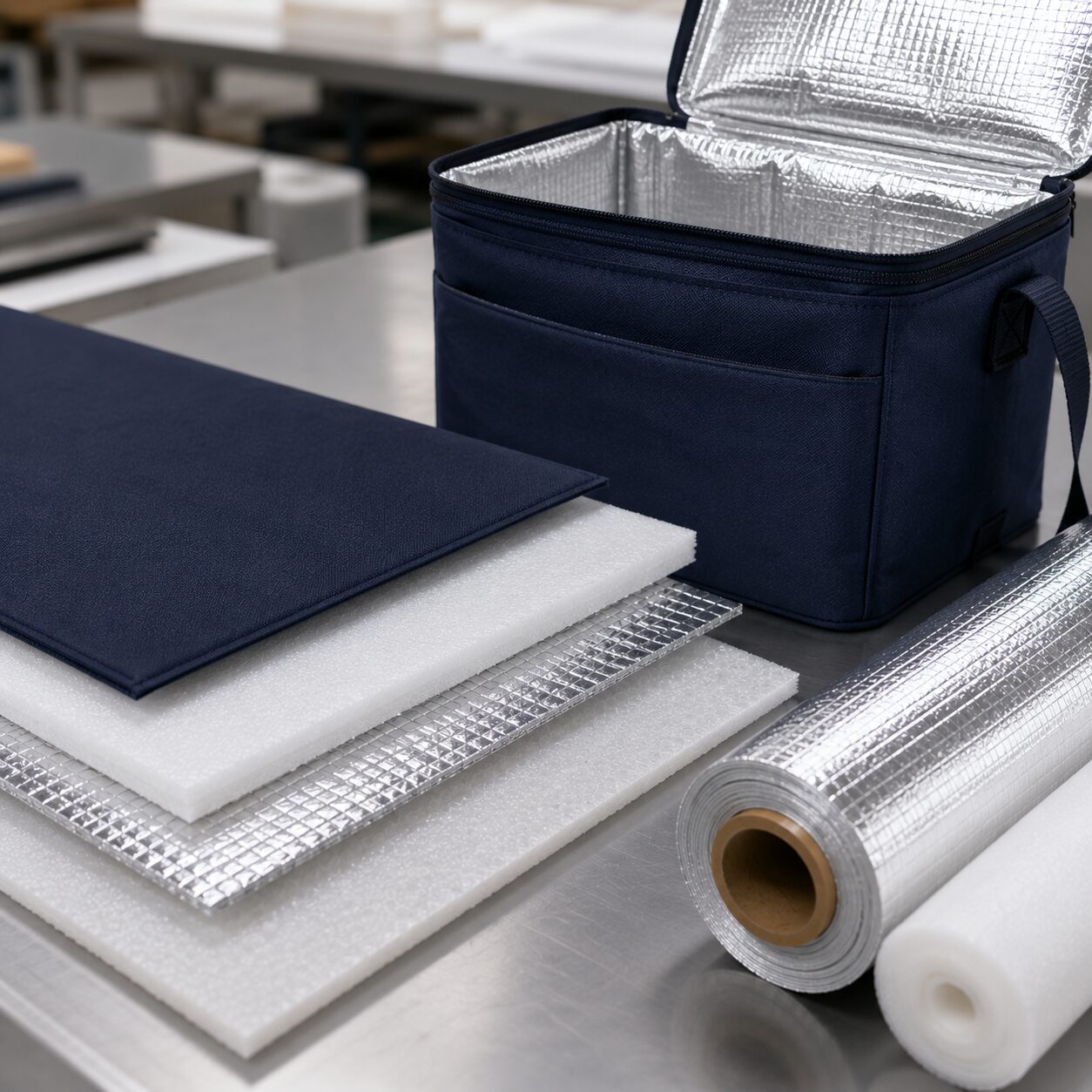
EPE foam, EVA foam, padded polyester, and protective inserts are commonly considered during product development. Each material offers different characteristics in flexibility, weight, thickness, and structural support.
For example, soft foam can cushion curved bottle surfaces, while a reinforced bottom panel helps the carrier maintain its shape when loaded. Additional padding around the base and shoulders of the bottles can be especially useful because these areas may experience concentrated contact during transportation.
Choosing Between Soft-Sided and Structured Construction
A wine case travel bag can use a lightweight soft-sided structure, a semi-rigid insert, or a reinforced shell, depending on the level of protection required.
Soft-sided constructions are convenient for everyday carrying and storage. Semi-rigid designs offer additional shape stability, making them attractive for premium retail products and organized travel accessories.
However, no fabric bag should automatically be considered breakproof. Protective performance depends on the complete construction, including padding thickness, bottle positioning, closures, and the conditions under which the product is used.
For OEM development, we recommend evaluating sample constructions with actual target bottles before approving production materials.
3. Divider Systems: Preventing Bottle-to-Bottle Contact
Fixed and Removable Dividers
An effective wine bottle holder travel bag should keep multiple bottles separated while allowing convenient loading and unloading. Without suitable dividers, glass surfaces may collide when the carrier is lifted, tilted, or placed inside a vehicle.
Fixed padded dividers are suitable for products with a consistent bottle capacity. Removable dividers offer greater flexibility, allowing customers to adjust the internal space for different bottle combinations or other travel accessories.
The divider material also affects product positioning. Fabric-covered foam creates a softer interior, while reinforced panels can provide additional compartment stability.
Designing Around Different Bottle Shapes
Bottle diameter, shoulder profile, and height vary between standard Bordeaux bottles, wider Burgundy bottles, and sparkling wine bottles.
For this reason, the internal dimensions of wine travel bags should be based on the actual bottle formats customers intend to carry rather than assuming one universal compartment size.
During product development, our team can adjust compartment width, divider height, fastening methods, and base support to accommodate different bottle configurations.
For brands selling several wine-related products, removable inserts can also create opportunities to develop coordinated product collections without requiring a completely different exterior design for every model.

4. Luggage-Friendly Design for Road Trips and Air Travel
Compact Shapes and Secure Packing
A wine case travel bag intended for suitcase storage should minimize unnecessary bulk while providing enough space for protective materials. An excessively large carrier may allow bottles to move, while an overly tight compartment can make loading difficult or place pressure on vulnerable areas.
Flat exterior panels, compact handles, secure zippers, and restrained hardware profiles can improve packing convenience.
For road trips, a stable base and reinforced carrying points help users transfer bottles between vehicles, accommodation, and outdoor locations.
Added Protection for Checked Luggage
Travelers may choose wine bottle travel protector bags as part of a larger checked-luggage packing system. However, a padded carrier alone cannot eliminate the risks associated with baggage handling.
For checked luggage, bottles should be securely closed and individually protected, with additional containment to reduce damage from potential leakage. They should be positioned away from hard suitcase edges and surrounded by suitable cushioning.
The outer suitcase must provide appropriate structural protection, and the complete packing arrangement should be evaluated rather than relying only on the bottle carrier.
Airline Restrictions and Travel Considerations
For a wine bottle travel bag designed for international travelers, practical product information should also explain that transport rules vary between airlines and destinations.
In the United States, standard 750 ml bottles generally exceed the TSA’s 100 ml carry-on liquid limit and therefore normally need to travel in checked baggage unless a specific exemption applies.
The Federal Aviation Administration’s guidance on alcoholic beverages explains that beverages containing 24% alcohol by volume or less are not subject to its hazardous-material quantity limit for checked baggage. Stronger beverages above 24% and up to 70% alcohol are subject to additional packaging and quantity restrictions.
Travelers should always verify airline policies and destination customs regulations before departure.
For manufacturers and private-label brands, this distinction matters. A product can be designed for convenient suitcase packing without claiming guaranteed protection or automatic airline approval.
5. Wine Glass Protection: A Separate Design Challenge
Why Glassware Needs Dedicated Compartments
A wine glass travel bag must address a different set of structural challenges from a bottle carrier. Wine glasses have delicate rims, narrow stems, and irregular shapes that require individualized support.
Placing glasses directly beside heavy bottles increases the possibility of damage during handling. A safer design uses dedicated compartments, padded sleeves, or separate protective inserts to limit contact between fragile components.
For picnic and hospitality products, organizing the glasses is just as important as protecting them.
Developing Coordinated Wine and Glass Sets
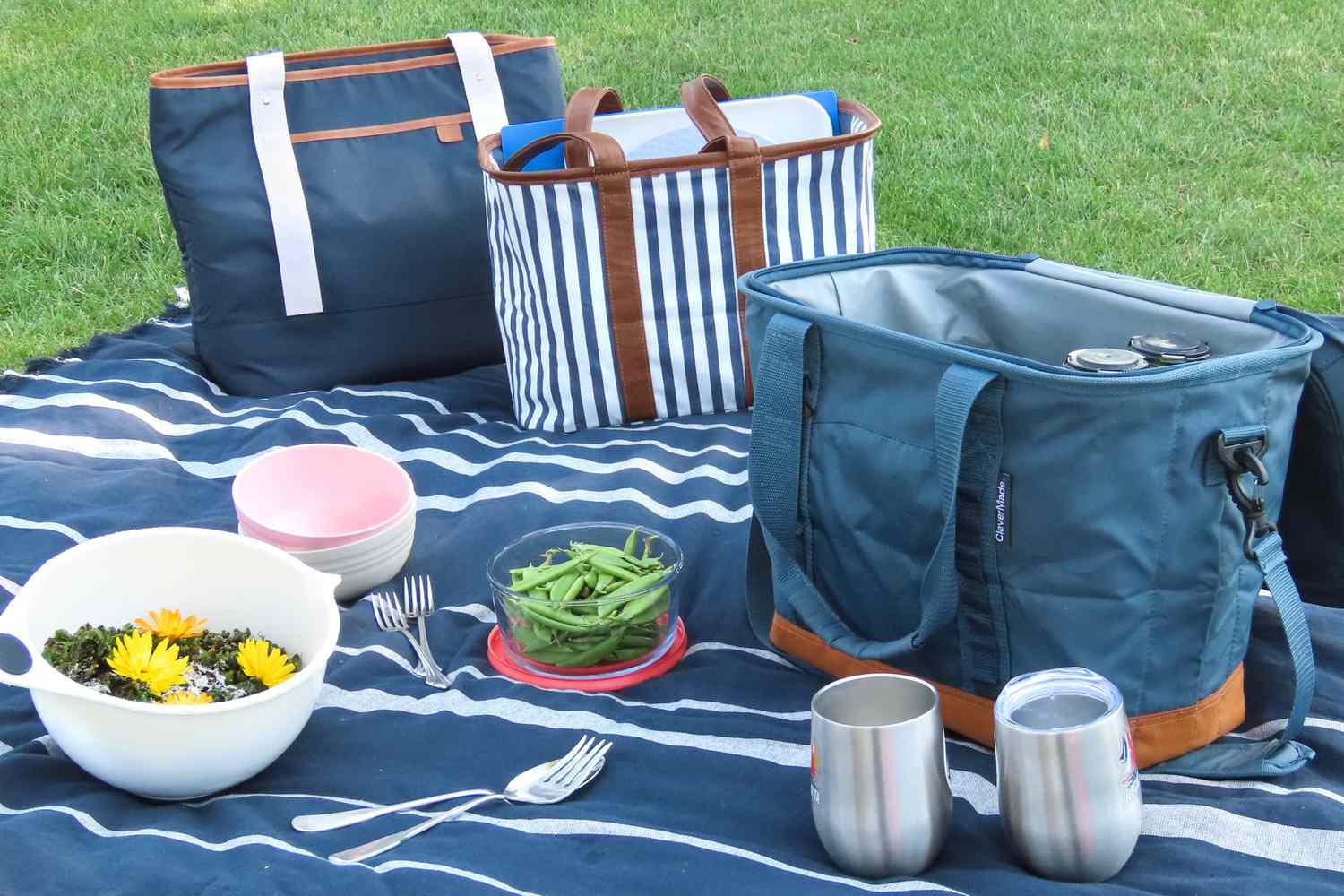
A premium wine glass travel bag can form part of a larger picnic or hospitality kit that includes bottle storage, glass compartments, and accessory pockets.
For example, a two-bottle picnic carrier might incorporate separate padded glass sleeves, a removable divider, and an external pocket for a corkscrew or napkins.
The exact arrangement depends on weight distribution and available space. Heavy bottles should remain stable, while fragile glassware should be isolated from concentrated loads.
This type of multifunctional design can offer brands greater opportunities for gift bundles, outdoor lifestyle collections, and higher-value retail sets.
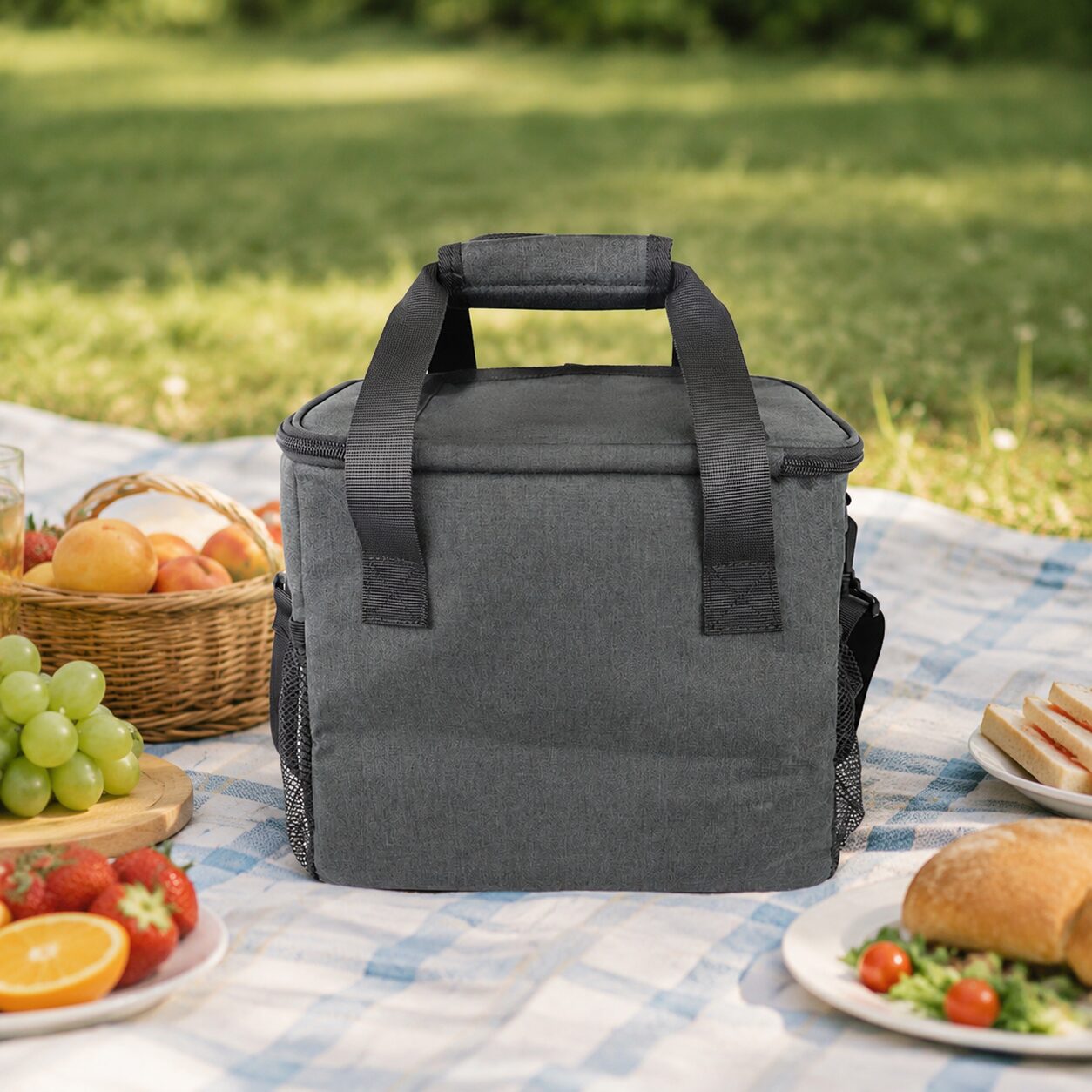
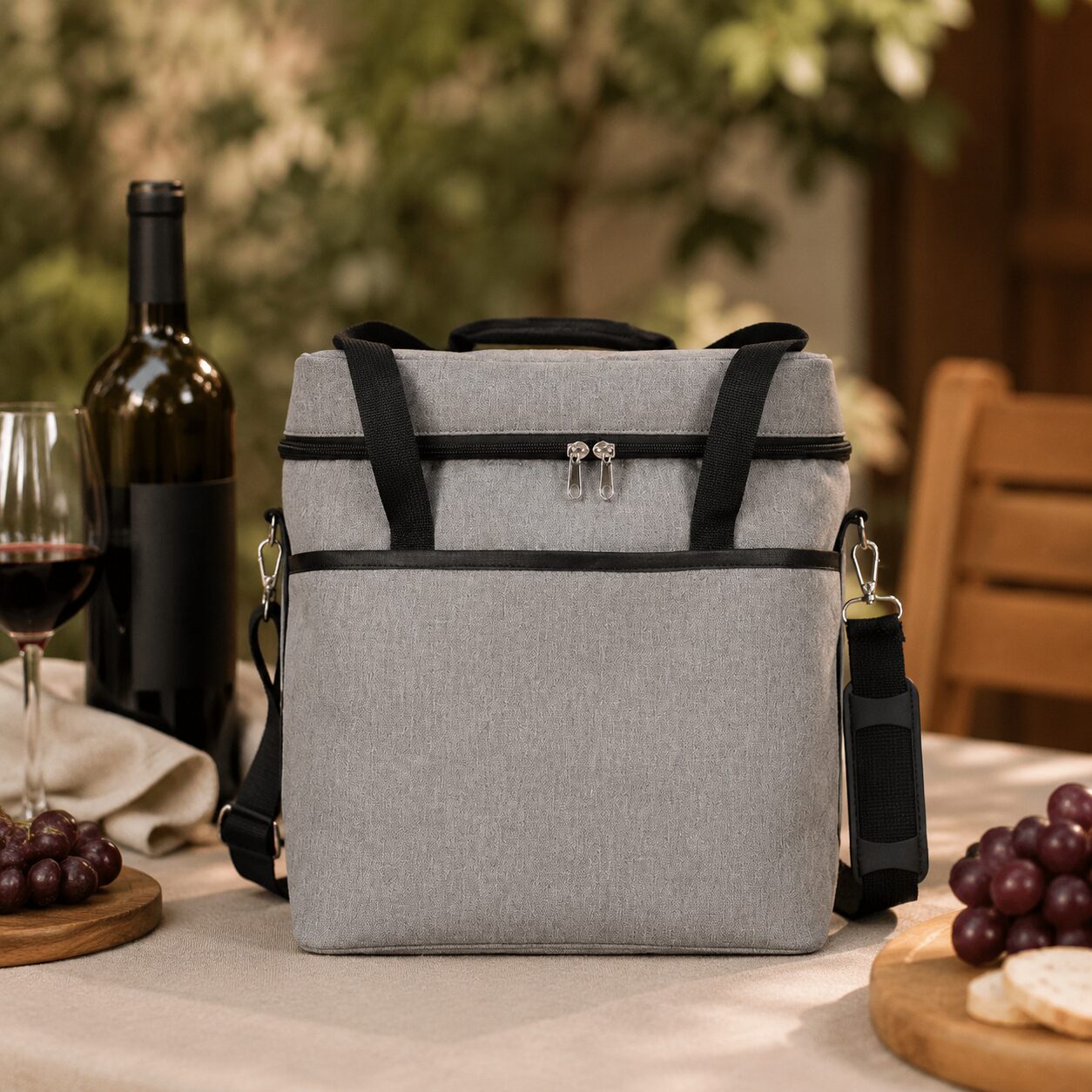
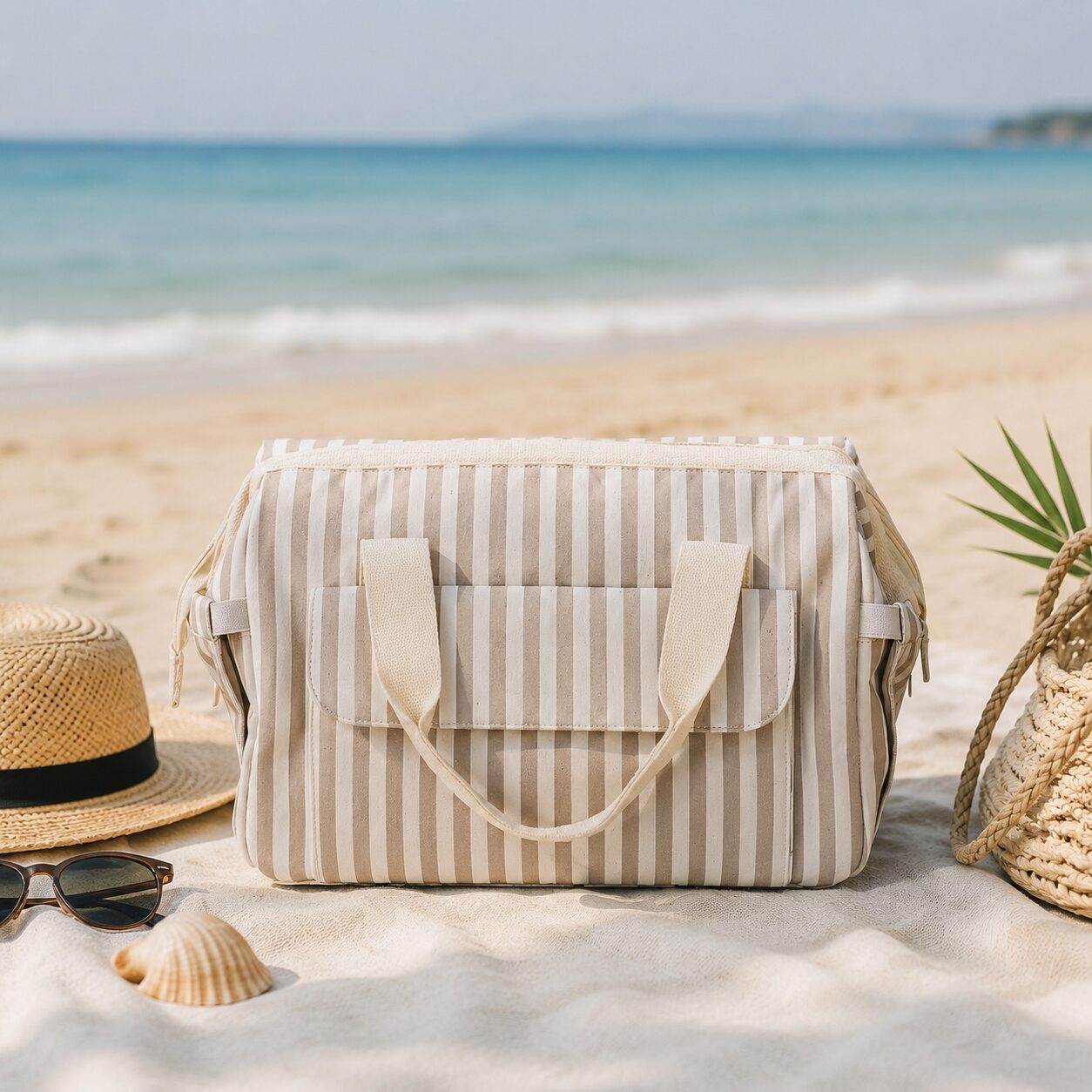
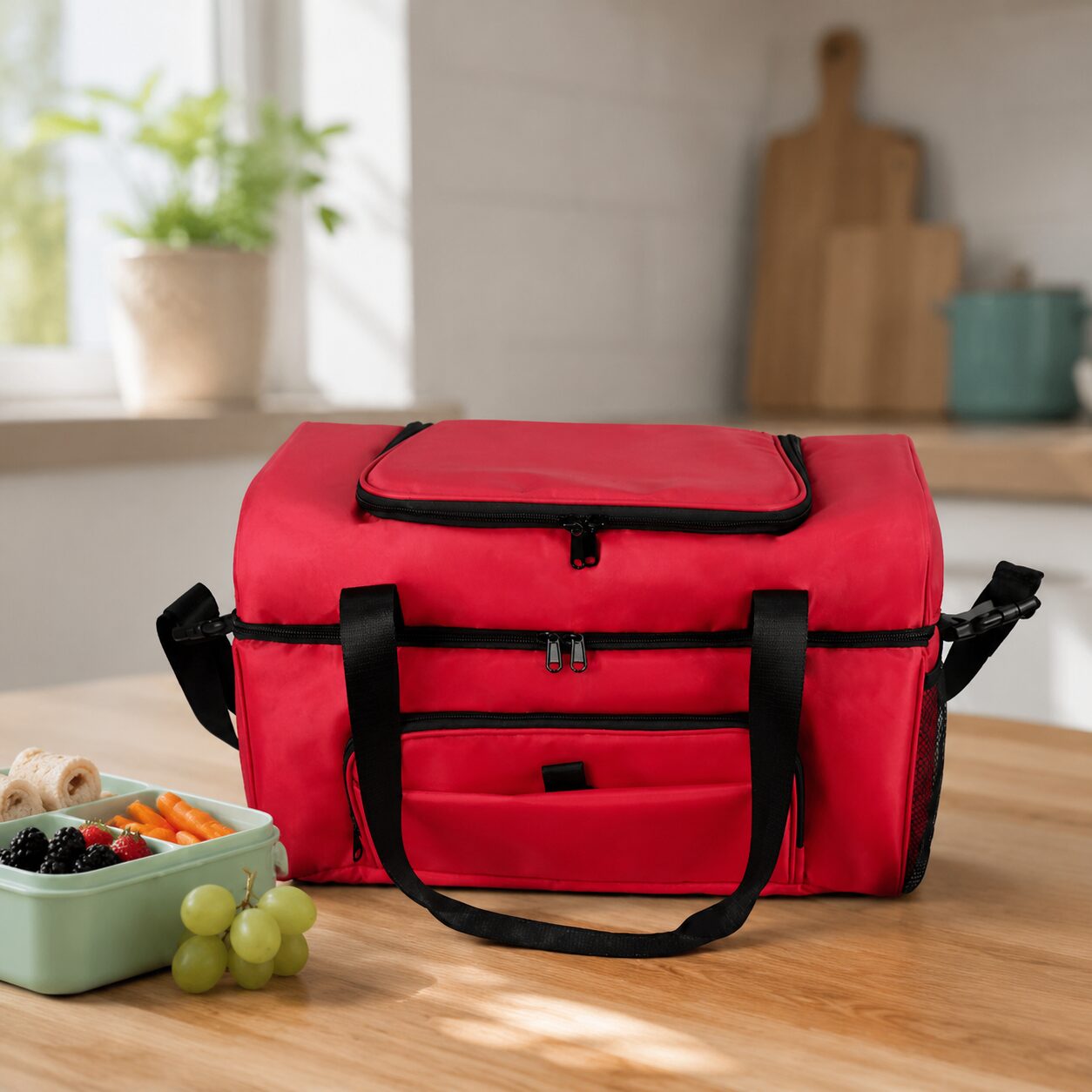
Our Picnic Insulated Wine & Cooler Tote Bag demonstrates a related multifunctional approach to insulated beverage and food storage. Additional protective compartments can be considered when developing a customized version for specific brand requirements.
6. Insulation, Fabrics, and Long-Term Durability
Choosing Materials According to Real Use
Some wine travel bags prioritize impact protection, while others focus on thermal insulation or everyday portability. Understanding these differences helps brands avoid adding unnecessary materials that increase production costs without providing meaningful customer benefits.
Oxford fabric and nylon are practical options for exterior construction. Their durability, relatively low weight, and available surface finishes make them suitable for many travel and outdoor applications.
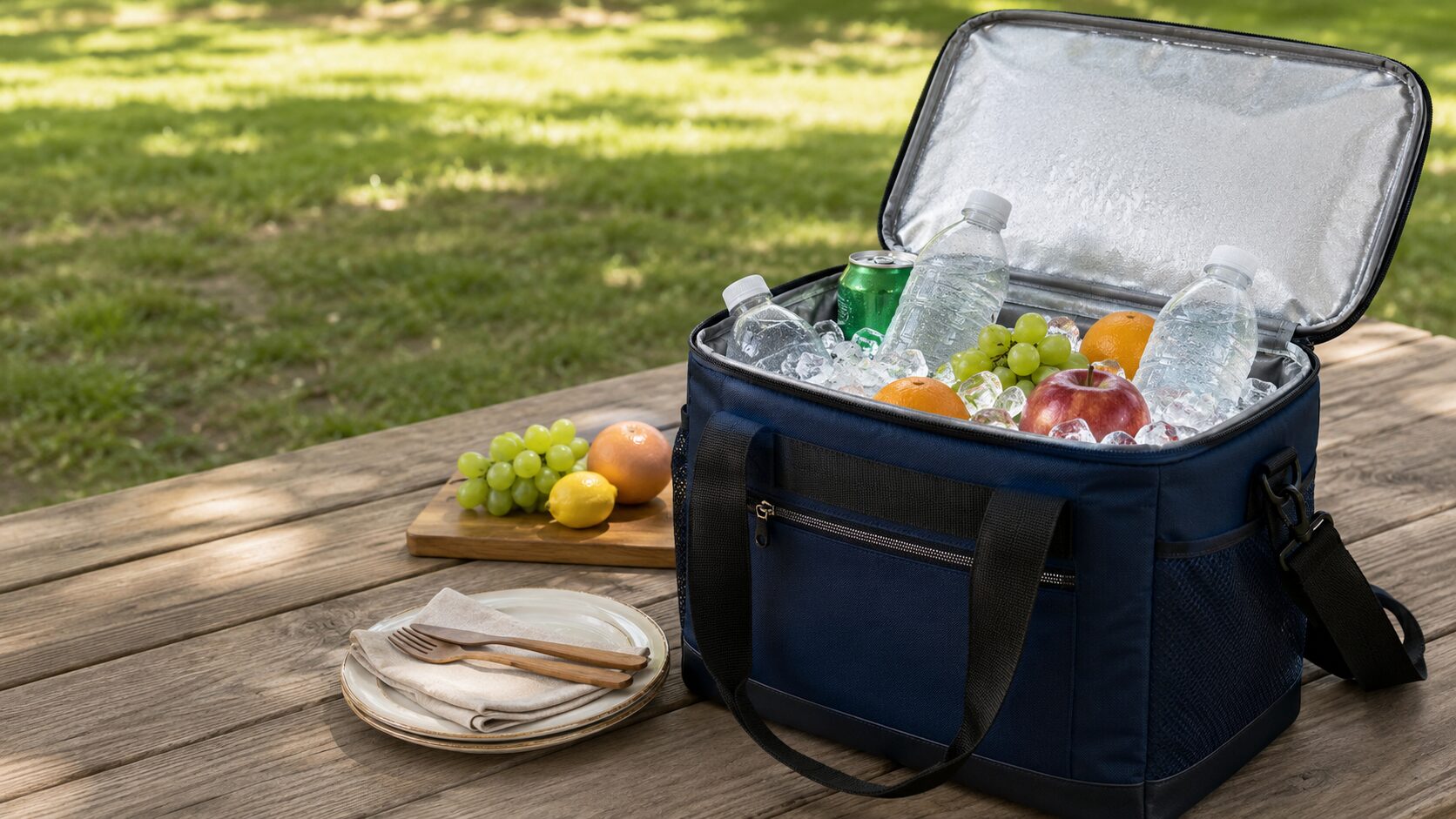
For insulated designs, EPE foam can be combined with PEVA or aluminum-foil laminated linings to slow temperature changes. The achievable thermal performance depends on construction, ambient conditions, initial bottle temperature, and any cooling elements used.
A wine bottle holder travel bag with insulation may be appropriate for short outdoor journeys, while a non-insulated padded carrier may be more suitable for compact luggage storage.
It is important to distinguish between insulation and impact resistance. A thermal layer may provide some cushioning, but its presence does not automatically establish that the product can withstand repeated impacts.
Construction Details That Matter
Zippers, reinforced handles, shoulder straps, stitching, and bottom panels all influence the practical lifespan of a carrier.
At Aimazing, our OEM/ODM development process considers the relationship between materials, structure, and real-world applications. We help brands evaluate fabric combinations, insulation thickness, compartment layouts, and load-bearing construction according to their target markets.
Our OEM cooler bag manufacturing experience supports product development for lifestyle brands, wholesalers, and private-label buyers looking for practical, customizable solutions.
7. B2B Development Example: Creating a Two-Bottle Travel Collection
European wine-accessory brand planning to introduce a premium two-bottle travel collection for winery visitors, gift retailers, and online shoppers.
The original concept features a lightweight canvas-style exterior, two internal compartments, and a removable shoulder strap. However, the brand faces three development challenges: accommodating different bottle shapes, improving protection without excessive bulk, and keeping production costs suitable for wholesale distribution.
Step 1: Translating the Idea Into Specifications
Instead of selecting a standard bag and simply adding a logo, our development approach would begin with the intended bottle types, carrying scenarios, price targets, and packaging requirements.
For this project, the design team could establish the following requirements:
- Two separate compartments for typical 750 ml wine bottles, with clearance checked against the brand’s actual bottle samples.
- Removable padded dividers and a reinforced bottom panel to improve support and organization.
- A detachable shoulder strap, durable handles, and a compact exterior suitable for car travel and short trips.
- Optional insulation, custom woven labels, and retail-ready packaging for different sales channels.
Step 2: Improving the Structure Through Sampling
An initial sample might reveal that the padded divider creates insufficient clearance for wider sparkling wine bottles.
Rather than proceeding directly to mass production, the design could be adjusted by modifying the compartment geometry, divider thickness, and internal fastening positions.
The revised sample would then be evaluated using representative bottle shapes, including a loaded carrying trial and a review of stitching, handles, and base stability.
The objective is not simply to create an attractive sample. It is to establish a construction that can be consistently reproduced during bulk manufacturing.
Step 3: Developing a Commercially Practical Product Range
Once the core construction is established, the brand could consider three variations built around a shared design platform: a basic padded carrier, an insulated travel edition, and a premium gift edition with upgraded exterior materials.
Using compatible structural components across these versions may simplify sourcing, improve production consistency, and help control development costs.
For a brand, this approach offers a more strategic alternative to purchasing unrelated stock designs from multiple suppliers. It creates opportunities for a recognizable collection, differentiated pricing, and more consistent product quality.
This scenario illustrates how Aimazing’s product-development capabilities can support brands beyond basic logo customization. Actual materials, testing requirements, pricing, and production decisions would be confirmed through sampling and quotation.

8. What Brands Should Confirm Before OEM Production
Successful wine travel bags require coordination between product positioning, structural engineering, material sourcing, and manufacturing consistency. Brands should establish clear specifications before committing to large-scale orders.
Product Requirements and Sampling
Important development details include target bottle dimensions, compartment quantity, divider construction, exterior fabric, interior padding, total loaded weight, carrying method, and required packaging.
For protective products, testing plans should reflect realistic usage. Loaded carry trials, zipper operation, stitching strength, dimensional checks, and application-specific handling evaluations can identify problems before production begins.
Customization and Manufacturing Support
Aimazing provides OEM/ODM services for brands, wholesalers, retailers, and distributors seeking customized functional bags. Our development support covers material recommendations, dimensional adjustments, compartment engineering, branding applications, sampling, and bulk production.
Our customization process outlines how design requirements are translated into samples, approved specifications, and manufacturing arrangements.
Custom wine bags can start from a minimum order quantity of approximately 100 pieces, depending on materials, colors, and construction complexity. Special components or highly customized designs may require different quantities.
For buyers, the value of an experienced manufacturing partner lies not only in the finished product, but also in the ability to identify structural problems, propose workable alternatives, and support consistent production across future orders.
9. Frequently Asked Questions
Can a Padded Wine Carrier Prevent Bottles From Breaking?
A padded carrier can reduce certain impact and contact risks, but it cannot guarantee that glass bottles will remain undamaged under all handling conditions. Protection depends on the construction, fit, external forces, and any additional packaging.
Are Removable Dividers Better Than Fixed Dividers?
Removable dividers provide greater flexibility for varying bottle quantities and sizes. Fixed dividers may offer simpler construction and more consistent compartment positioning. The better option depends on the intended product application.
Can an Insulated Wine Bag Keep Bottles Cold During Travel?
Insulated materials help slow temperature changes, but they do not actively refrigerate bottles. Cooling performance depends on insulation thickness, surrounding temperature, travel duration, and whether appropriately designed cooling packs are used.
Can Brands Develop Matching Wine Carriers and Picnic Accessories?
Yes. OEM/ODM development can include matching bottle carriers, insulated picnic totes, accessory organizers, and coordinated gift sets. Shared materials, colors, and branding details help create a consistent retail collection.
Conclusion: Better Protection Begins With Better Product Development
A well-designed bottle carrier should deliver more than attractive packaging. Protective construction, suitable dividers, organized storage, comfortable carrying, and thoughtful material selection all contribute to a better travel experience.
For brands entering the wine-accessory market, product differentiation increasingly depends on how effectively these details respond to customer needs. A carefully developed collection can serve multiple applications, from vineyard visits and road trips to outdoor events and premium gifting.
At Aimazing, we work with brands and wholesale buyers to transform product concepts into practical, customizable manufacturing solutions. Whether you are developing a new bottle carrier or improving an existing design, our team can support structural planning, material selection, sampling, and production.
Planning a custom wine bag collection for your brand?
Contact Aimazing to discuss your product requirements, target market, and OEM/ODM development options.