
1. Beyond Traditional Refrigeration: Applied Material Science in Sourcing an Insulin Cold Pack
Advanced biopharmaceutical supply chains demand precise molecular phase-change engineering rather than basic household cooling elements when specifying an insulin cold pack. Unstable therapeutic peptides break down rapidly when environmental conditions breach the strict 2°C to 8°C preservation bracket during active distribution and custom cargo routing. Industrial thermal designers compute exact latent heat thresholds to guarantee that internal phase-change components dissipate thermal loads uniformly across changing environmental exposures. This sophisticated thermal regulation prevents destructive temperature fluctuations throughout global logistics networks without risking primary drug safety. Precision refrigerant design ensures ultimate protection for delicate medical injectables when integrating any commercial insulin cold pack.
- Primary Question: How does industrial biotechnology dictate thermal calibration for medical refrigerants?
- Direct Answer: Biological peptide solutions require scientifically calculated phase-change thresholds to maintain chemical stability within the 2°C to 8°C bracket.
- Complementary Explanation: Computing exact latent heat absorption parameters prevents destructive temperature spikes during variable transit schedules and multi-modal logistics shifts.
2. Long-Haul Distribution: Structuring High-Capacity Thermal Cores for Intercontinental Transit
Balancing inner gel density with structured thermal insulation ensures container survival across aggressive airport tarmac conditions and international freight holds alongside a verified insulin cold pack. Manufacturing a specialized cold pack for insulin travel requires mapping environmental solar absorption profiles against internal barrier resistance values under rigorous simulated stress. Advanced thermodynamic validation proves that optimized gel structures prevent thermal drift during extended flight delays, customs holds, and severe weather events. Heavy-duty enclosure construction shields delicate biologics from extreme external climate variations during cross-border maritime shipping and airfreight transfer. Detailed thermal mapping guarantees uncompromised cold-chain integrity globally for corporate healthcare brand partners.
| Performance Metric | Laboratory Testing Protocol | Industrial Standard Requirement |
| Thermal Endurance | 24-hour continuous ambient test | Maintains stable 2°C to 8°C core range |
| Latent Heat Capacity | Differential scanning calorimetry | Exceeds 180 Joules per gram of active gel |
| Film Containment | Multi-ply polymer lamination | Resists delamination across 500 freeze cycles |
3. Regulatory Clearance: Formulating Passenger-Compliant Aviation Refrigerant Assemblies
Overcoming stringent liquid cargo prohibitions requires engineering semi-solid polymer matrices that pass international security screening immediately, powered by a standard insulin cold pack. Fabricating an approved tsa insulin cold pack involves sustaining a stable solid-phase consistency during rigorous X-ray imaging and physical security audits. Sophisticated macromolecular chemistry locks free moisture into resilient cross-linked structures that easily satisfy aviation regulatory volume limits across worldwide customs agencies. Factory compliance testing ensures that refrigerant units clear aviation inspections without administrative delays, security friction, or confiscation threats. Phase-state regulatory compliance guarantees unbroken passenger journeys across international airports and global frontiers.
- Primary Question: How do specialized medical refrigerants bypass international aviation liquid restrictions?
- Direct Answer: Formulating semi-solid gel structures maintains a solid phase state during X-ray screening protocols.
- Complementary Explanation: Sophisticated macromolecular chemistry locks free moisture into resilient cross-linked structures that satisfy strict regulatory limits during security checkpoints.
4. Syringe Architecture: Molded Thermal Geometries for Pen Injector Enclosures
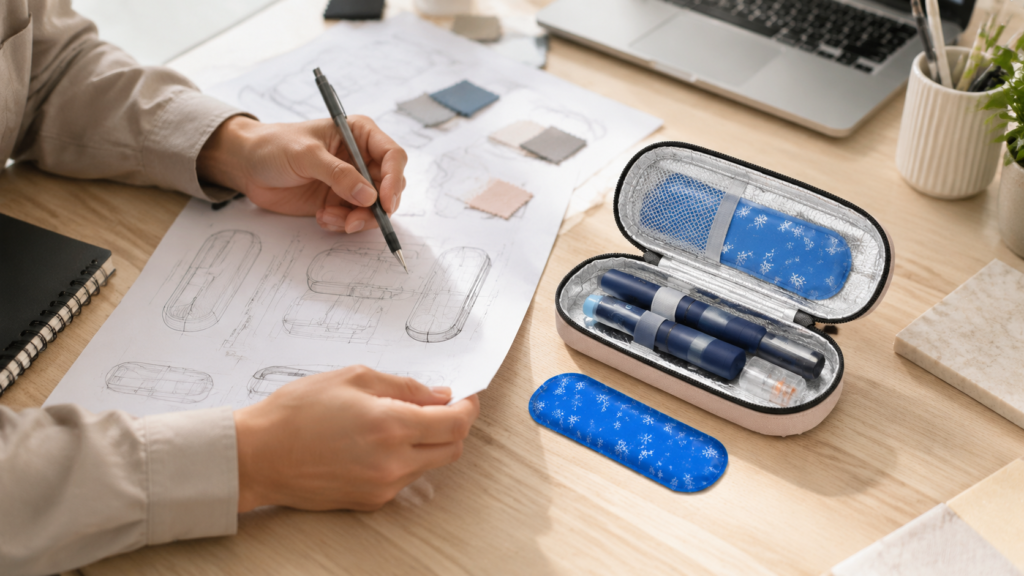
Molding curved, channel-engineered gel architectures wraps securely around pen injectors to eliminate dead-air insulation gaps while utilizing an insulin cold pack. Sculpting precise cold packs for insulin pens demands dedicated cavity molds that match cylindrical injector diameters precisely down to the fraction of a millimeter for optimal fit. Mathematical radius computations maximize direct physical contact with fragile glass pharmaceutical ampoules during transport and everyday handling. Contoured molding guarantees uniform cold dispersion over the entire injection assembly without creating thermal bridges or cold-spot freezing zones. Geometric integration transforms standard refrigerant elements into bespoke pharmaceutical shields tailored for medical excellence.
| Chemical Parameter | Specification Standard | Safety & Stability Objective |
| Toxicity Level | Non-toxic medical grade | Ensures complete safety during accidental exposure |
| Viscosity Index | Cross-linked polymer modifier | Prevents liquid pooling during phase transitions |
| Thermal Uniformity | Multi-point thermocouple array | Guarantees consistent cold distribution across surface |
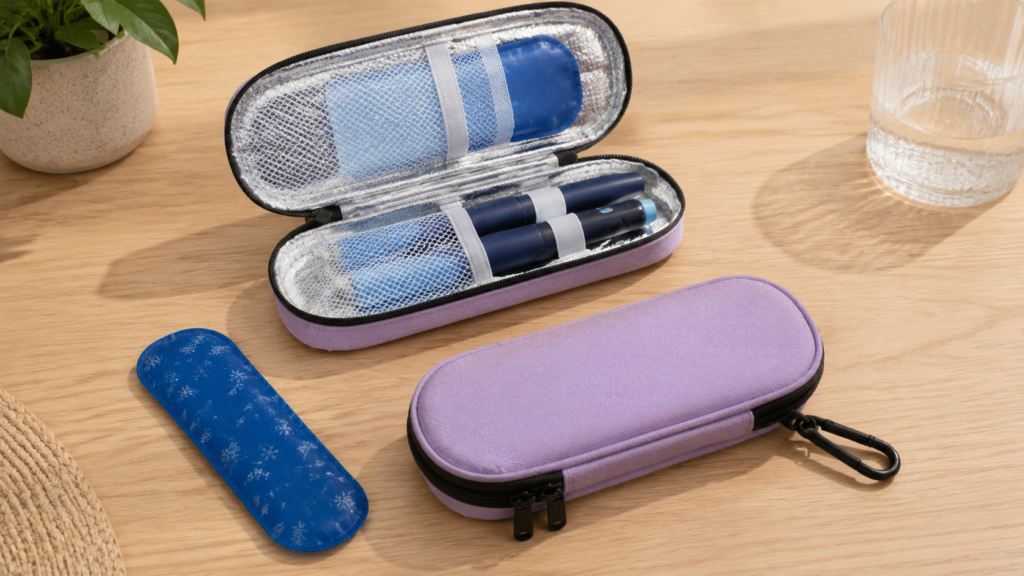
5. Urban Portability: Designing Featherweight Thermal Sub-Assemblies for Daily Commuters
Removing excess structural weight allows slim cooling units to integrate into compact daily carry cases and professional briefcases without causing shoulder discomfort, supported by an insulin cold pack. Engineering an agile travel ice pack for insulin involves reducing thermal mass volumes down to slender mobile device dimensions without losing latent refrigeration duration. Industrial pattern makers utilize advanced CAD software to eliminate dead airspace pockets surrounding the active cooling core entirely during prototype spatial layout. This efficient spatial distribution keeps life-saving medication chilled throughout active urban transit routines and professional schedules. Compact-footprint engineering reinvents ultra-slim medical carrying formats for contemporary users navigating dense metropolitan landscapes.
- Primary Question: How do engineers reduce volumetric bulk in ultra-compact daily carry cooling packs?
- Direct Answer: Engineers eliminate dead airspace and shrink thermal mass dimensions down to smartphone footprints.
- Complementary Explanation: Advanced spatial optimization allows pocket-sized cooling packs to fit slim daily carry pouches without adding physical weight or hindering daily mobility.
6. Turnkey Kits: Assembling Modular Medical Accessories for Retail Commercialization
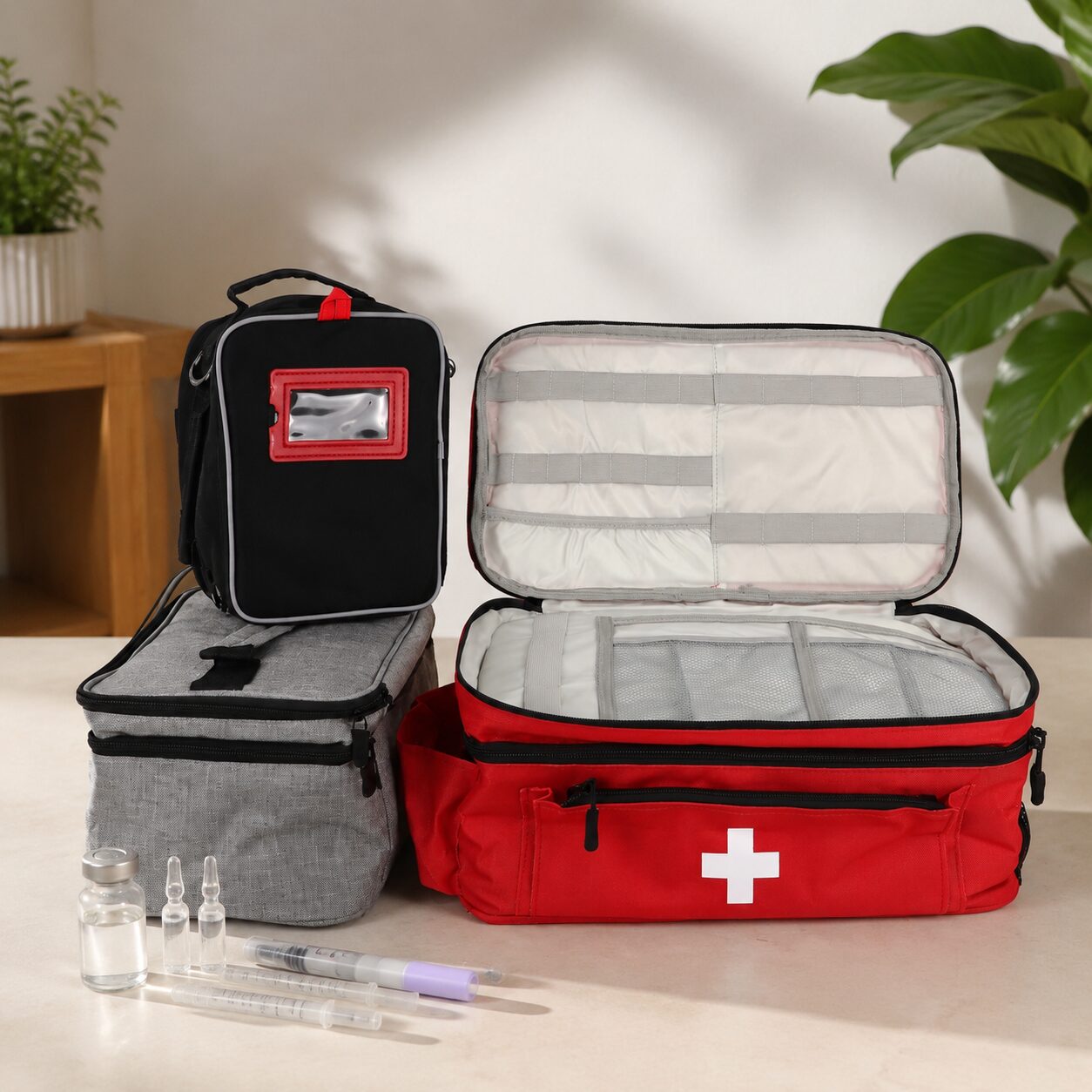
Combining custom-molded gel packs, insulated technical fabric shells, and digital temperature data loggers builds a cohesive retail product when pairing with an insulin cold pack. Procuring comprehensive insulin travel packs cooling packs supplies end-users with an all-inclusive medical management toolkit for daily routines and emergency preparedness. Factory assembly standards integrate modular internal pockets and secure elastic retention loops to organize every secondary accessory neatly inside the protective bag. Comprehensive modular kits eliminate user guesswork when preparing emergency medicine storage for extended vacations and overseas travel. Packaged turnkey excellence drives exceptional conversion performance across major wellness e-commerce platforms.
| Mechanical Metric | Test Simulation Procedure | Minimum Industrial Benchmark |
| Drop Resistance | 2-meter vertical drop onto concrete | Zero outer film rupture or gel leakage |
| Puncture Strength | Dynamic stylus penetration test | Withstands 45 Newtons of localized force |
| Compression Load | 100-kilogram static weight stack | Endures 24 hours without seam separation |
7. Production Infrastructure: Scalable Soft-Goods Fabrication Partnership with Aimazing Bag
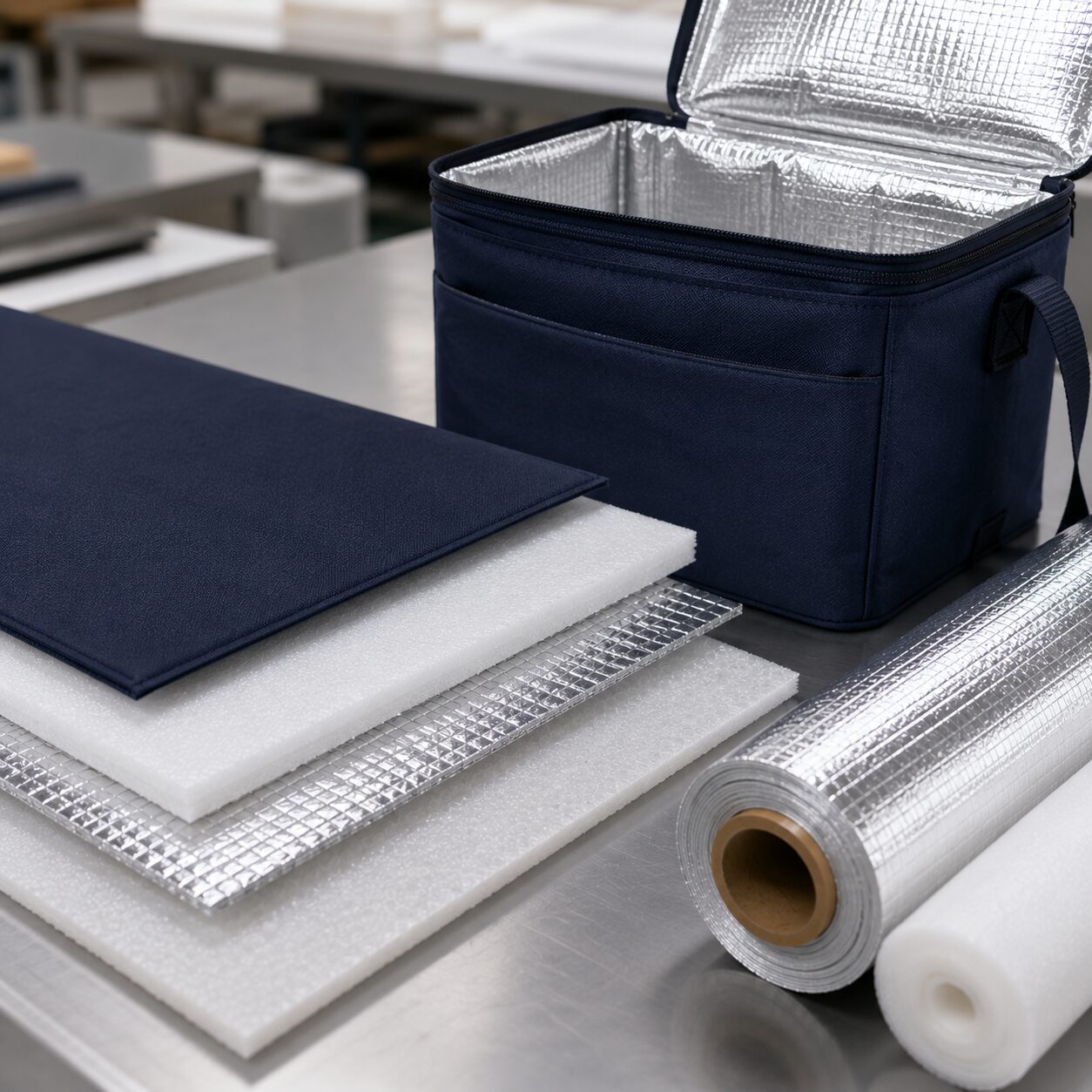
Applying ultrasonic and high-frequency bonding eliminates needle-hole thermal leaks across specialized insulation walls and gel pouches during volume manufacturing of any insulin cold pack. Traditional sewing operations puncture membrane barriers, developing microscopic vapor channels that degrade thermal efficiency over time and permit fluid weeping. High-frequency radio-frequency welding melts matching thermoplastic layers together to form an unbreakable hermetic seal capable of resisting internal compression forces. Factory production engineers calibrate sealing frequency and pressure mechanics to guarantee absolute seam airtightness across high-volume production runs. Advanced thermal-welding expertise establishes the peak manufacturing benchmark for specialized medical soft-goods and thermal accessories.