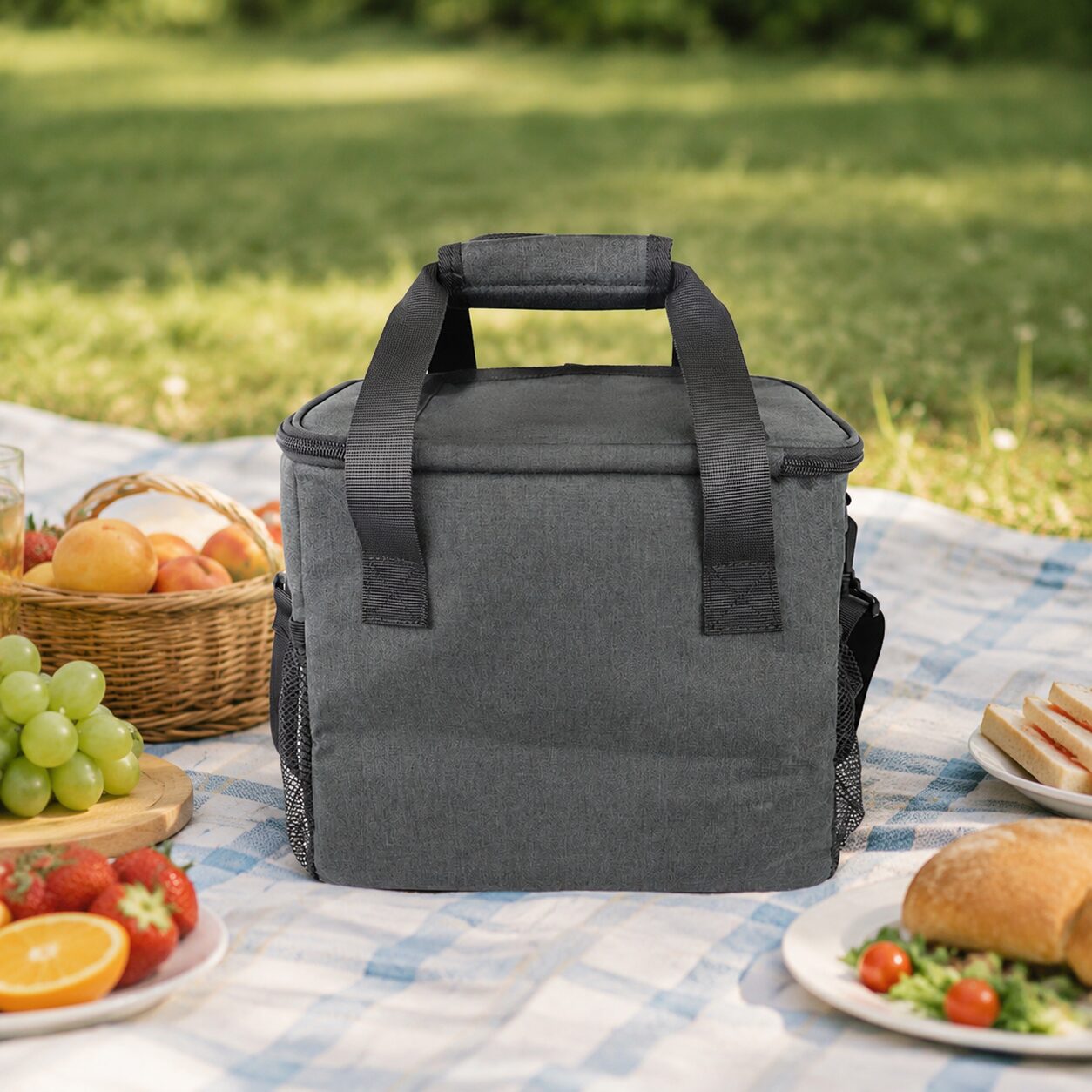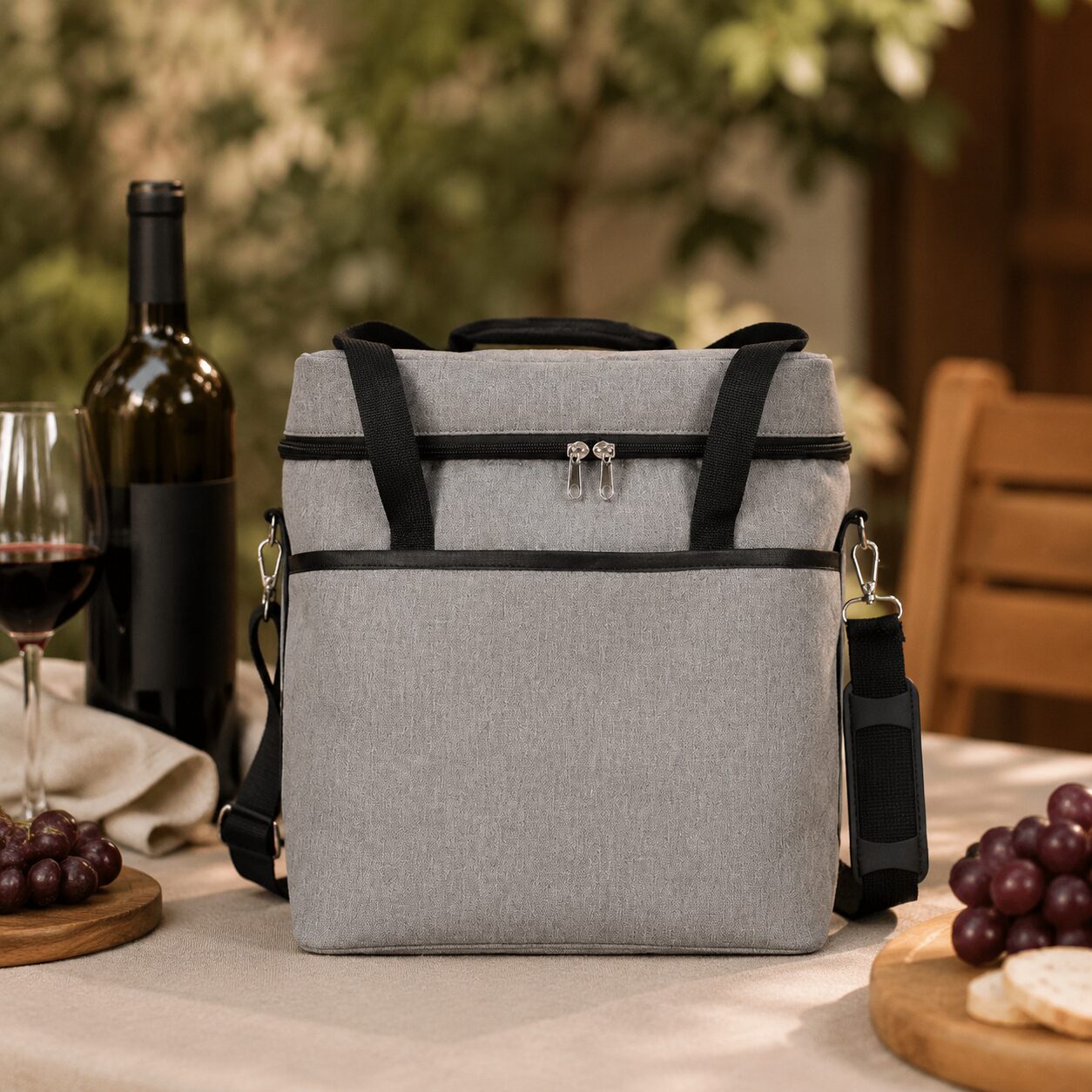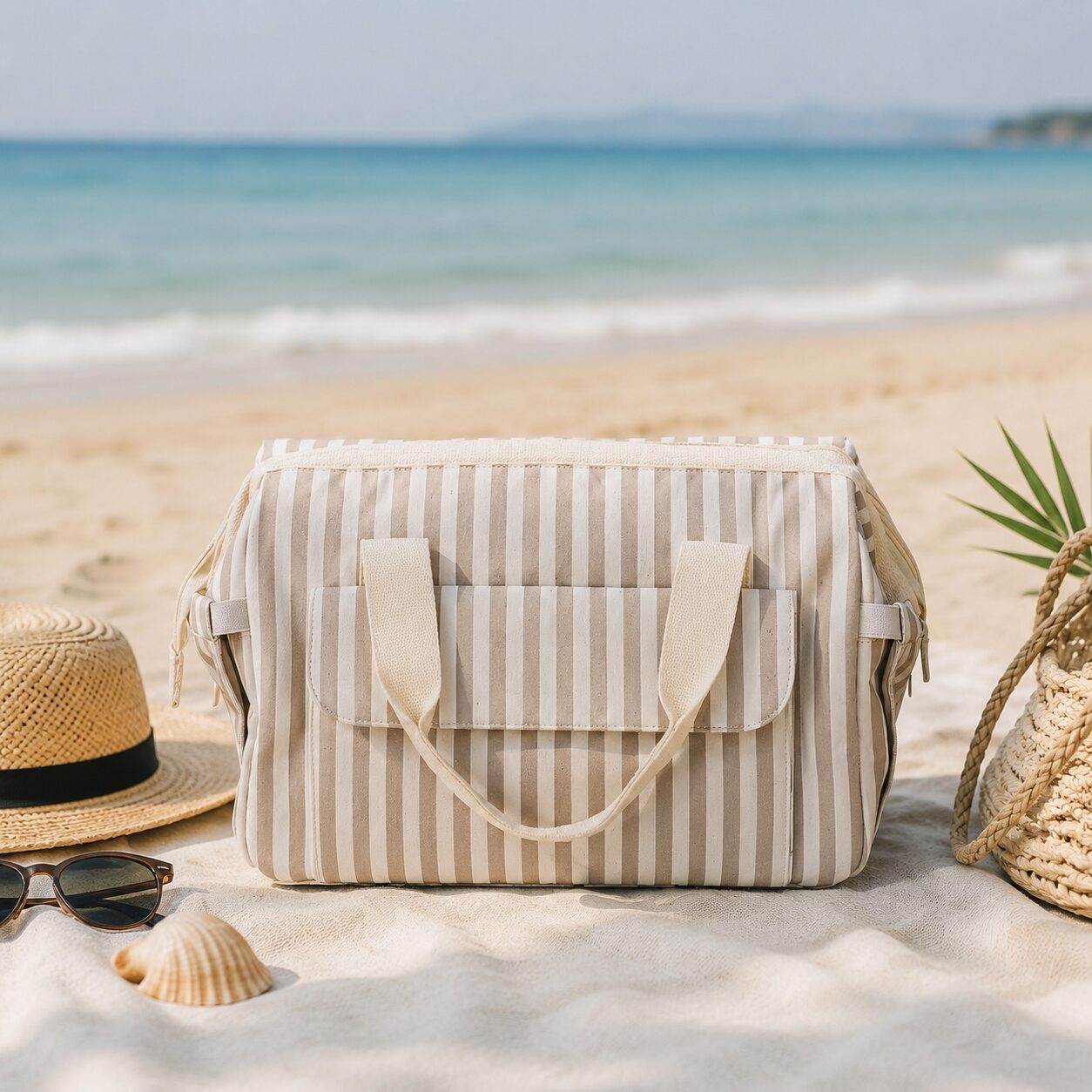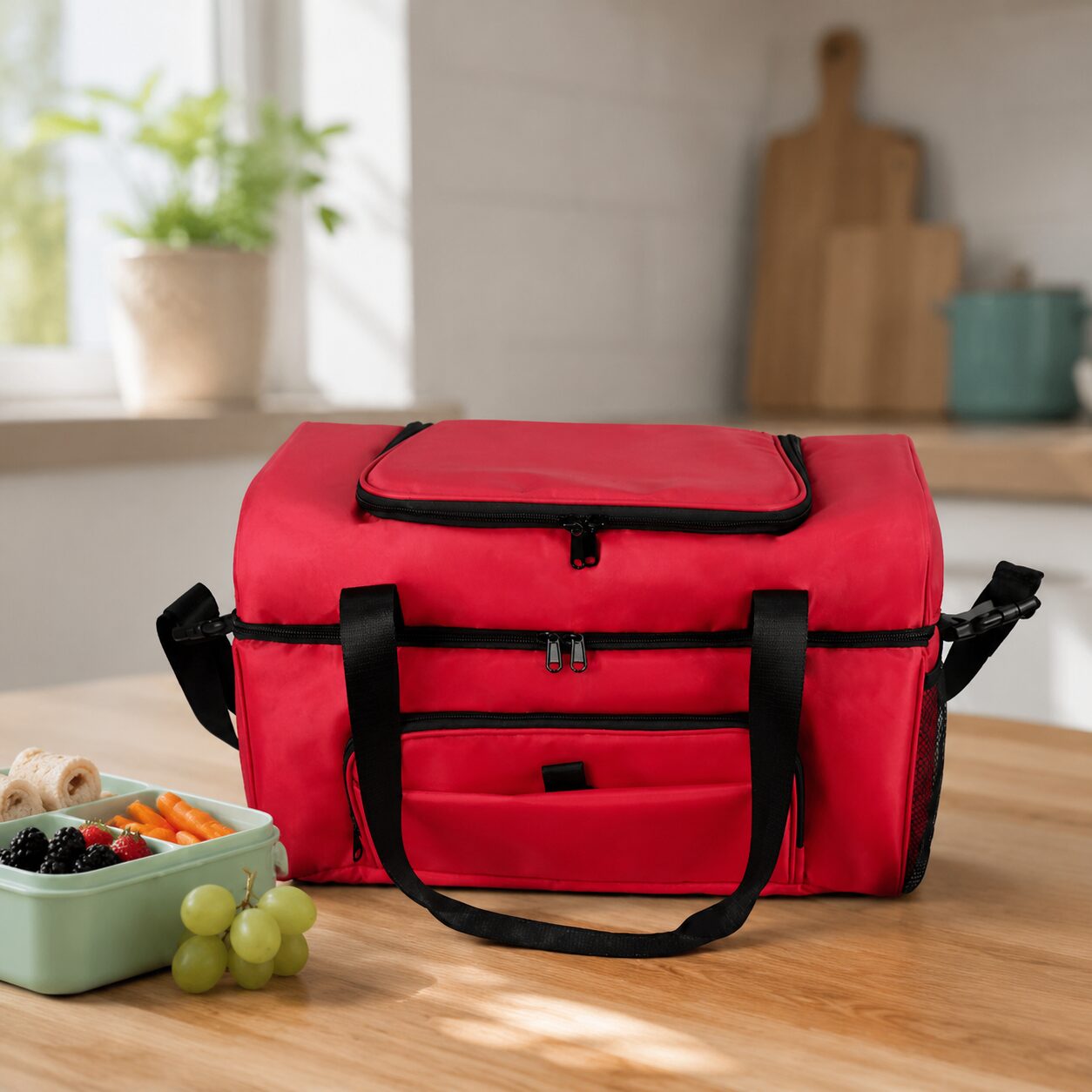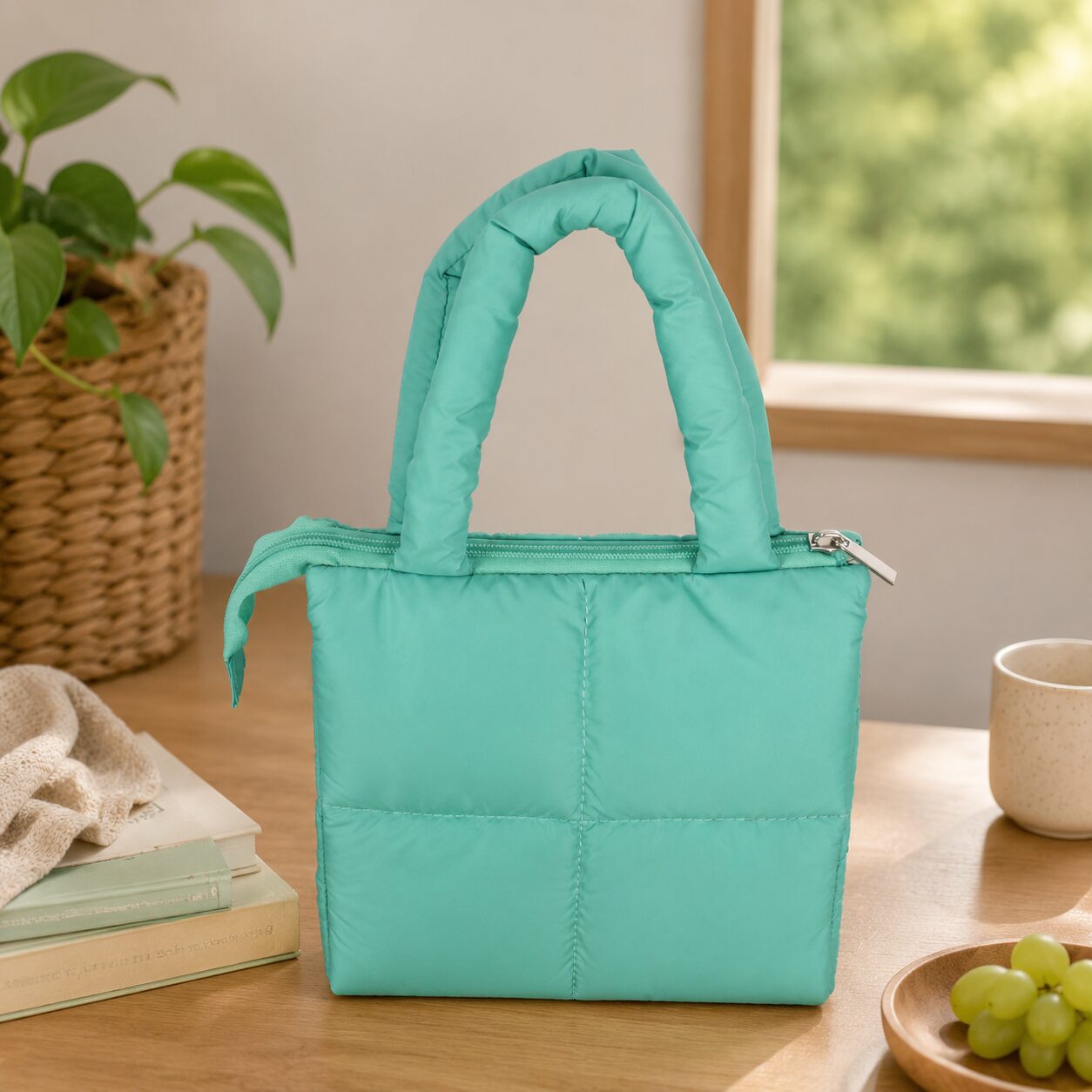

Outdoor dining is about more than carrying food from one place to another. People want a simple way to bring their meals, drinks, tableware, and picnic essentials together without packing several separate bags.
For outdoor brands and wholesalers, creating a complete set brings an additional challenge. Every component must fit properly, stay organized, and work well during transport. A good design also needs to meet retail price targets and remain practical for bulk production.
At Aimazing Bag, we approach these projects from a manufacturer’s perspective. The goal is not to add as many accessories as possible, but to develop a complete product that customers will actually enjoy using.
1. Start With the Complete Set, Not Just the Bag
Before designing a picnic bag set, brands should decide what customers need to carry and how they will use the product.
Some customers want a lightweight option for weekend trips. Others prefer a complete outdoor dining kit with plates, cutlery, glasses, a blanket, and space for chilled food.
These differences affect the bag’s size, internal layout, materials, and overall cost.
From our manufacturing experience, it is better to confirm the components before finalizing the bag dimensions. Otherwise, brands may discover during sampling that plates are too large, cutlery straps are poorly positioned, or the cooler compartment leaves too little room for food.
For most projects, we recommend separating the design into three functional areas:
| Functional Area | Typical Components | Design Priority |
|---|---|---|
| Dining accessories | Plates, cutlery, glasses, napkins | Secure organization |
| Insulated storage | Food, drinks, ice packs | Temperature control and cleaning |
| Outdoor accessories | Blanket, bottle opener, small essentials | Easy access and convenient carrying |
This approach creates a more useful product without adding unnecessary size.
For brands developing a complete outdoor dining collection, our custom picnic bag manufacturing solutions offer flexible options for insulated compartments, tableware organization, blanket attachments, and private-label designs.
2. Choose the Right Blanket Storage Design
A blanket makes outdoor dining more comfortable, but it also takes up valuable space.
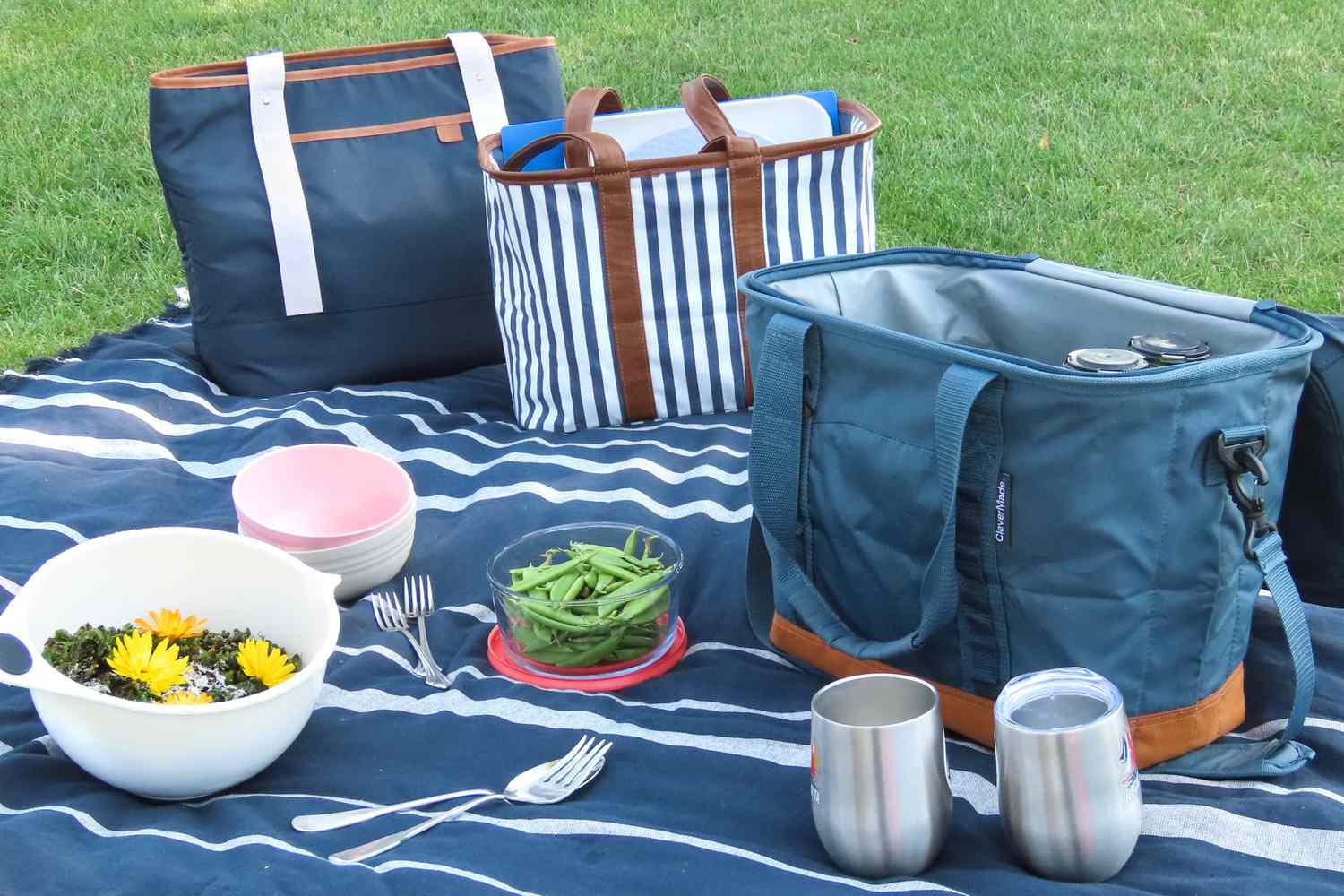
When developing a picnic bag set with blanket, one of the first decisions is whether the blanket should be stored inside or attached outside.
For compact products, an external attachment is often more practical. Two adjustable straps can hold a rolled blanket against the side or top of the bag.
However, the attachment position matters.
If the blanket hangs too low, it may affect carrying comfort. If the straps are too loose, the blanket can shift during walking.
At Aimazing Bag, we recommend positioning the attachment points according to the bag’s loaded weight and handle structure. Reinforced stitching at high-stress areas helps the straps withstand repeated use.
For brands developing a picnic blanket and cooler bag set, we also suggest checking whether the blanket can be removed without opening the insulated compartment.
This small detail improves convenience and keeps the cooling area closed for longer.
Blanket material is another consideration. Polyester fleece offers a soft feel, while a blanket with a water-resistant backing can be useful on damp grass.
The final choice should reflect the target retail market, product positioning, and intended selling price.
3. Make the Cooler Compartment Work in Real Conditions
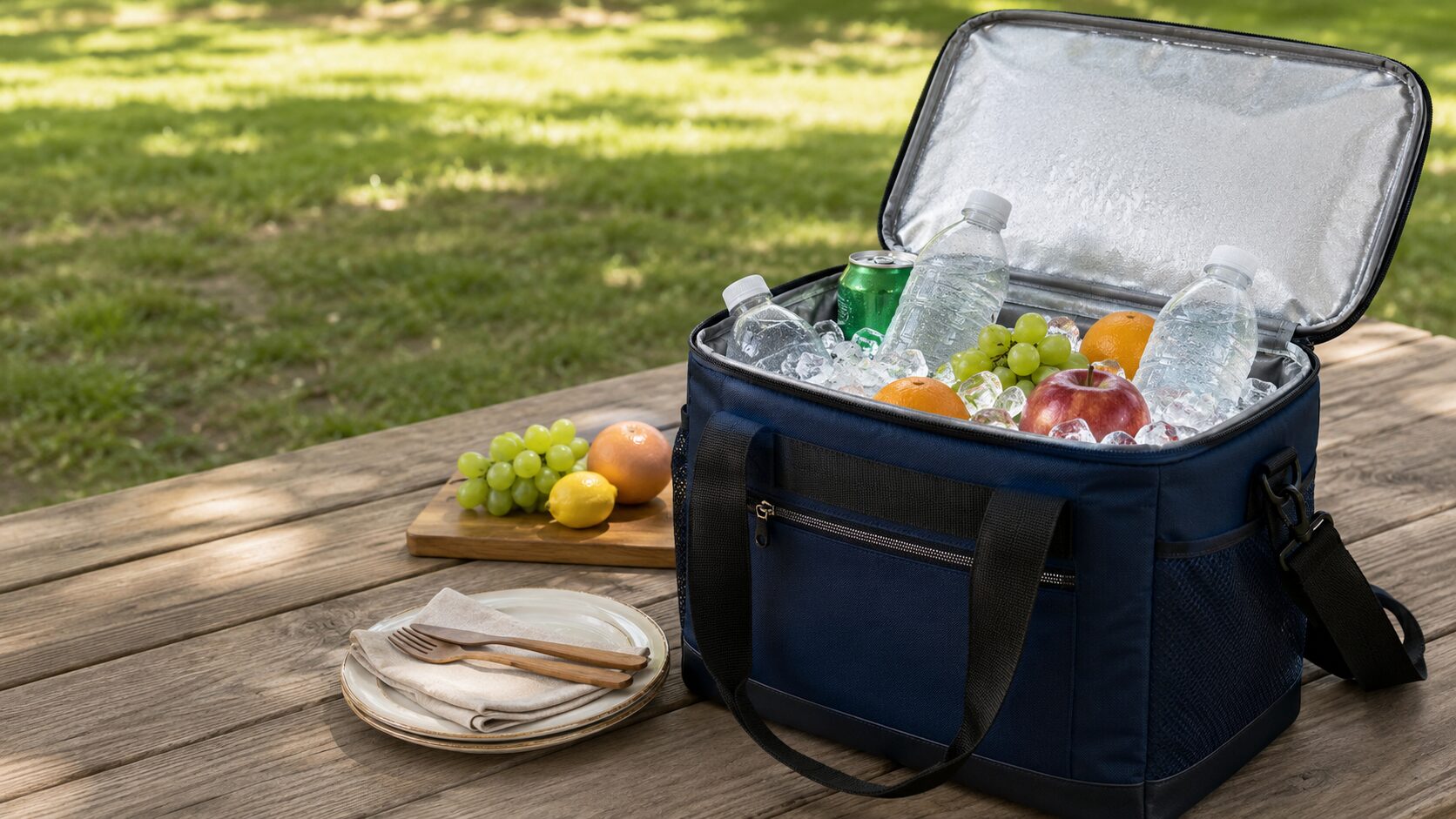
Cooling performance is one of the most important features customers notice during outdoor trips.
However, a cool bag picnic set needs more than a layer of insulation to perform well.
The outer material, foam thickness, inner lining, and closure design all affect how quickly heat enters the bag.
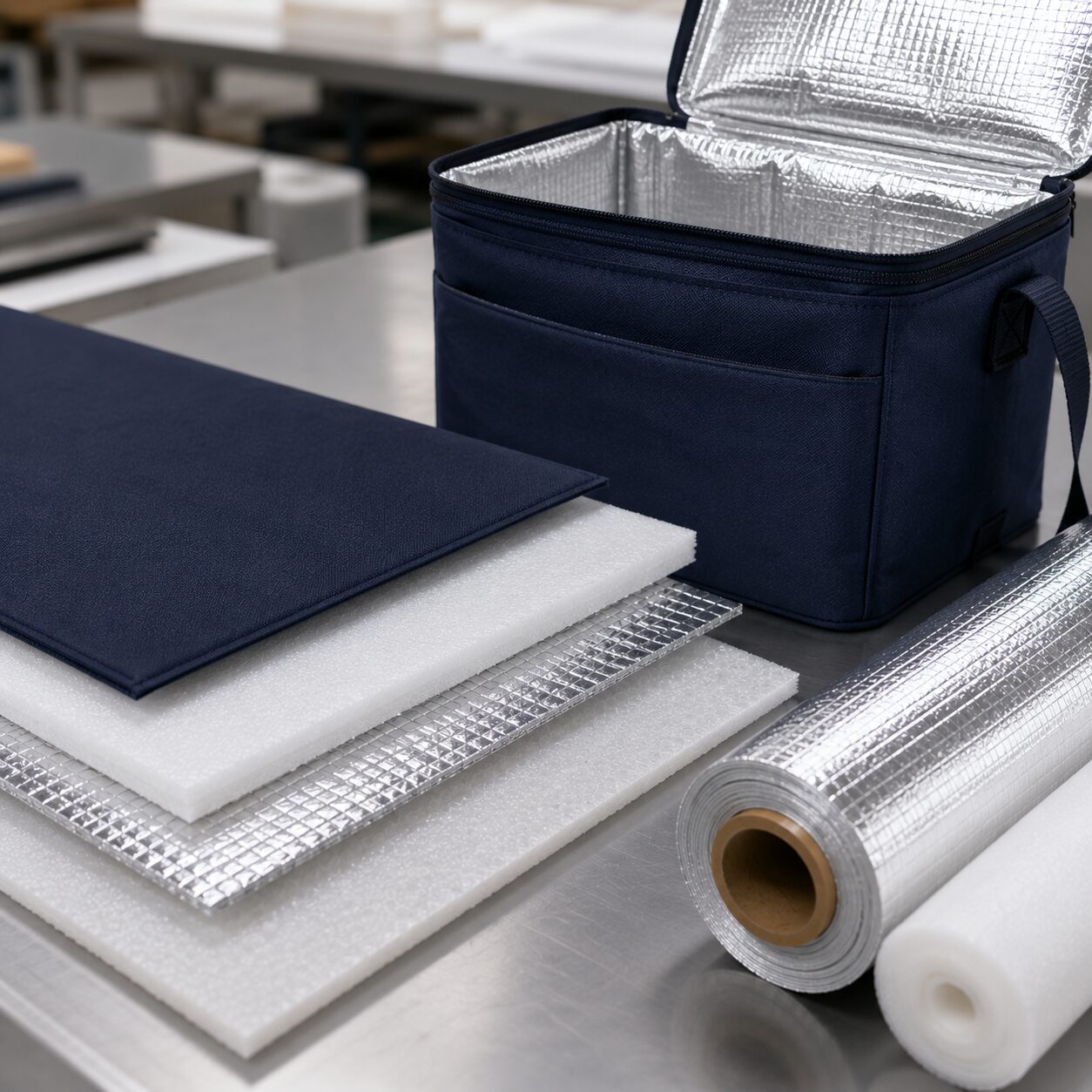
For many custom cooler projects, we work with a three-layer structure:
| Layer | Material Options | Main Function |
|---|---|---|
| Outer shell | Oxford, polyester, nylon, RPET | Durability and appearance |
| Insulation | EPE foam, commonly 3–10 mm depending on design | Slows heat transfer |
| Inner lining | Silver-colored PEVA or aluminum-film laminate | Easy cleaning and internal protection |
For products where liquid containment is important, compatible PEVA or TPU linings can be designed with heat-welded seams.
This helps reduce leakage through the liner compared with conventional stitched constructions. However, the finished compartment must still be tested, and a welded liner does not automatically make the entire bag waterproof.
Material selection is only one part of the process. Buyers should also consider lining safety, insulation performance, and everyday durability. Our insulated picnic bag sourcing guide explains the key specifications worth checking before bulk production.
Another important point is temperature testing.
A product may keep pre-chilled drinks cool for several hours under certain conditions, but results depend on ambient temperature, insulation thickness, ice-pack quantity, initial food temperature, and how frequently the bag is opened.
Brands should define a repeatable test method instead of making a fixed cooling-time claim without supporting data.
For food safety, FoodSafety.gov recommends keeping perishable foods at 40°F (4°C) or below. Food should not remain without adequate refrigeration for more than two hours, or one hour when exposed to temperatures above 90°F (32°C).
Good insulation supports convenient outdoor use, but it should never replace proper food storage practices.
4. Keep Plates and Cutlery Organized Without Wasting Space
Customers should not have to unpack the entire bag to find a fork or plate.
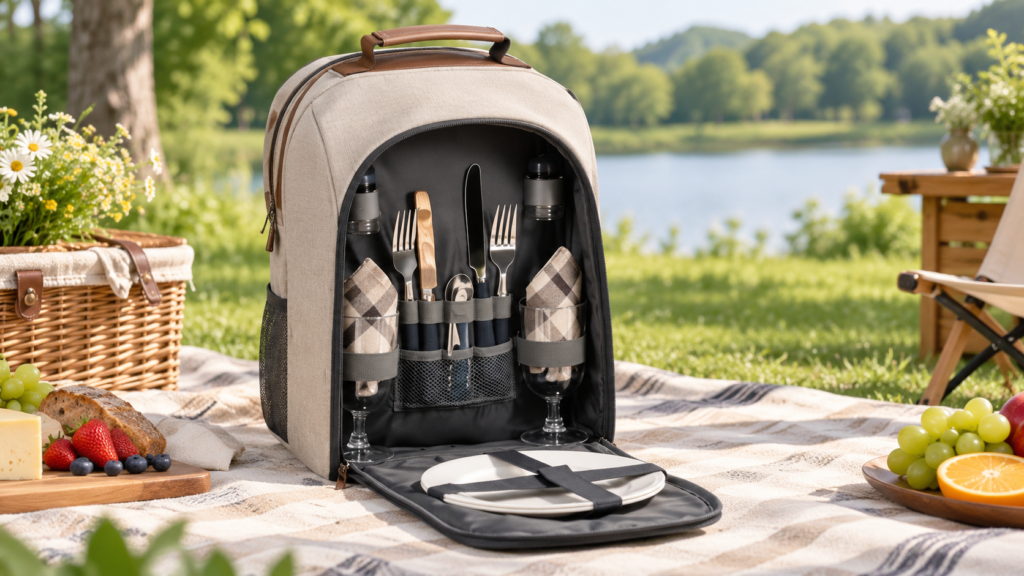
That is why a well-designed picnic set in bag solution needs dedicated storage for dining accessories.
Elastic loops are useful for securing forks, knives, and spoons along an interior panel. Plates can be stored in padded sleeves or fitted pockets, depending on their material and shape.
For glasses and delicate accessories, separate compartments may reduce movement during transport.
We usually recommend that brands confirm actual accessory dimensions rather than rely only on standard bag measurements.
Even small differences in plate diameter or glass height can affect the internal layout.
Manufacturers should also consider cleaning and replacement. Removable accessory panels make it easier for customers to maintain the product, while standardized components can simplify future replenishment orders.
The best layout is not necessarily the one with the most pockets. It is the one that keeps everything accessible without making the bag unnecessarily heavy.
5. Design Different Capacities for Couples and Families
A compact two-person kit and a family-sized product should not simply use the same structure in different dimensions.
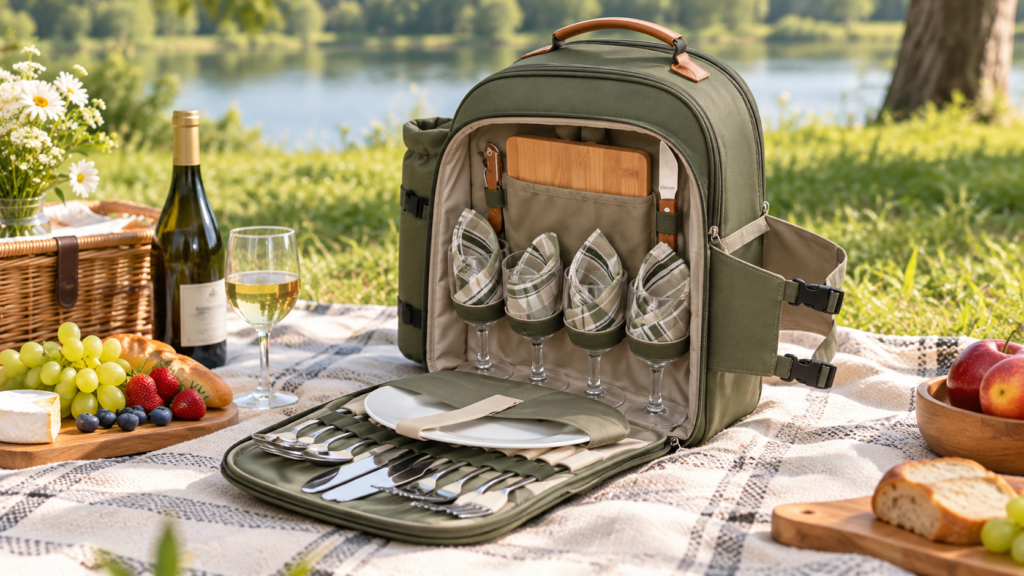
For a picnic bag set for 4, the weight of additional plates, glasses, cutlery, food, and drinks can put more stress on the base and handles.
That means the manufacturer should review load distribution and carrying comfort before enlarging the original design.
Consider these two common configurations:
| Design Feature | Two-Person Set | Four-Person Set |
|---|---|---|
| Dining accessories | 2 sets | 4 sets |
| Cooler capacity | Compact | Medium to large |
| Carrying method | Handle or shoulder strap | Reinforced handle and optional padded strap |
| Base structure | Lightweight support | Stronger base reinforcement |
| Main selling point | Portability | Family convenience |
These are starting points rather than fixed industry specifications.
For family-sized products, Aimazing Bag can incorporate reinforced base panels, stronger handle attachment areas, and adjustable carrying straps according to the expected load.
We also advise buyers to review the finished packed weight.
A larger bag is not automatically better if it becomes uncomfortable to carry from the parking area to the picnic location.
For brands targeting lightweight retail collections, our picnic tote design guide explores practical approaches to capacity, insulation, carrying comfort, and packaging efficiency.
6. B2B Sourcing Scenario: Solving a Complete-Kit Design Problem
Illustrative sourcing scenario based on typical OEM development challenges. This example is not presented as an actual completed customer order.
Consider a European outdoor lifestyle brand preparing a private-label summer collection.
The brand wants two versions: a compact kit for couples and a larger family kit. Both products need matching colors, organized tableware, a detachable blanket, and an insulated food compartment.
Its initial idea is to buy a standard cooler bag and source the remaining accessories separately.
This looks simple on paper, but several problems can emerge during development.
The supplied plates may not fit the existing pockets. The blanket may be too bulky for the available straps. Different suppliers may also deliver slightly different fabric colors, creating an inconsistent retail presentation.
For the smaller picnic bag set with blanket, Aimazing Bag’s recommended approach would be to confirm every accessory measurement before adjusting the bag pattern.
We would then review the attachment structure, cooler capacity, fabric colors, and final packed dimensions together.
For the larger version, the priority would shift toward load-bearing construction and convenient family use.
A brand sourcing a picnic blanket and cooler bag set could also benefit from coordinating the exterior fabric, blanket trim, logo placement, and retail packaging within one development plan.
How This Approach Differs From Buying Standard Cooler Bags
Some suppliers focus only on producing the insulated bag itself. The buyer must then coordinate additional accessories, packaging, and component compatibility elsewhere.
Aimazing Bag takes a broader project-partner approach.
With our own bag manufacturing facilities and established material and accessory sourcing network, we can help buyers evaluate the whole product rather than treating each component as an unrelated purchase.
That includes reviewing material choices, adjusting sample structures, coordinating accessory specifications, and preparing the final packing arrangement.
The benefit for the buyer is not simply having more customization options.
It is the opportunity to identify design conflicts before committing to a bulk order, reducing the risk of mismatched components, avoidable rework, and unnecessary sourcing complexity.
7. Check the Entire Product During Sampling
Sampling is where a good product idea becomes a practical manufacturing specification.
For a cool bag picnic set, we recommend evaluating the finished product with all accessories packed inside rather than examining an empty bag.
The team should check how easily the bag opens, whether the plates remain secure, and whether the cooling compartment can hold the intended food containers and ice packs.
The test should also include carrying the fully loaded product.
This helps identify uncomfortable handles, uneven weight distribution, or straps that interfere with the customer’s movement.
For a compact picnic set in bag, packaging dimensions are especially important.
A bag that folds neatly during production may become much larger once plates, glasses, and accessories are installed.
That difference affects master carton size, storage requirements, and freight costs.
At Aimazing Bag, straightforward custom bag samples can typically be developed in 3–5 days after specifications and materials are confirmed. More complex multi-component projects may require additional time for accessory matching and testing.
We recommend approving a complete pre-production sample, including the final accessory arrangement and packaging, before mass production.
At Aimazing Bag, we support brands from initial specifications to sample approval and bulk manufacturing. Learn more about our OEM customization process and how we coordinate materials, structural development, branding, and production.
8. Confirm the Details Before Placing a Wholesale Order
For wholesale buyers, the lowest unit price does not always represent the lowest total sourcing cost.
Material substitutions, missing accessories, unsuitable packaging, and unclear specifications can create extra expenses after an order is placed.
Before approving a picnic bag set for 4, brands should confirm the complete bill of materials and the finished product requirements.
Our recommended purchasing checklist includes:
- Component list: Confirm the number, dimensions, materials, and packaging position of every plate, utensil, glass, and blanket.
- Insulation requirements: Specify foam type, thickness, liner construction, and any required cooling or leakage tests.
- Structural details: Agree on handle reinforcement, base support, zipper type, and blanket attachments.
- Brand customization: Approve fabric colors, logo methods, labels, and retail packaging samples.
- Shipment preparation: Confirm packed dimensions, master carton quantities, inspection requirements, and delivery terms.
A complete specification helps both the brand and manufacturer understand what must be delivered.
At Aimazing Bag, we support OEM and ODM projects from material selection and sampling through bulk manufacturing and shipment coordination.
With 26+ years of bag manufacturing experience, two in-house factories, and a controlled sourcing network, our focus is on helping brands develop products that can be reproduced consistently—not simply making a sample that looks attractive.
Conclusion: Build a Better Outdoor Collection With the Right Manufacturing Partner
A successful outdoor dining collection depends on how well its individual components work together.
Plates and cutlery need secure storage. Blankets should be easy to carry and remove. Insulated compartments need suitable materials and realistic performance expectations. Every design decision should also consider production cost, packaging, and the end customer’s experience.
For brands, retailers, importers, and wholesalers, these details can make the difference between a basic promotional product and a practical, well-positioned outdoor collection.
Aimazing Bag works with buyers to turn their product ideas into manufacturable designs, helping coordinate materials, bag construction, accessories, and private-label requirements.
Planning a custom outdoor dining collection?
Share your target market, preferred accessories, reference designs, and expected order quantity with our team.
We’ll help you explore a practical manufacturing solution for your brand.