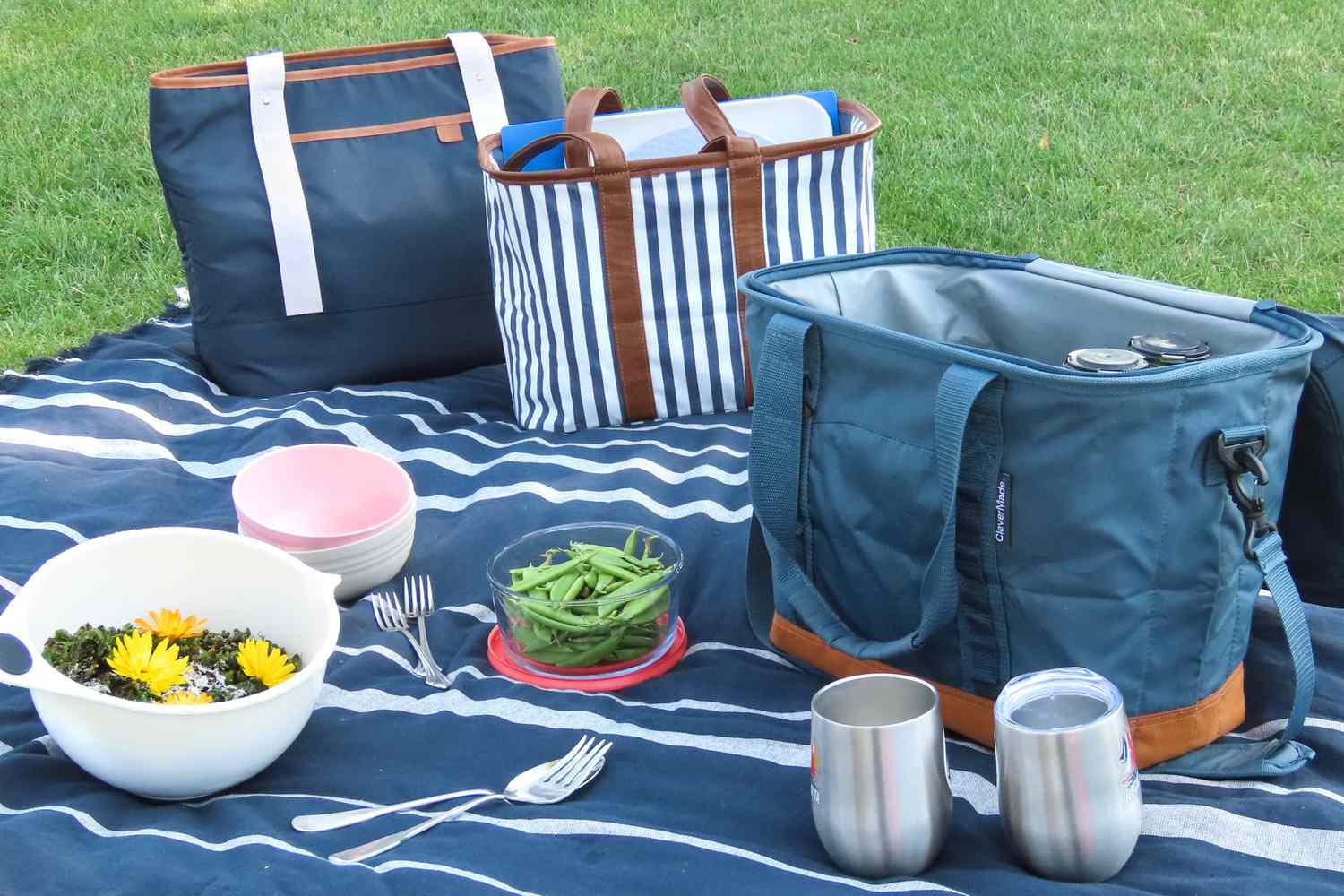

Traditional wicker baskets bring a familiar charm to outdoor dining, but their weight, fixed compartments, and hand-carry design do not suit every trip. Soft backpacks solve the portability problem, yet they can lose their shape when packed with plates, bottles, and food containers. Hybrid designs offer a more practical middle ground: the appearance and organized storage of a basket, combined with padded straps, insulated compartments, and components that can be removed for cleaning or everyday use.
For brands and wholesale buyers, the challenge is deciding which features belong in the permanent structure and which should remain interchangeable. That decision affects comfort, production cost, packaging volume, and how useful the finished bag feels after the first picnic.
1. Why Hybrid Construction Works Better Than a Fully Rigid Basket
A picnic basket backpack needs enough structure to stand upright without becoming awkward to carry. That does not mean every panel has to be hard. In fact, using a rigid frame throughout the bag may add unnecessary weight and make storage difficult.
A more balanced approach uses a semi-rigid base, supportive side panels, and a reinforced upper opening. The fabric shell provides flexibility, while internal support helps protect food containers and prevents the bag from folding inward when opened.
Three practical construction choices are worth comparing:
- Reinforced base: A removable PP or HDPE board distributes the weight of bottles and packed meals across the bottom.
- Supported side walls: Foam-backed panels, sometimes combined with plastic sheets, reduce sagging without making the entire bag rigid.
- Stable top opening: Binding, stiffened fabric, or a wire-supported rim can help the opening retain its shape, depending on the closure design.
The frame should also be evaluated under realistic loading. A structure that looks square when empty may behave differently when one side carries a full bottle and the other holds lightweight tableware. Before finalizing a sample, buyers should check whether the base stays level, the zipper closes without excessive tension, and the shoulder straps remain comfortable.
2. Removable Inserts: The Feature That Makes a Hybrid Design Useful
Removable inserts are more than optional accessories. They allow one bag body to support different activities and make the interior easier to maintain. A well-designed hybrid carrier can accommodate a cold-food compartment on one trip and a simpler open storage space on another, provided the insert and bag dimensions are engineered together.
Common options include:
| Insert option | Practical purpose | Key point to verify during sampling |
|---|---|---|
| Insulated food box | Separates chilled items from plates and accessories | Fits securely without compressing the insulation |
| Padded bottle divider | Reduces contact between glass bottles | Can be removed without disturbing the liner |
| Tableware organizer | Keeps plates, utensils, and napkins accessible | Straps match the actual accessory dimensions |
| Removable base board | Improves shape retention when loaded | Corners are covered and the board can be taken out for cleaning |
There is an important distinction between a removable organizer and a removable waterproof liner. A fabric organizer is relatively straightforward to detach. A liner intended to contain melted ice needs carefully designed seams and material compatibility; its leak resistance should be tested separately rather than assumed from the word “removable.”
Brands should also consider how shoppers will clean and dry each insert. Hook-and-loop tabs, snaps, or fitted sleeves may all work, but exposed fasteners inside a food compartment can create dirt traps. Simple construction is often more valuable than an overly complicated modular system.
3. Wicker Picnic Basket Backpack: Choosing the Right Exterior
A wicker picnic basket backpack can take several forms. Some models use genuinely woven wicker or rattan, while others imitate the woven appearance with printed fabric, embossed synthetic materials, or decorative panels. These options may look similar in a catalog, but they differ significantly in weight, flexibility, cost, and care requirements.
Real woven materials provide texture and a traditional appearance, although they need more attention to moisture exposure, edge finishing, and dimensional consistency. Printed polyester or Oxford fabric is lighter and easier to sew into a soft-sided backpack. Embossed synthetic panels offer a more tactile effect but require careful assessment of stiffness and bending at seams.
For an outdoor lifestyle collection, a wicker picnic basket backpack made with a textile shell may be more practical when portability and repeatable branding matter more than an authentic woven texture. Buyers should request physical swatches, not rely on rendered images, and assess abrasion resistance, print appearance, and coating performance against their target market.
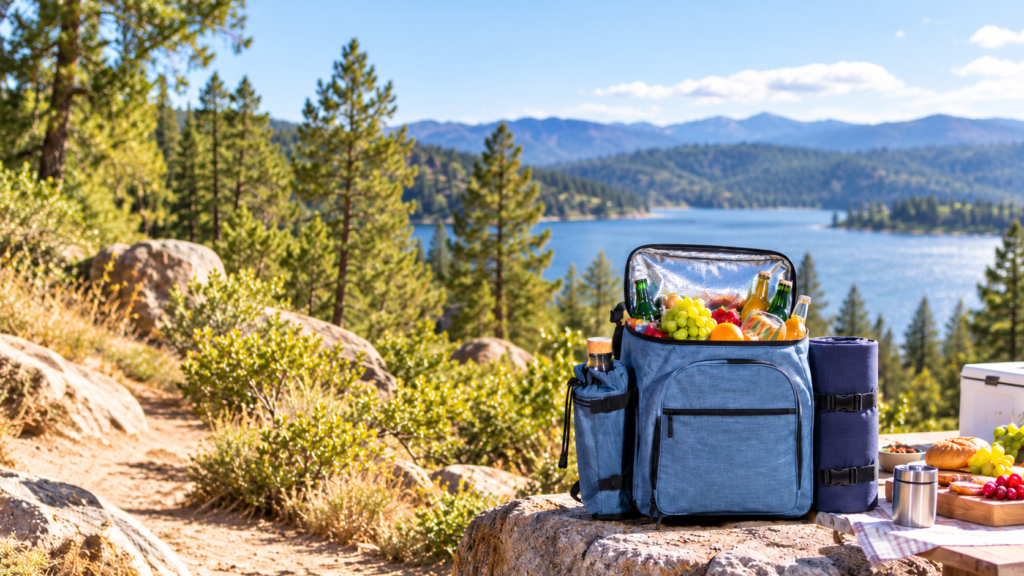
4. Picnic Basket Backpack for 2: Sizing for Real Meals
A picnic basket backpack for 2 should feel compact without forcing users to unpack the entire bag to reach a drink or a plate. Space planning begins with the size of the intended contents—not simply with a target liter capacity.
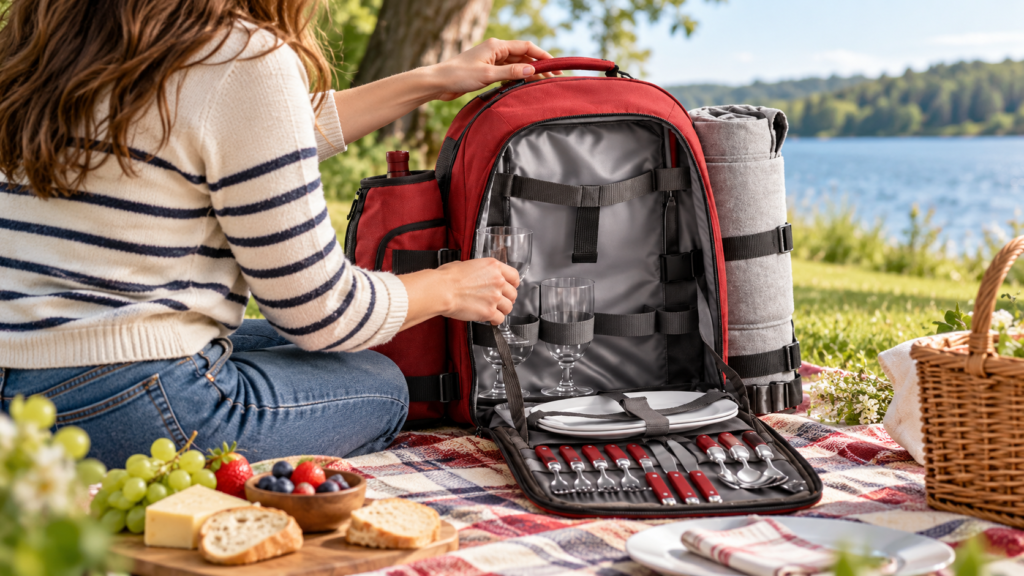
A two-person layout might include dedicated retention straps for two plates, two sets of utensils, two drinking vessels, napkins, and a shared food compartment. The exact combination depends on whether the brand is selling an empty carrier or a complete dining kit.
When developing a picnic basket backpack for 2, Aimazing recommends confirming the dimensions and weight of every bundled accessory before approving the internal layout. Elastic straps that look tidy around a thin sample plate may not fit a thicker production version. A removable divider also needs sufficient clearance so that customers can lift it out without snagging zippers or tableware.
Comfort deserves equal attention. Shoulder padding, adjustable webbing, and a breathable back panel help distribute the load. Rather than claiming a universal fit, brands should test the packed sample on users of different heights and check whether the bag leans backward or pulls at the shoulders.
5. Picnic Basket Set Backpack: Which Accessories Belong in the Box?
A picnic basket set backpack can create a convenient retail offer, but more accessories do not automatically make it better. Adding a blanket, cutting board, bottle opener, utensils, plates, and glasses increases perceived completeness while also adding sourcing work, weight, and packaging complexity.
For a picnic basket set backpack, the most useful starting point is a clear bill of materials that lists each accessory’s dimensions, material, packing position, and replacement options. A matching cutlery roll may be easy to source, for example, while a rigid cutting board can interfere with the back panel if it is stored in the wrong position.
Brands can offer two configurations built around the same shell: a base version with a removable organizer and an upgraded kit with coordinated tableware. This gives retailers price-point flexibility without requiring a completely different bag design for each SKU. During sampling, every accessory should be packed exactly as it will appear in the final retail unit.
6. Insulation, Leak Resistance, and Food Storage
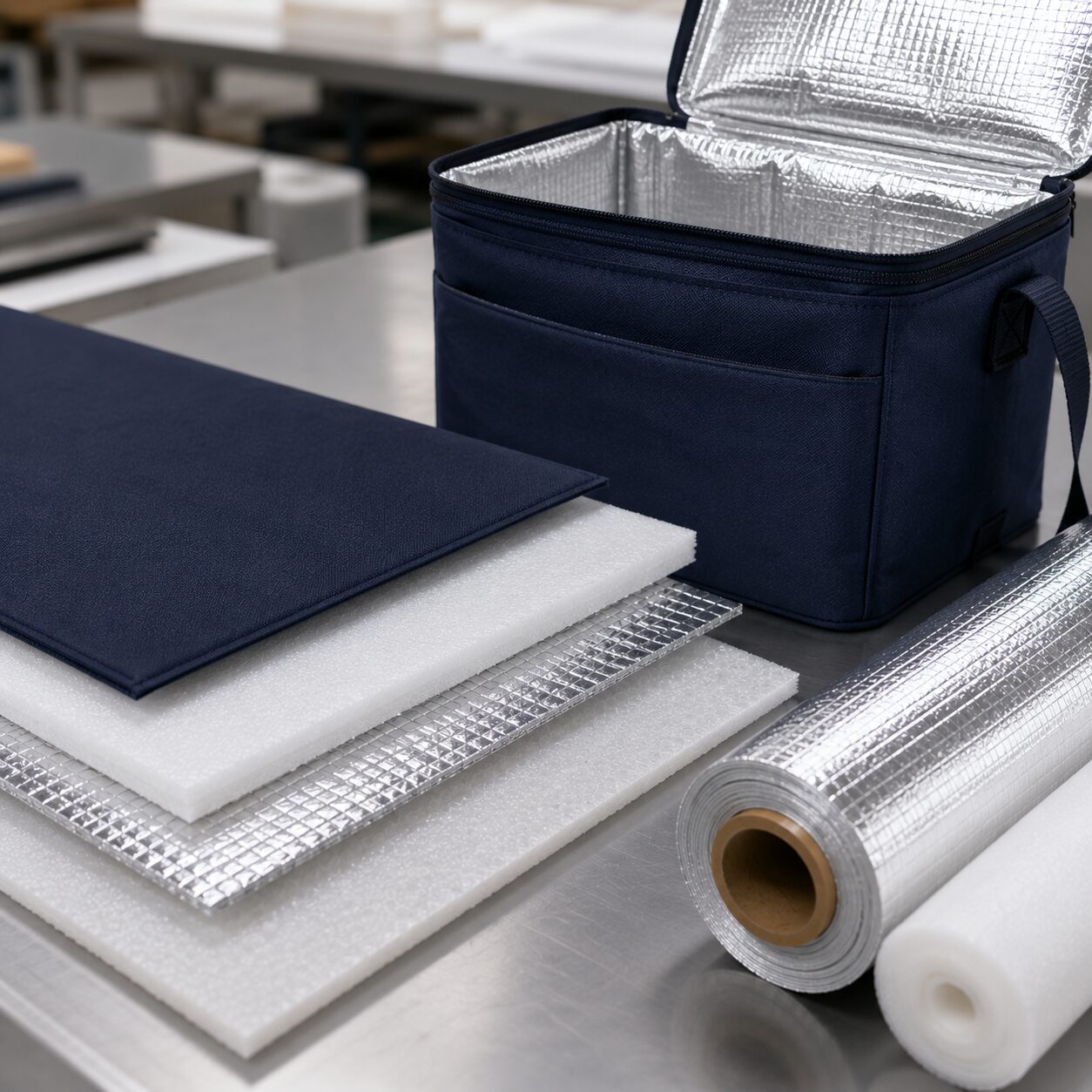
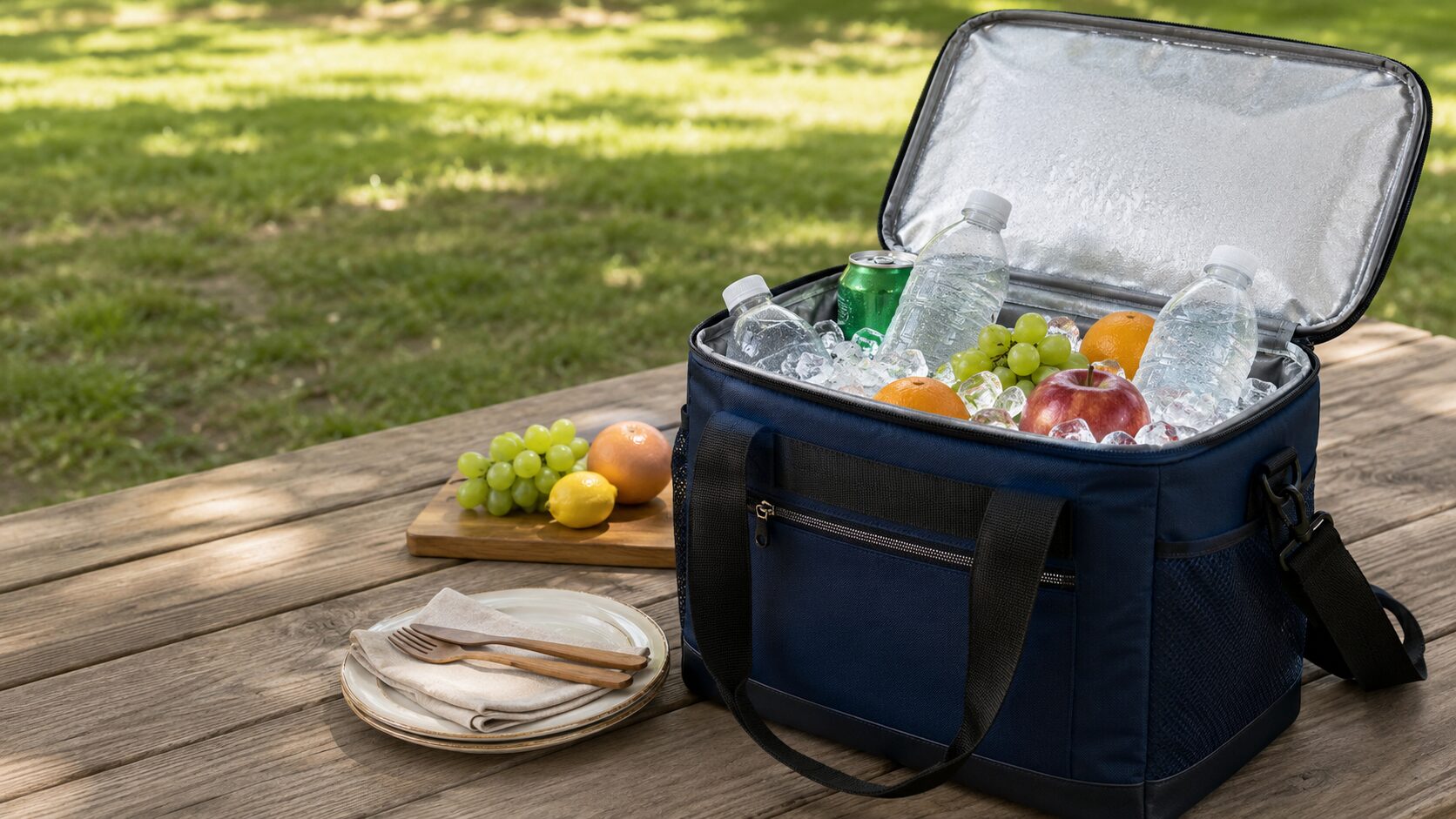
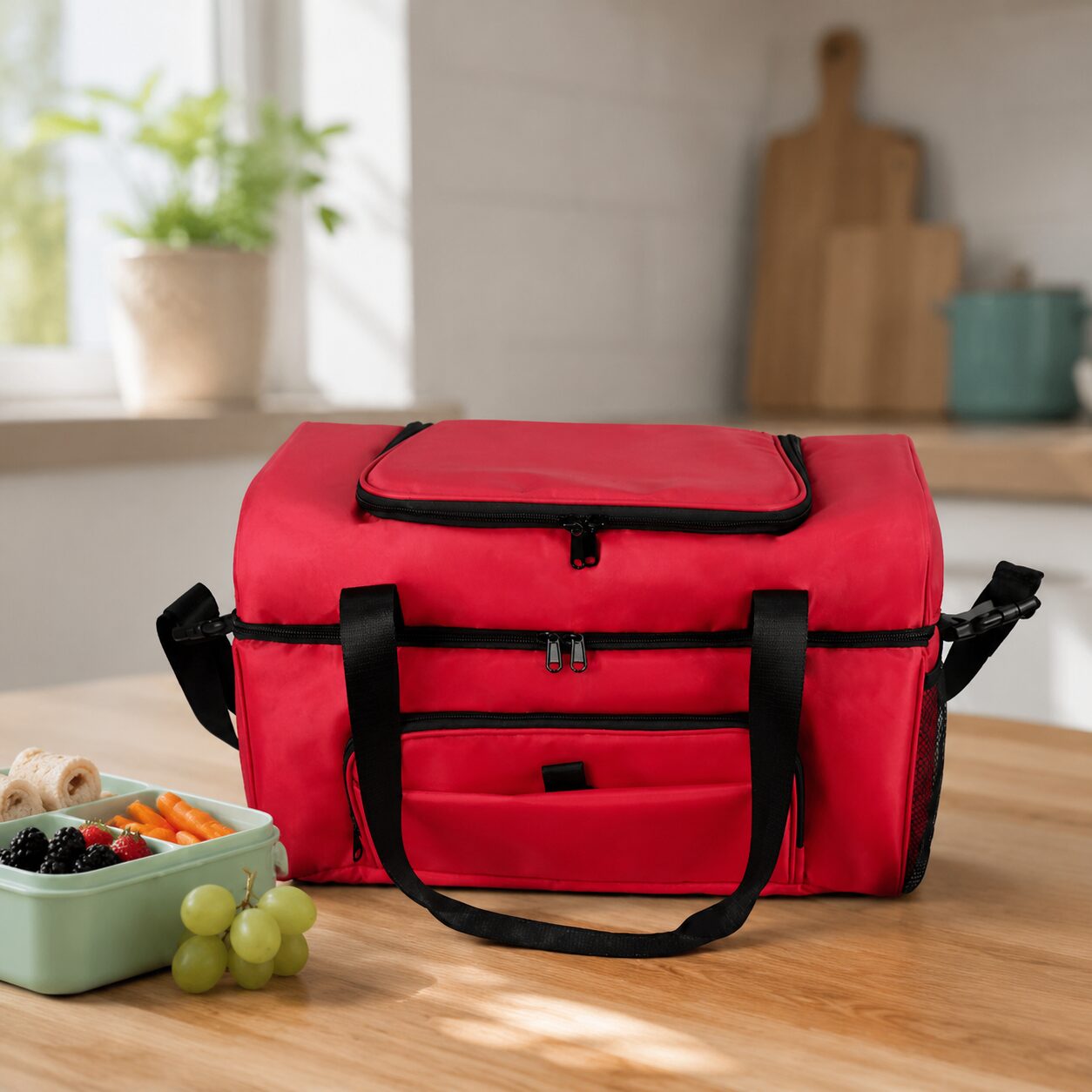
For a picnic backpack insulated with closed-cell foam, thermal performance depends on the entire construction—not just the thickness stated on a specification sheet. External fabric, foam coverage, lining seams, zipper openings, and how frequently users access the contents all affect temperature retention.
A typical design may combine polyester or Oxford outer fabric, EPE foam insulation, and a wipe-clean PEVA liner. Buyers should distinguish water-resistant fabric, leak-resistant construction, and leakproof performance: these are not interchangeable claims. A stitched liner can allow water through needle holes, while a properly engineered welded liner may improve containment if the materials and seam method are compatible.
When comparing a picnic backpack insulated with different foam thicknesses, request a consistent test method: starting food or pack temperature, ambient conditions, load quantity, ice-pack configuration, and the intervals at which the bag is opened. Without that information, an advertised number of cooling hours tells buyers very little.
Removable inserts create another design consideration. If a cold-storage insert can be lifted out, it should remain stable in the backpack and have an easily cleaned interior. Perishable food still requires appropriate cold sources and safe handling; an insulated bag alone cannot guarantee food safety.
7. What Makes the Best Backpack Picnic Basket for Retail?
The best backpack picnic basket is not necessarily the most rigid model or the one with the longest accessory list. It is the version that matches the intended customer: couples heading to a park, families spending a day at the beach, or gift buyers who value a coordinated dining set.
For retail buyers, evaluation should include several practical questions:
- Can the bag stand upright and open comfortably when fully loaded?
- Can users remove the food compartment or organizer without tools?
- Do bottles and plates stay separated while walking?
- Is the lining easy to clean, and are any leakage claims supported by testing?
- Does the folded or packed carton size make sense for shipping and shelf storage?
- Can the manufacturer keep accessory dimensions and materials consistent between samples and bulk production?
Finding the best backpack picnic basket for a specific market means testing realistic use rather than relying on a product photo alone. A beautiful sample that tips over on uneven grass or becomes uncomfortable after a short walk is unlikely to support positive long-term reviews.
8. An Aimazing Customer Example: Why Sample Consistency Matters
One example from Aimazing’s published customer case studies involves Noah Bennett, a cooler-bag buyer who was cautious about changing suppliers. His previous concern was that attractive samples did not always translate into consistent insulation and construction in bulk orders.
In that project, our team reviewed the insulation layers, reinforced the heat-sealed liner, improved outer-fabric durability, and refined the storage layout. Noah tested the sample outdoors before placing a trial order. According to the company case record, the initial order developed into repeat cooperation.
This was an insulated cooler-bag project, not a documented basket-backpack order. Its relevance to hybrid picnic designs is the development method: assess performance with a fully packed sample, agree on materials and dimensions, then check whether production units match the approved version. It is especially important when the bag contains removable parts that must fit consistently from one batch to the next.
For more information about the company and its manufacturing focus, visit About Aimazing.
9. Turning a Hybrid Design Into an OEM/ODM Production Brief
When sourcing this type of outdoor bag, buyers can reduce sampling revisions by separating essential functions from optional features in the first brief. The starting document should specify the intended user, loaded weight, exterior appearance, dimensions, insulation requirements, and whether the liner, dividers, or base board must be removable.
Aimazing’s customization process covers design discussions, material choices, prototypes, sample feedback, and production planning. Its broader OEM/ODM service also supports structural and insulation development for branded cooler bags.
Before approving production, request a final sample with all accessories included, plus a specification sheet identifying panel materials, insert dimensions, retention methods, seam details, and agreed performance tests. If multiple retail configurations share one exterior shell, distinguish their accessory lists clearly in the purchase order and packaging instructions.
Buyers planning trial runs can consult the company’s FAQ on MOQ and sampling; exact quantities and lead times should still be confirmed for the selected materials and design complexity.
Conclusion
Hybrid basket-inspired packs work best when structure, comfort, storage, and easy maintenance are designed together. A removable organizer can improve versatility, but only if it fits securely, comes out easily, and does not interfere with the insulated compartment or everyday carrying comfort.
For brands developing a basket-inspired carry system, the most valuable next step is a functional sample built around real plates, bottles, and food containers. That practical approach produces a clearer design brief, more meaningful testing, and a product that has a better chance of meeting customers’ expectations beyond the first outing.