
Outdoor dining products can look simple in a catalog, but buyers quickly notice the details that were overlooked during development: a plate that does not fit its sleeve, a cooler that leaves too little room for lunch, or a fully packed bag that is uncomfortable to carry. For brands and distributors, the practical goal is to agree on the contents, test the layout with real components, and control the delivered cost before confirming production.
1. Start with a Four-Person Component List, Not the Bag Dimensions
A picnic set for 4 should begin with a confirmed bill of materials. Decide which pieces are included, their actual dimensions and the intended retail price before drawing interior pockets. A larger bag is not automatically a better set; excess room can allow plates and utensils to move during transportation.
A typical configuration may include four plates, four cups, four sets of forks, knives and spoons, four napkins, and one shared bottle opener or cutting board. Melamine plates, reusable plastic cups and stainless-steel cutlery are options, not mandatory specifications. Check the food-contact requirements for each market and obtain appropriate documentation from the component suppliers.
OEM checkpoint: Request physical samples of the final tableware before approving elastic loops, plate sleeves or cup holders. A few millimeters of difference can change how easily customers repack the set.
2. Keep Cold Food Separate from Hard Tableware
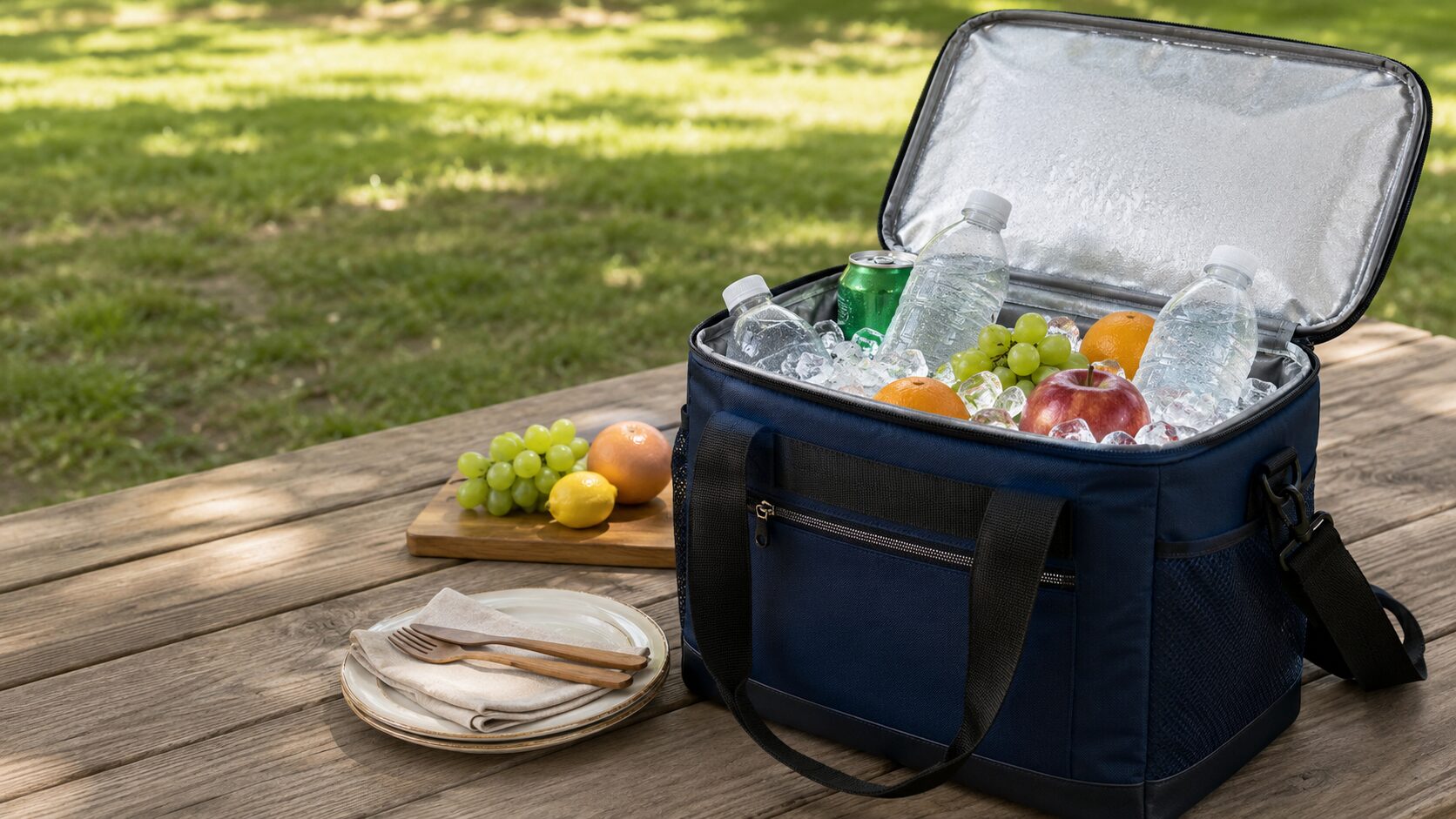
For a backpack picnic set for 4, we recommend planning the insulated food compartment and dry accessory compartment separately. This helps stop hard plates from pressing against food containers and keeps damp items away from napkins. The right arrangement depends on what customers will actually carry, not only on a stated liter capacity.
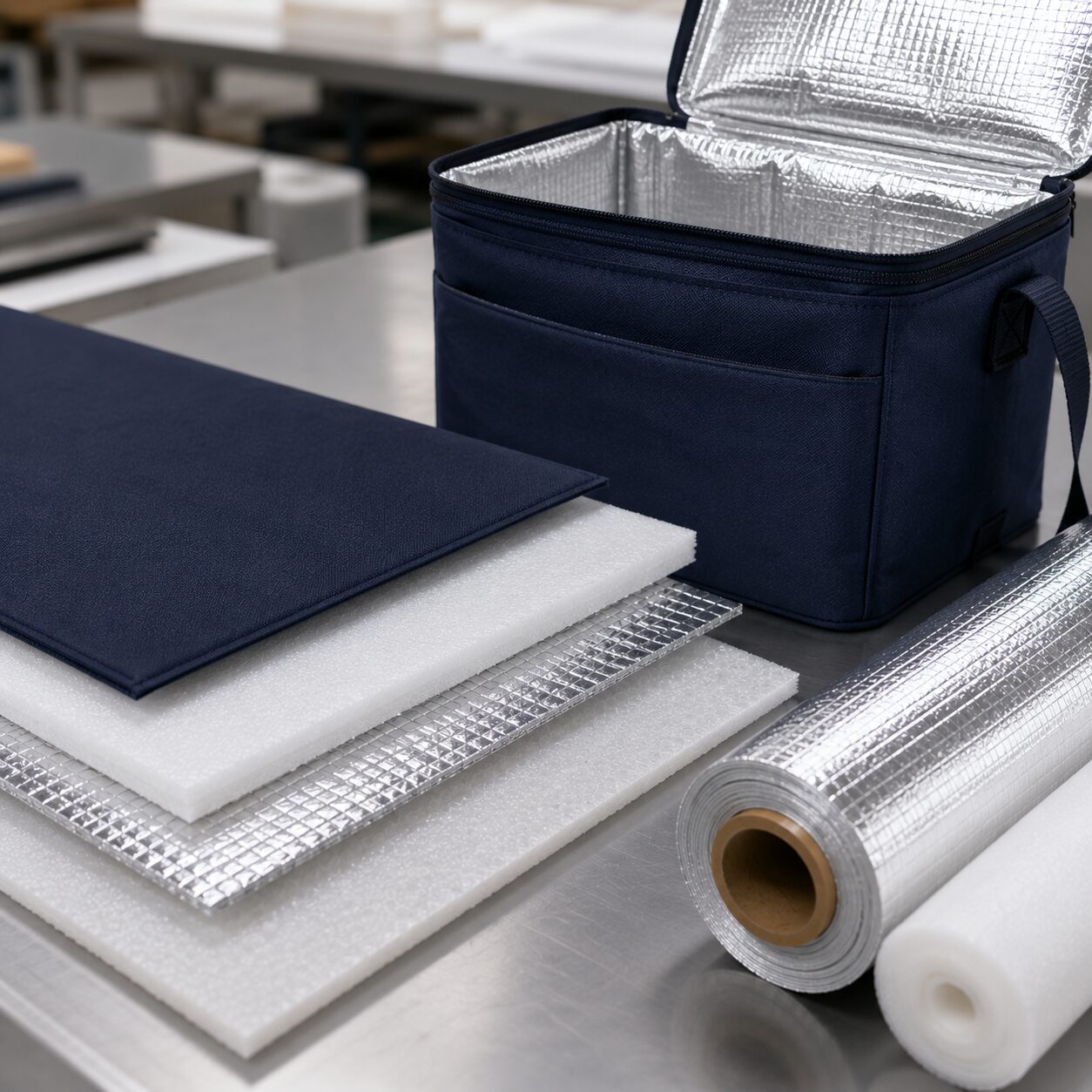
Foam insulation, such as EPE, can help slow heat transfer when paired with an appropriate lining. PEVA is often chosen for easy cleaning, but the material name alone does not prove food-contact compliance or leak resistance. Those claims depend on the selected formulation, seam construction and relevant testing.
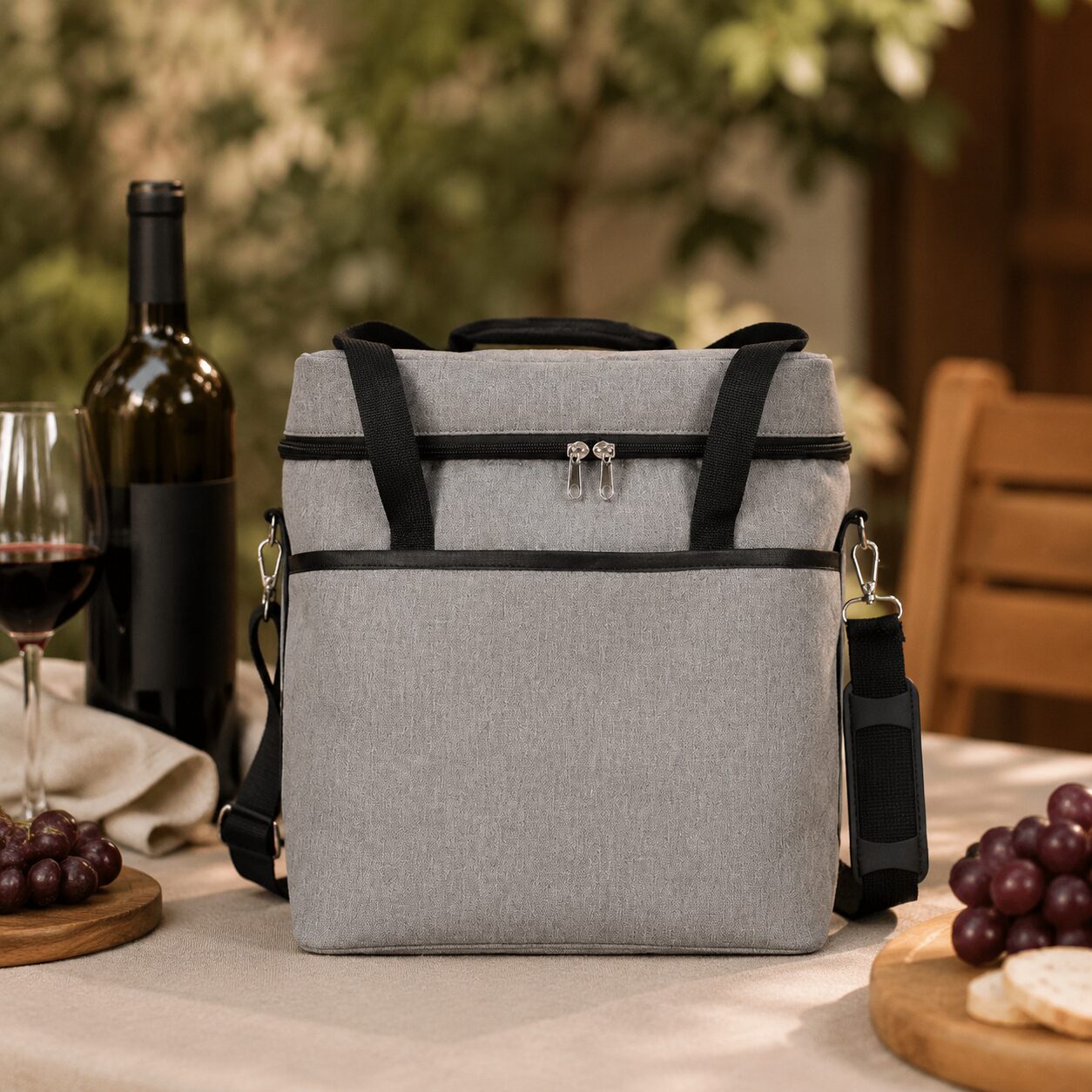
If the design includes a side bottle holder, see our custom wine bag options for ideas on insulation, dividers and bottle protection.
3. Design Two-Person and Four-Person Versions as a Range
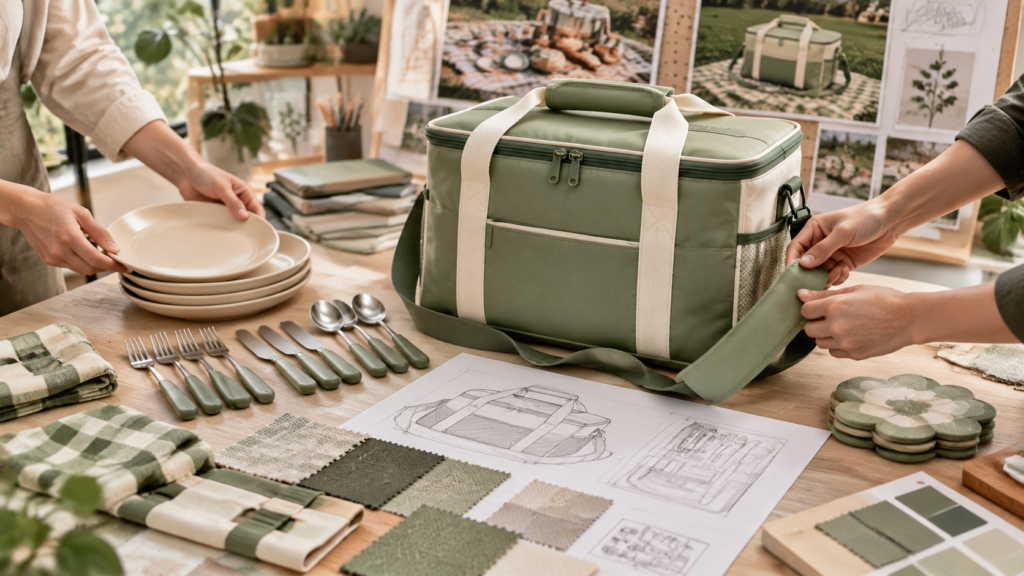
A picnic bag set for 2 can share fabrics, colorways, logo placement and certain hardware with the larger family version. However, the internal organizer usually needs a different pocket pattern. Doubling the plates and glasses does not necessarily mean doubling every dimension of the bag.
Before approving a collection, compare both formats side by side. Check whether the same bottle sleeve works, whether the cutting board needs to change size, and whether the straps support the heavier loaded version. This gives retail buyers a consistent-looking product range without forcing unsuitable components into one pattern.
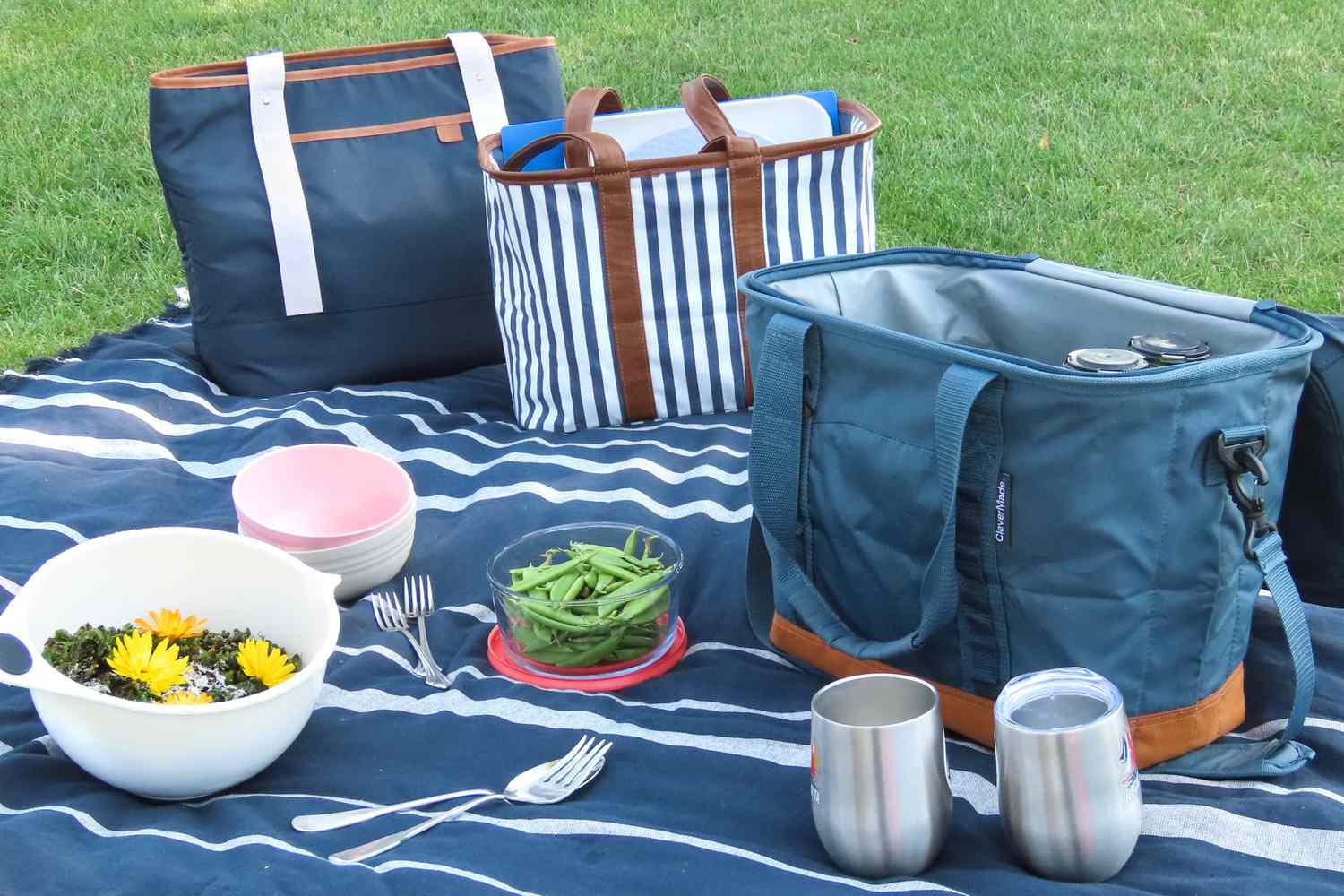
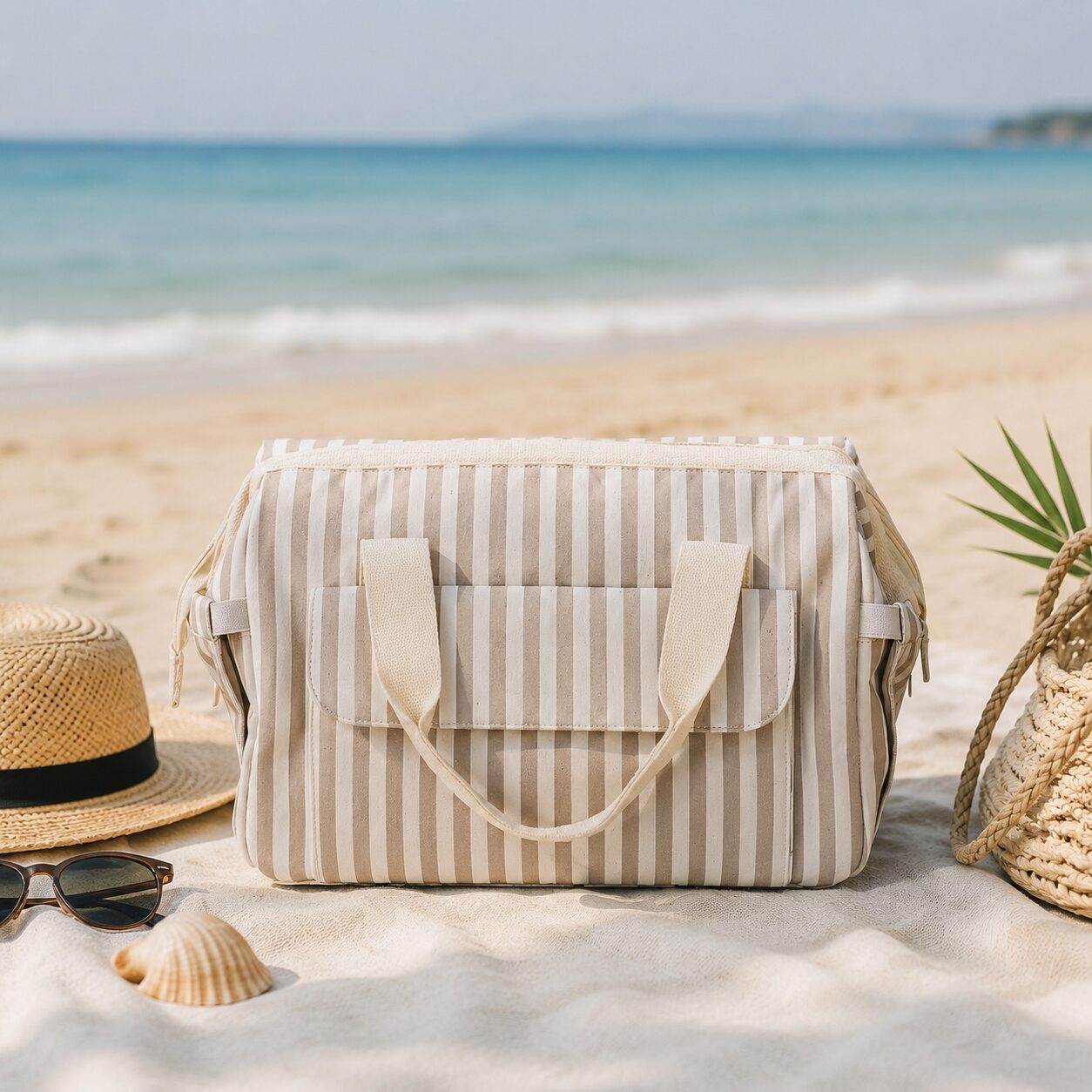
A second picnic bag set for 2 option could be a simple carry tote rather than a backpack. Offering that choice may help a brand serve different price points while keeping the overall product identity consistent.
4. Reach the Target Cost Without Guessing About Material Quality
A cheap picnic set should not mean uncontrolled material substitutions. For most wholesale projects, the better approach is to agree on a target factory price and then compare two or three sample specifications. Buyers can see which changes save money and which ones affect durability or presentation.
| Decision | Lower-Cost Option | What Buyers Should Verify |
|---|---|---|
| Exterior | Standard polyester or Oxford fabric | Fabric weight, coating and abrasion resistance |
| Insulation | Thinner foam layer | Cooling performance under intended conditions |
| Tableware | Simpler matched accessories | Food-contact documentation and breakage risk |
| Organizer | Sewn elastic loops | Ease of packing and long-term stretch |
| Packaging | Compact retail carton | Protection during transportation |
The cheapest component is not always the cheapest finished product. Broken cups, difficult packing and excess cartons may add costs after the goods leave the factory.
5. Evaluate Shipping Volume Before Choosing a Basket Shape
A buyer searching for a “picnic basket set cheap” often cares about the landed cost, not only the quoted unit price. Rigid wicker-style hampers may be attractive, but their outer dimensions can increase storage and freight requirements. A soft-sided construction or removable support panel may be worth considering when the product design allows it.
There is no universal percentage of freight saved by switching to a folding design. Ask the factory for the finished sample dimensions, retail carton size, master-carton count and gross weight. Compare those figures using the same shipping method and destination before deciding.
6. Make the Organizer Easy to Use and Repack
The advantage of a picnic set in a bag is that shoppers can find and return every accessory without unpacking the food compartment. Put frequently used utensils within easy reach, give cups individual holders if needed, and avoid overly tight elastic that makes repacking frustrating.
Useful details include a removable cutlery roll, a wipe-clean insulated interior, a dedicated napkin pocket and a blanket strap on the outside. But not every feature belongs in every price tier. For example, a removable organizer is helpful only if it can be attached securely again after use.
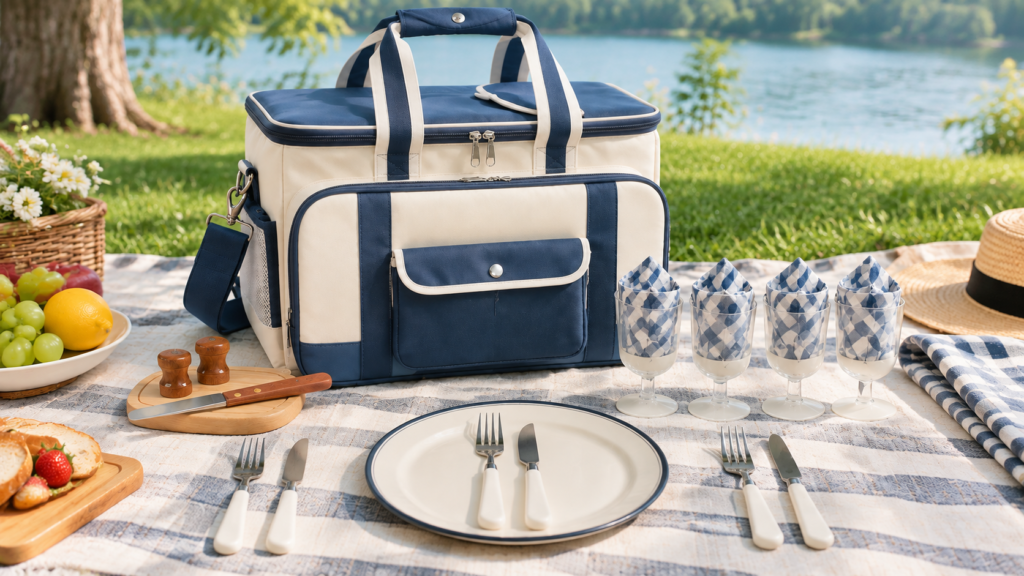
7. Aimazing Client Case: Improving an Outdoor Cooler Bag Through Sampling
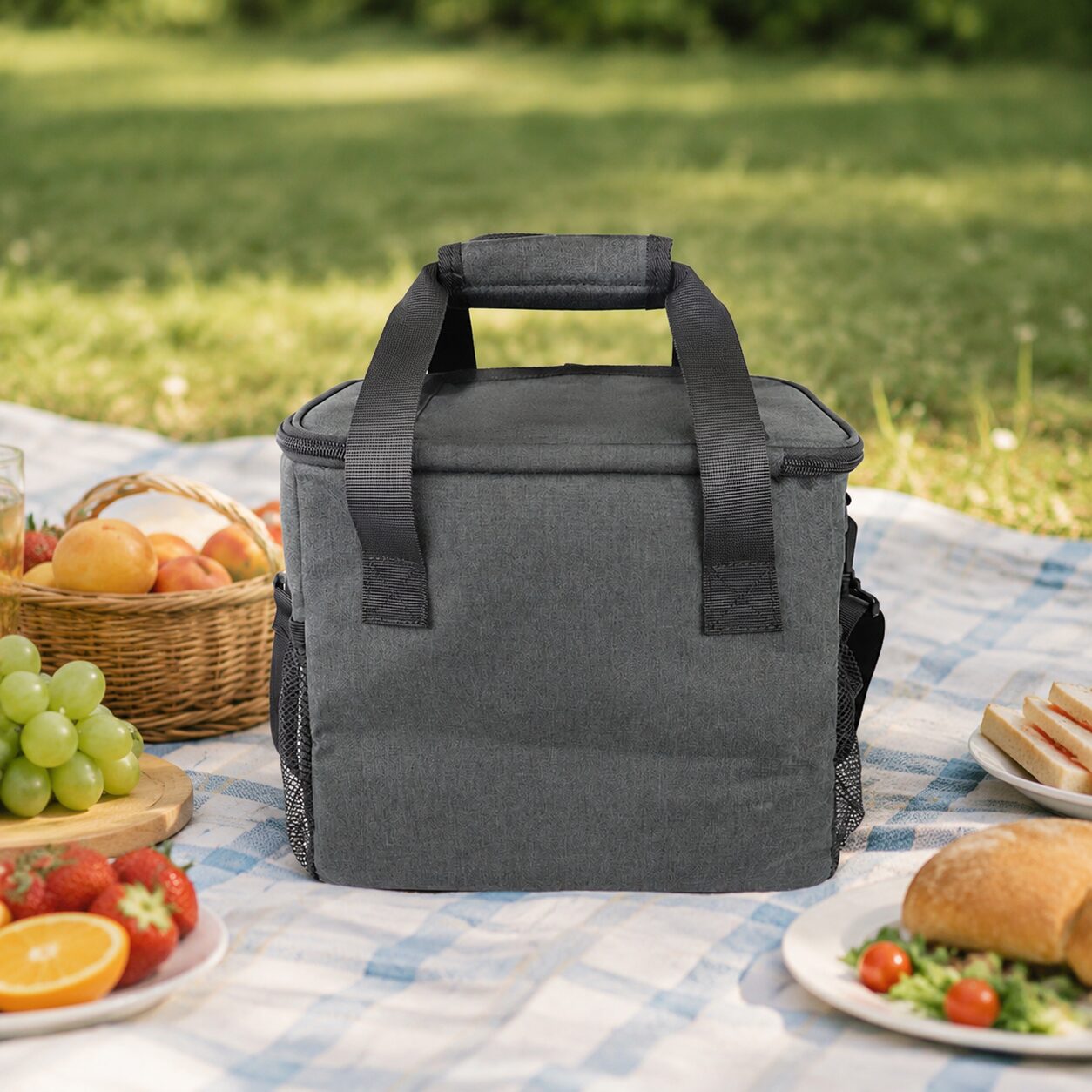
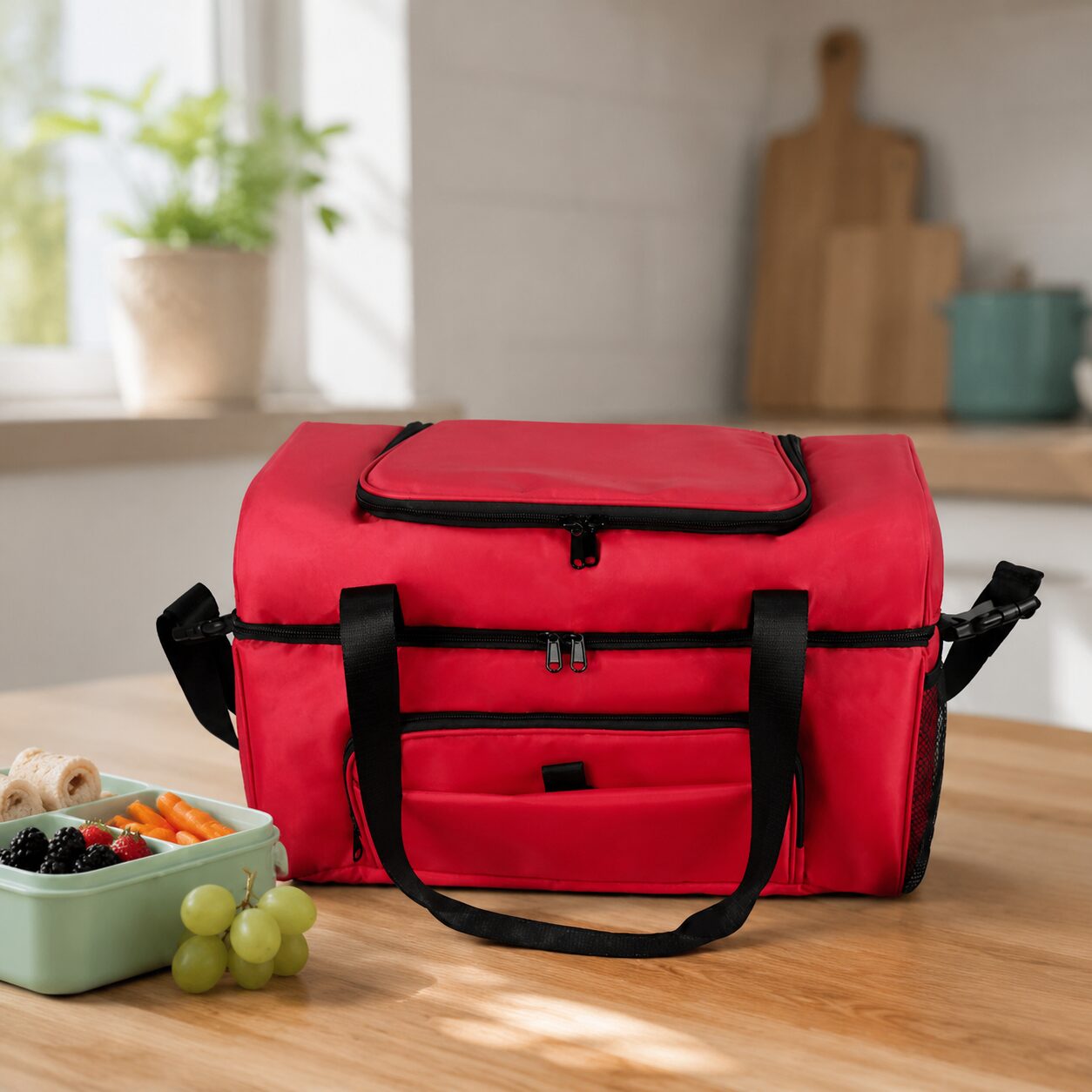
One of our clients, Aria, wanted a lightweight cooler bag suitable for daily use and outdoor activities. Her main concerns were practical: keeping food and drinks cool, preventing leakage, and making the bag comfortable to carry.
Rather than simply following the initial design, our team adjusted the insulation structure, reinforced the bottom, and improved the inner lining. After two rounds of sampling, Aria approved the final design, and the project moved into bulk production.
Although this was an outdoor cooler bag rather than a complete four-person picnic kit, the development process offers a useful lesson for brands sourcing a backpack picnic set for 4.
A good design should be tested with real contents before production. Food containers, tableware, bottles, and carrying comfort all matter.
At Aimazing, our role goes beyond manufacturing. We work with customers to identify practical problems during sampling and develop solutions that fit their product requirements and target market.
Explore more Aimazing customer projects.
8. Set a Realistic Landed-Cost Target and Inspection Plan
A picnic set for 4 needs a complete cost sheet. In addition to the sewn bag, include tableware, printing, packaging, master cartons, inspection and freight.
If a retailer needs a cheap picnic set for a seasonal campaign, simplify the accessories or decorative details first rather than removing essential reinforcement or skipping quality checks.
The search phrase “picnic basket set cheap” should also prompt one practical question: will the retail carton survive normal transport? A lower unit price can be wiped out by damaged packaging and product returns. Confirm the required drop-test or transport-test method with the buyer and packaging supplier rather than assuming one test standard fits every market.
Before bulk production, ask the factory to check a fully loaded sample for strap strength, pocket fit, zipper function, lining workmanship and actual packed dimensions. Our quality-control process explains how inspection is handled across cooler bag manufacturing.
9. Turn a Sample into a Repeatable OEM Specification
The final production brief should include tableware measurements, fabric and lining specifications, insulated compartment dimensions, branding artwork, packing instructions and an agreed approval sample.
For a picnic set in a bag, the contents must remain the same from the approved sample to the production cartons—not just the exterior appearance.
At Aimazing, we help overseas brands, wholesalers and distributors develop custom picnic bags around their intended customers, target cost and ordering requirements.
You can explore our picnic bag manufacturing range or review the OEM customization process before sharing a brief.
A picnic set for 4 works best when design, accessory sourcing and production are reviewed together.