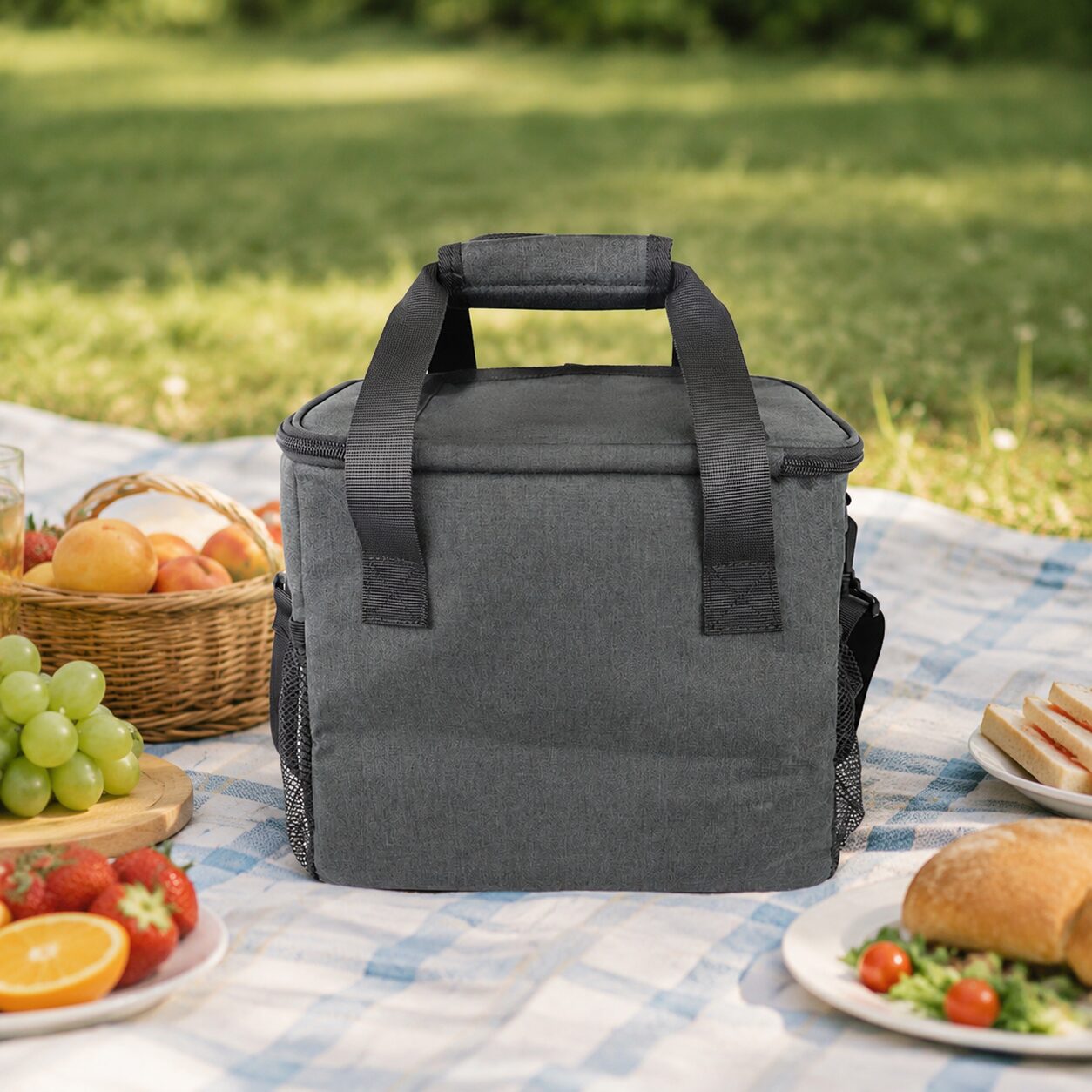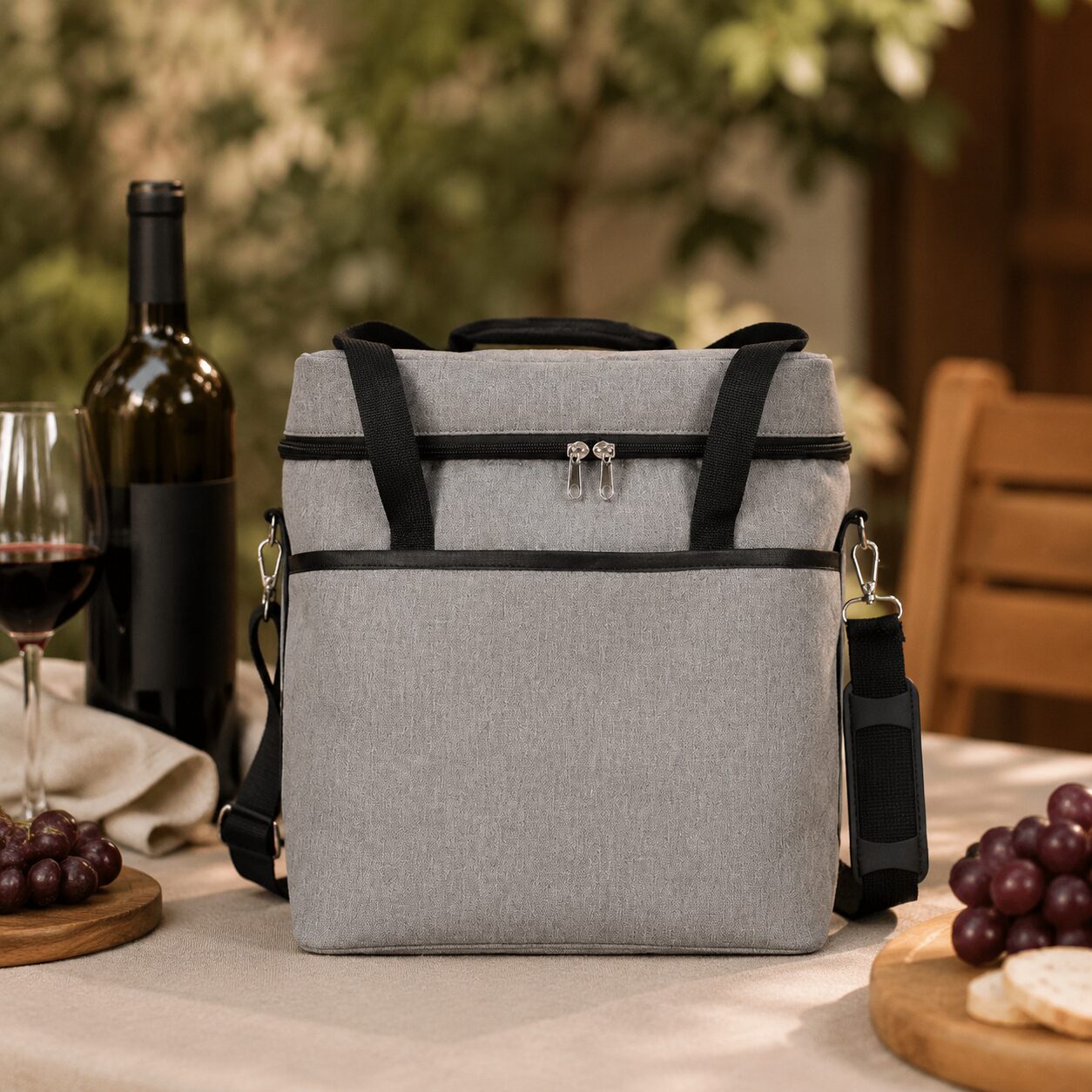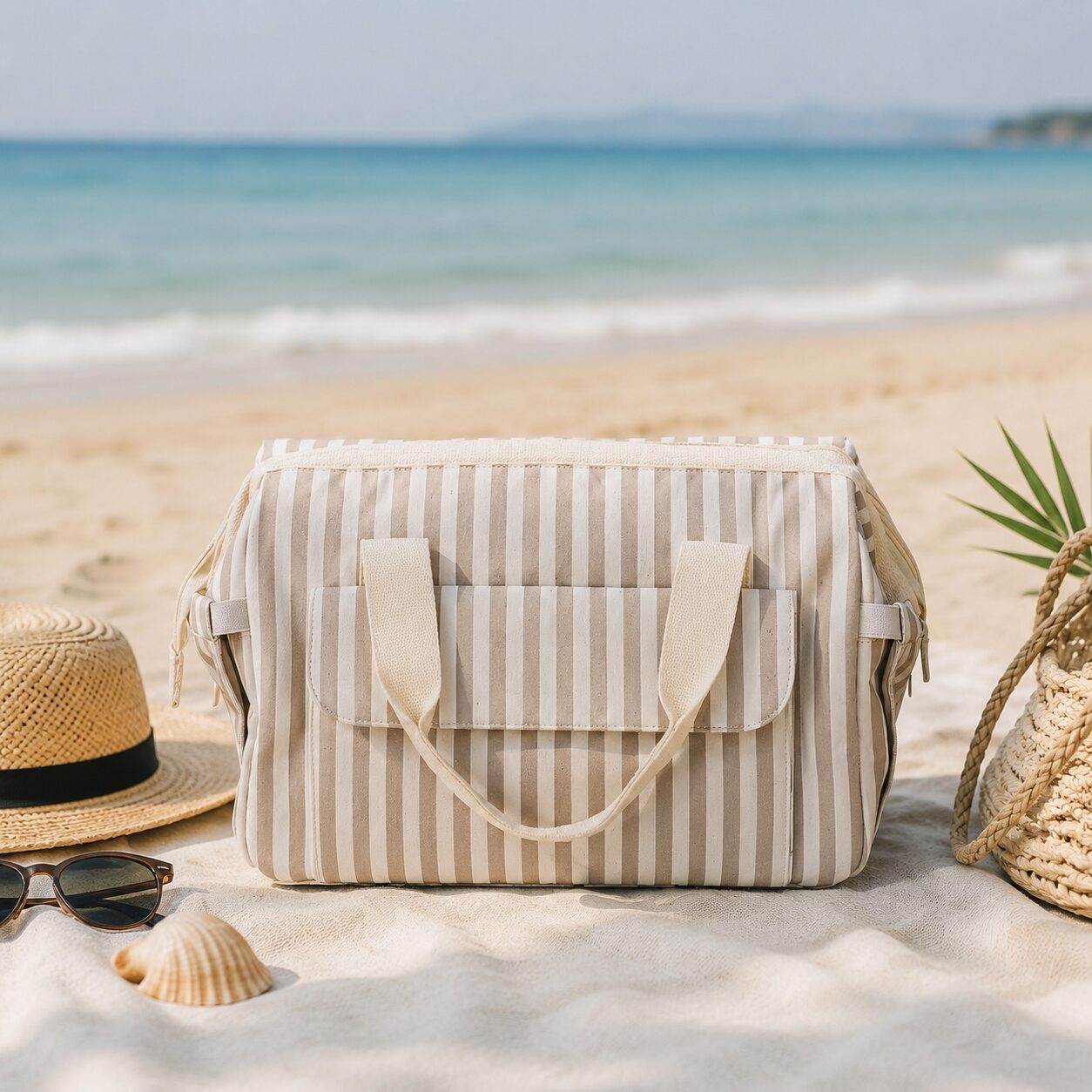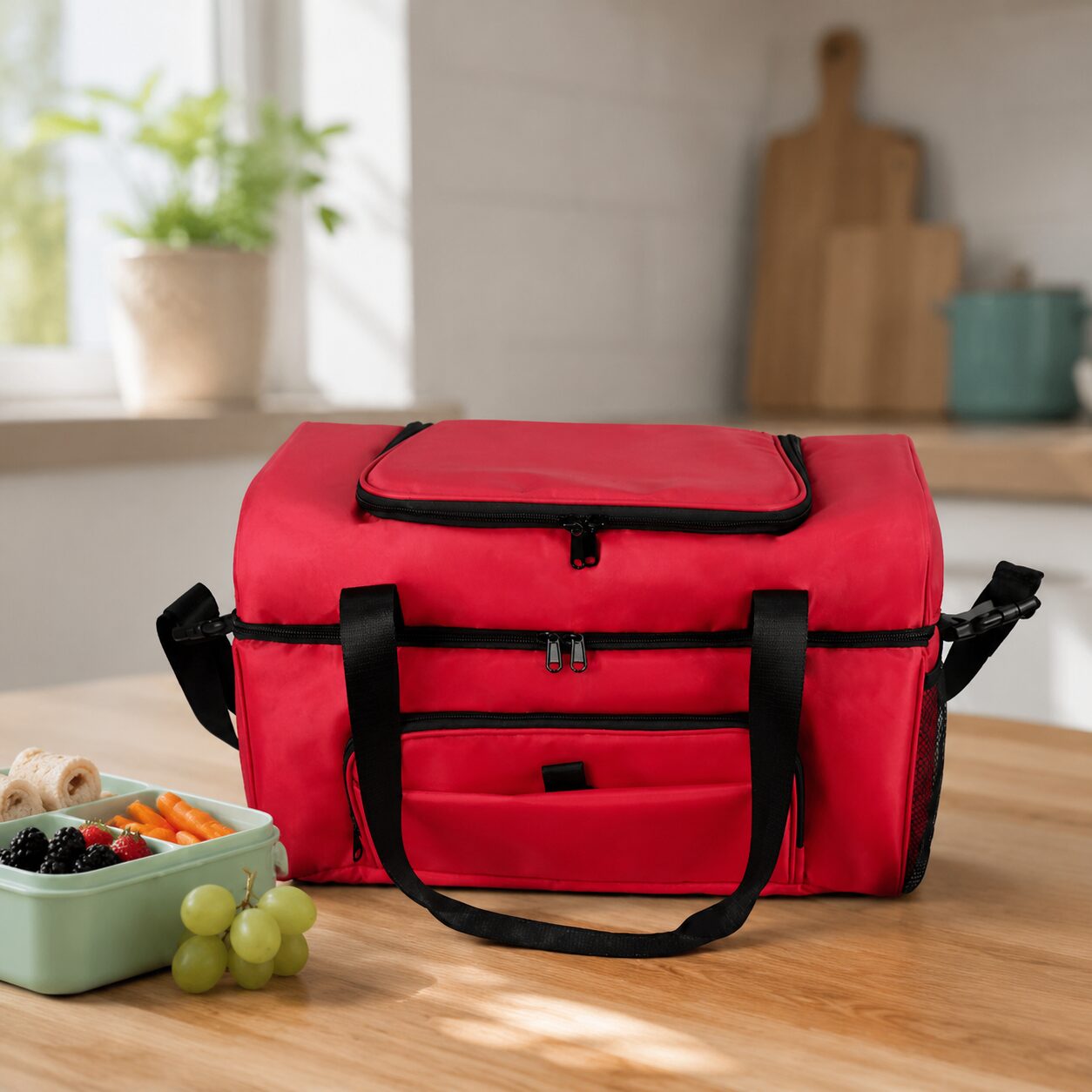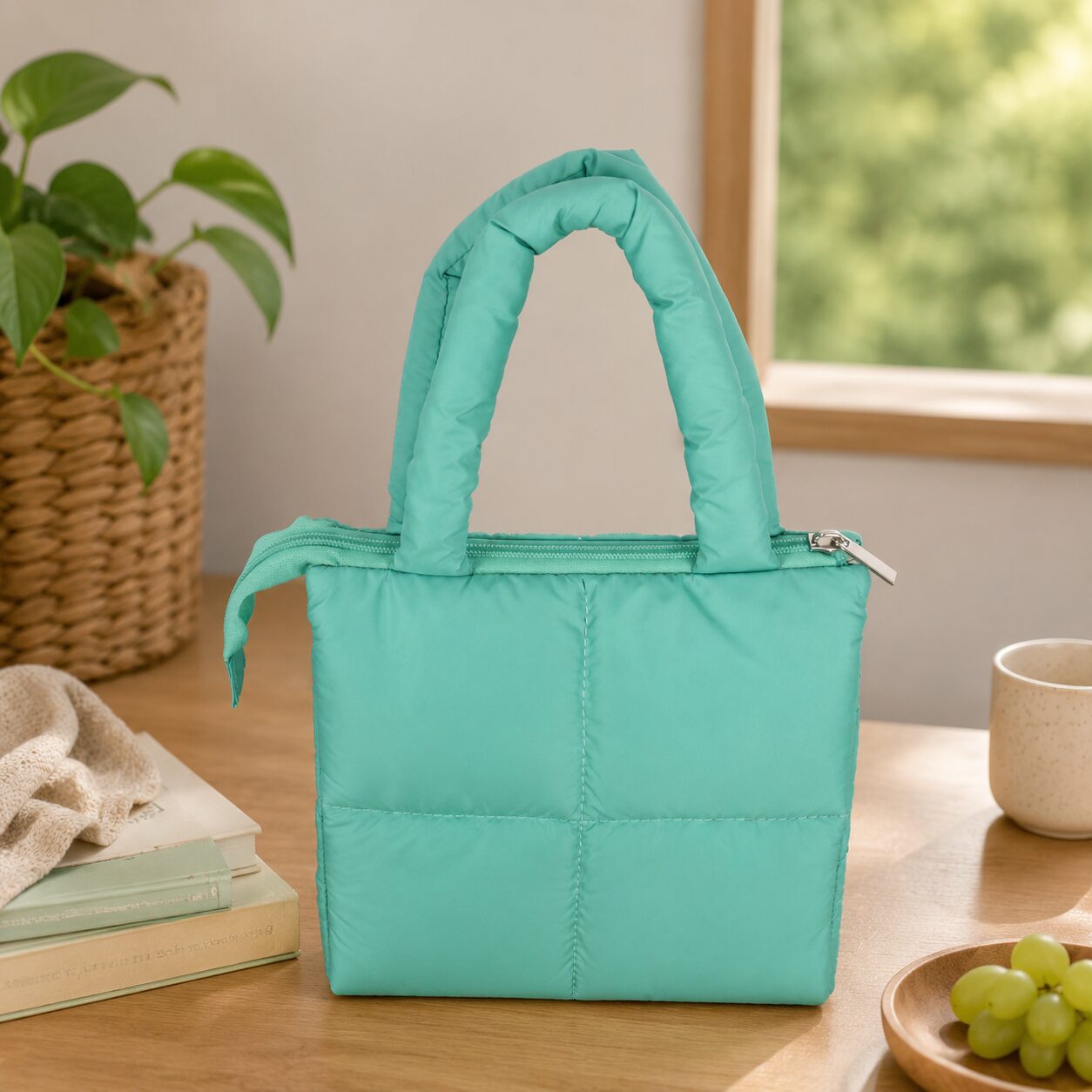

A good picnic tote should be easy to carry, simple to pack, and useful long after a summer promotion ends. For retailers, outdoor brands, and promotional product distributors, however, there is more to consider than appearance.
Size, insulation, handle strength, logo placement, and shipping costs all affect whether a product is worth adding to a collection.
At Aimazing Bag, we work with brands and wholesale buyers to develop custom cooler bags for different markets. One thing we have learned is that adding more features does not always make a better product. The right design depends on how people will use the bag, what they are willing to pay, and how the product will be shipped.
Here are the details we recommend reviewing before placing a bulk order.
1. Start With How Customers Will Actually Use the Bag
Before choosing materials or colors, think about what your customers will put inside.
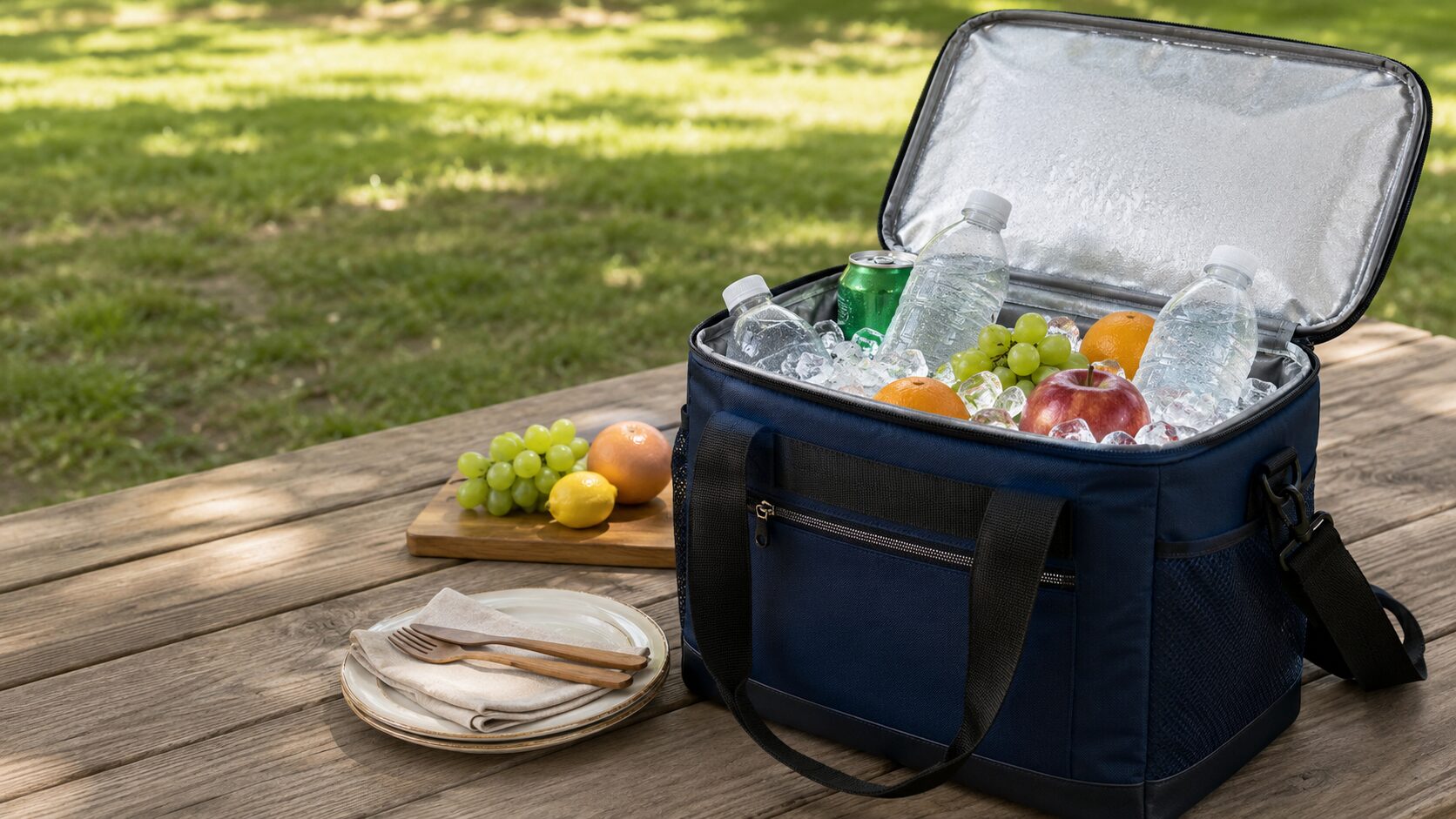
A picnic tote bag designed for a corporate summer event may only need space for sandwiches, snacks, and a drink. One sold through an outdoor retailer may need to carry heavier food containers, bottles, and reusable ice packs.
Those are two very different products, even if they look similar.
For buyers developing a new collection, we usually recommend answering three questions first:
- What will customers carry? Food containers, bottled drinks, fruit, or picnic accessories?
- Where will they use it? Parks, beaches, offices, grocery stores, or outdoor events?
- What matters most? Low weight, insulation, storage capacity, or a premium appearance?
The answers help determine everything from the bag’s dimensions to its zipper and handle construction.
For example, a bag intended for frequent grocery trips may benefit from reinforced handles and a wider base. A promotional giveaway, on the other hand, may work better with a simpler structure and a large printing area.
Our manufacturing advice: Decide which features customers will use regularly before spending money on additional pockets, hardware, or decorative details.
2. Choose the Right Size for Your Retail Market
Bigger is not automatically better.
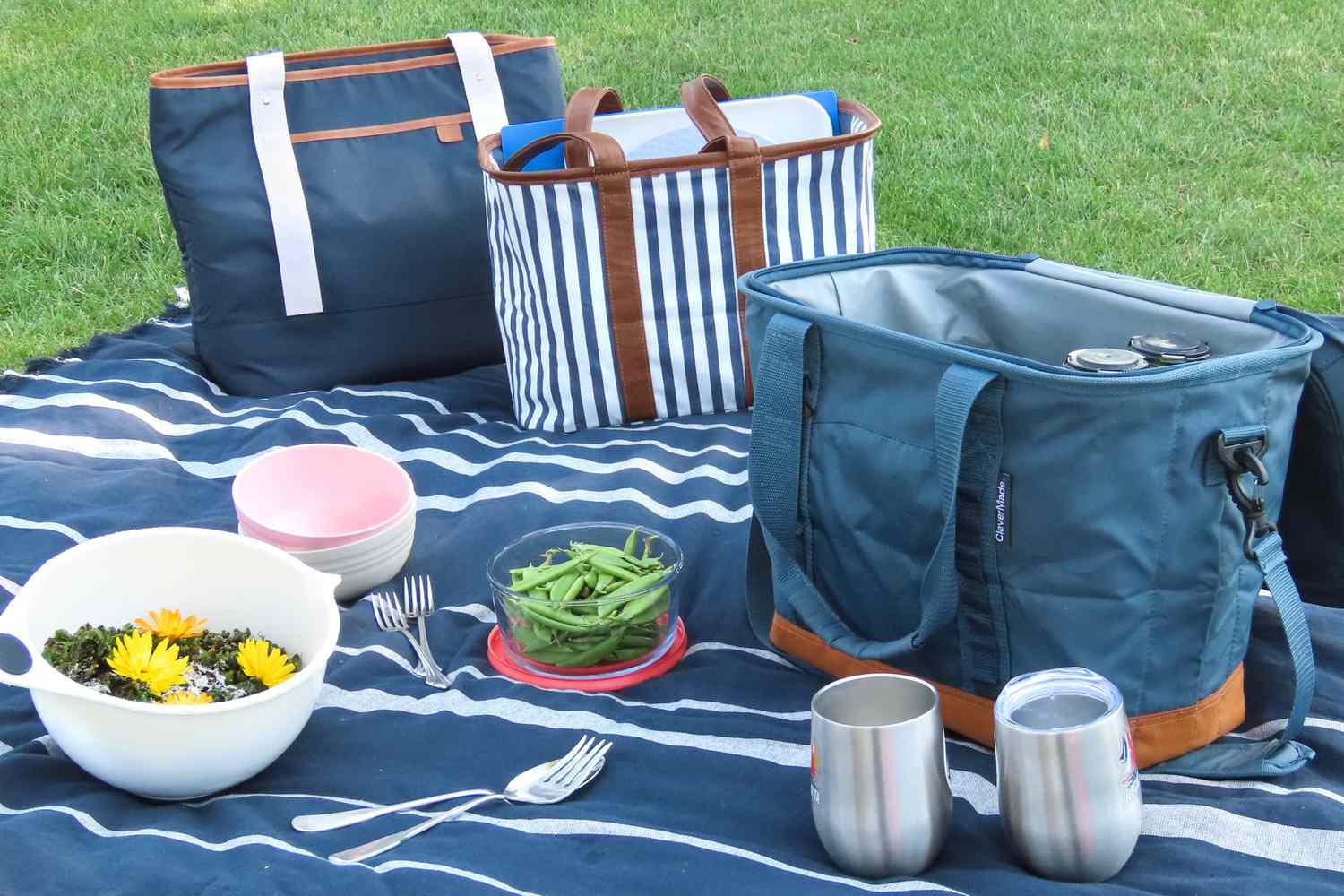
A small picnic tote can be a practical choice for city shoppers, office workers, and customers who want something easy to carry on short outings.
Compact designs also give brands an opportunity to create lightweight products that work for more than one occasion.
However, buyers should think carefully about internal dimensions. A bag may look spacious in photographs but become difficult to use once thick insulation and a zipper are added.
For this reason, we recommend testing the sample with actual drinks, lunch containers, and ice packs rather than relying only on measurements.
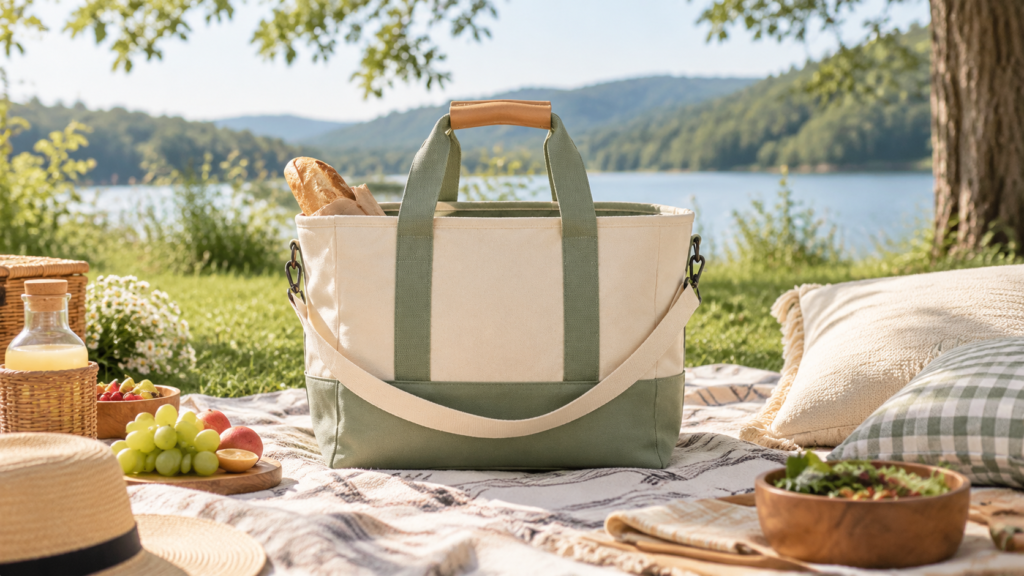
Comparing Different Formats
| Format | Best suited for | Recommended features |
|---|---|---|
| Compact | Individual lunches, short trips, promotional gifts | Lightweight construction, easy-access opening |
| Medium | Couples, everyday shopping, weekend outings | Insulated lining, comfortable handles, useful pockets |
| Large | Family outings, group events, grocery shopping | Stronger handles, reinforced base, larger opening |
For a large insulated picnic tote, capacity is only part of the equation. Buyers should also consider the weight when the bag is full.
A wide bag with weak handles may feel comfortable when empty but become awkward when filled with bottles and food containers.
Adding reinforced webbing, a stronger bottom panel, or a removable shoulder strap may improve everyday use without completely changing the design.
The goal is to match the construction to the expected load rather than simply make the bag bigger.
3. Understand What Makes an Insulated Tote Work
Insulation is one of the most important features to compare when developing cooler-style bags.
When a buyer asks us to develop a picnic insulated tote, we first want to know how long the contents need to remain cool, the expected outdoor temperature, and whether customers will use ice packs.
These details are more useful than simply asking for the thickest possible insulation.
Common Materials Used in Insulated Tote Construction
| Material | What it does | What buyers should consider |
|---|---|---|
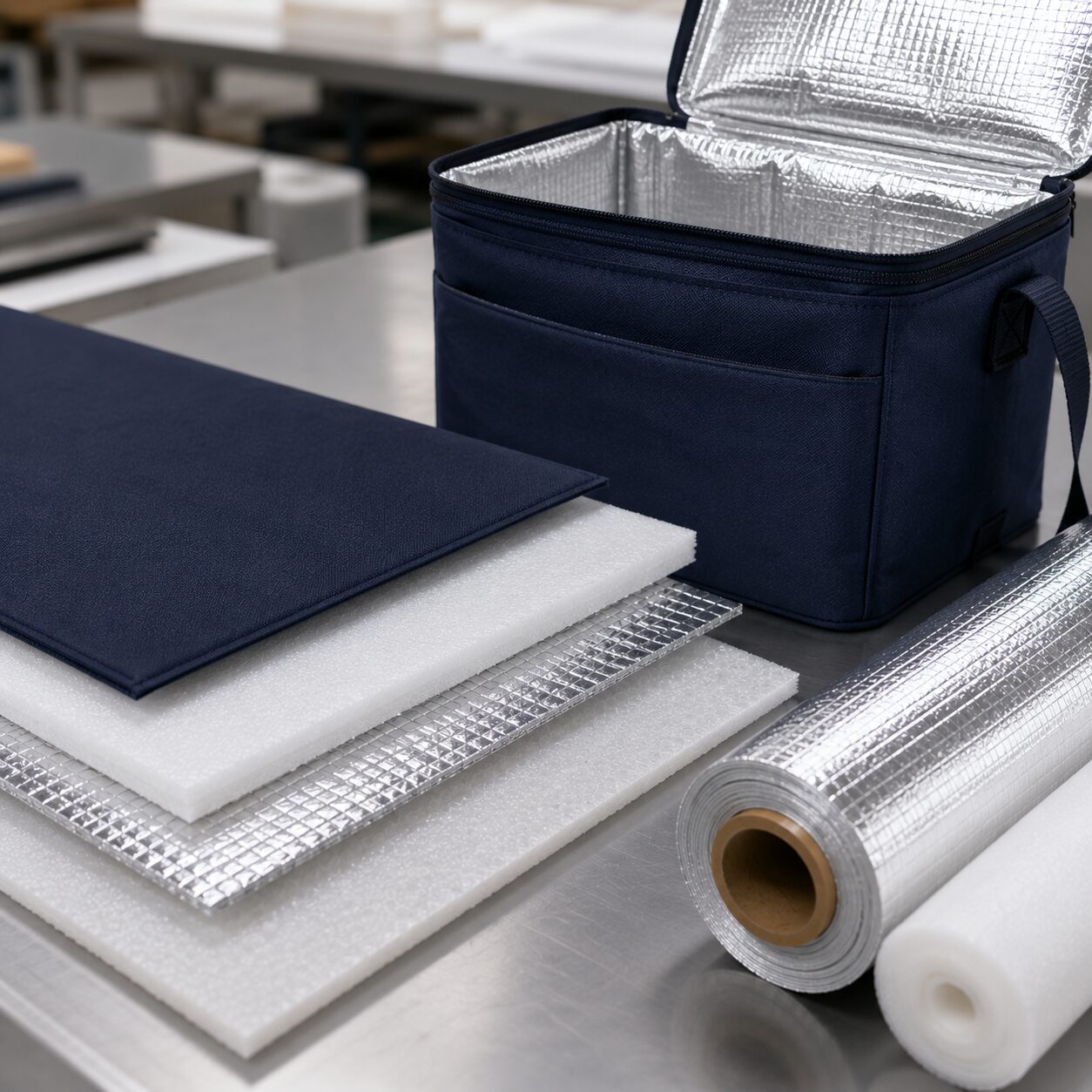
| Polyester or Oxford fabric | Provides the outer structure and protects the bag from everyday wear | Fabric weight, coating, color, and durability |
| EPE foam | Slows heat transfer through the bag walls | Thickness, flexibility, and required cooling performance |
| PEVA lining | Provides an easy-to-clean inner surface | Material documentation, seam construction, and intended use |
| Metallized film | Can contribute to thermal management in suitable constructions | Layer placement and overall insulation design |
| Reinforced webbing | Supports the handles when carrying heavier contents | Stitching, attachment points, and load requirements |
At Aimazing, we can develop cooler bag structures using different EPE foam thicknesses, including 3 mm, 5 mm, and 8 mm options.
But thicker foam is not always the best choice.
More insulation can increase manufacturing costs, take up internal space, and make a bag harder to fold for shipping. Buyers need to balance insulation with weight, price, and the finished shape.
It is also important to remember that insulation slows temperature changes; it does not actively cool food.
The USDA’s outdoor food safety guidance recommends keeping perishable foods at 40°F (4.4°C) or below with suitable cold sources.
For brands selling food-storage products in Europe, the European Commission’s food-contact materials guidance is also useful when assessing materials intended to come into direct contact with food.
Our manufacturing advice: Request cooling test results under clearly defined conditions before making temperature-retention claims in your product listings.
4. Reduce Shipping Costs Without Sacrificing Structure
Shipping is often overlooked during product development.
A picnic tote with a rigid frame may look attractive on a store shelf, but it can take up unnecessary space during international transportation.
For wholesale buyers ordering hundreds or thousands of units, packaging efficiency can make a meaningful difference to the final landed cost.
One option is to use flexible foam panels instead of a permanent metal frame. This allows certain designs to fold flatter when packed.
However, not every insulated bag should be compressed tightly. Thick foam, reinforced openings, and some liner constructions may lose shape or develop creases if folded incorrectly.
An Example of How Carton Size Affects Shipping Volume
Consider two possible packaging arrangements for the same quantity of bags.
| Packaging option | Carton dimensions | Units per carton | Carton volume |
|---|---|---|---|
| Standard packing | 60 × 40 × 40 cm | 30 | 0.096 m³ |
| Flat-fold packing | 60 × 40 × 25 cm | 30 | 0.060 m³ |
In this illustrative example, the flatter configuration takes up 37.5% less carton volume.
That does not guarantee a 37.5% reduction in freight charges, since shipping costs also depend on weight, shipment size, route, and carrier pricing.
For parcel shipments, FedEx explains how dimensional weight affects shipping charges.
When reviewing samples, we suggest asking your manufacturer for both the finished product dimensions and the packed carton dimensions.
This helps you understand the cost of getting the product into your warehouse—not just the factory price.
5. Make Custom Branding Practical, Not Just Attractive
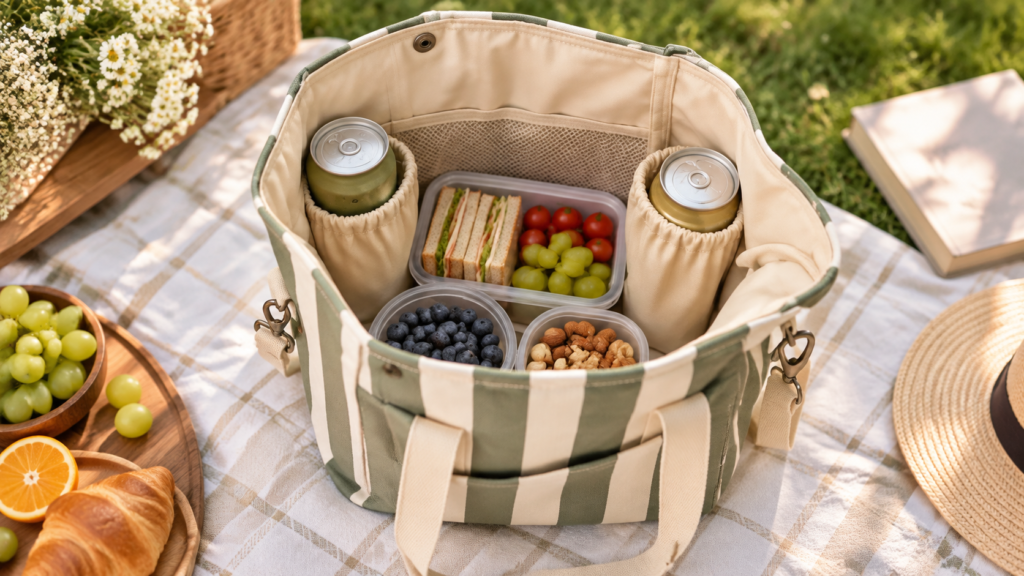
For promotional distributors and private-label brands, logo customization is often one of the main reasons for developing a new bag.
A personalized picnic tote gives businesses an opportunity to put their identity on a useful everyday product.
However, choosing the right branding method matters.
A large logo may look excellent on a digital mockup but crack, peel, or become distorted if it is placed across an area that bends repeatedly.
Which Logo Method Should You Choose?
| Logo method | Suitable applications | Points to check |
|---|---|---|
| Screen printing | Simple graphics and larger promotional orders | Ink adhesion, fabric compatibility, and color accuracy |
| Heat transfer printing | Multicolor artwork and detailed designs | Application settings and resistance to repeated folding |
| Embroidery | Premium fabric exteriors | Fabric stability, backing, and waterproofing considerations |
| Woven or rubber patch | Outdoor-style and premium collections | Attachment strength, flexibility, and added cost |
For frequent-use bags, we generally recommend placing the logo on a relatively flat exterior panel.
Avoid locating important graphics directly over seams, heavily folded corners, or areas likely to rub against the user’s body.
It is also worth checking the logo after repeated folding and cleaning.
Our manufacturing advice: Approve a physical printed sample before mass production. A digital design can confirm layout, but it cannot fully show how the finished logo will look and feel on fabric.
6. Real Retail Example: What Brands Can Learn From Trader Joe’s
One useful example comes from the American grocery retailer Trader Joe’s.
On May 20, 2026, the company introduced a summer collection of mini insulated tote bags in six colors and designs.
According to ABC News’ coverage of the launch, the bags featured:
- Dimensions of approximately 10 × 6 × 6 inches
- A 1.5-gallon capacity
- A zippered top opening
- Two reinforced handles
- A retail price of $3.99 at launch
The collection was designed for everyday uses such as carrying lunches, snacks, and drinks.
What Can Wholesale Buyers Learn From This Example?
First, a useful size can be more important than maximum capacity.
A small picnic tote does not need to carry a full family meal to be commercially relevant. A compact product can appeal to customers looking for convenient daily food storage.
Second, one basic shape can support different retail designs.
Using multiple color combinations and graphics allows a retailer to offer variety without necessarily creating a completely different bag structure for every design.
Third, simple features still matter.
The zippered opening and reinforced handles addressed common everyday needs without making the product unnecessarily complicated.
For a brand developing a picnic tote collection, the lesson is straightforward: give customers a clear reason to use the product, then make sure the size, construction, and price support that purpose.
This is a publicly documented retail example, not a manufacturing project attributed to Aimazing. It provides a useful reference for product planning rather than a claim about our own customer results.
7. Check Quality Before Approving Bulk Production
A sample may look good in photographs, but it needs to perform well when filled, carried, folded, and cleaned.
For a picnic insulated tote, we recommend checking thermal performance under conditions that reflect how the customer will actually use it.
That means using a consistent starting temperature, ambient temperature, ice-pack quantity, and test duration when comparing different constructions.
We also recommend checking these areas before production approval:
- Handle strength: Load the bag to the agreed test weight and check the attachment seams.
- Lining quality: Look for gaps, weak seals, and areas where moisture might escape.
- Zipper operation: Open and close the bag repeatedly, especially around curved corners.
- Base stability: Make sure the bottom holds its intended shape when the bag is loaded.
- Logo durability: Check adhesion, appearance, and resistance to normal handling.
- Packing condition: Confirm the product can be packed and unpacked without permanent damage.
For a large insulated picnic tote, pay particular attention to the handle attachment points and bottom panel.
Heavy bottles place additional stress on these areas, especially when users lift the bag quickly or carry it over longer distances.
An HDPE or PE support panel may help maintain a flat base, but it can also reduce folding flexibility. Where both support and compact packing are required, a removable or foldable insert may be worth considering.
Buyers should also distinguish between water-resistant and leakproof construction. A waterproof lining material does not automatically make the completed bag leakproof. Seams, stitching, and closures all matter.
These checks can help reduce avoidable quality problems before a shipment reaches retail customers.
8. Work With a Manufacturer Who Understands Your Market
Good product development starts with a clear brief.
When a buyer brings us a picnic tote bag project, we encourage them to share more than a reference image.
Useful information includes the target retail price, expected order quantity, preferred materials, intended customers, and the main features the product needs.
With a personalized picnic tote project, logo artwork, brand colors, packaging requirements, and preferred decoration methods are equally important.
At Aimazing Bag, our role is not limited to sewing bags from an existing specification.
As an OEM and ODM cooler bag manufacturer with manufacturing experience dating back to 2000, we support brands and distributors through material selection, structural development, sampling, and bulk production.
Our services include:
- Custom OEM and ODM development
- Material and insulation recommendations
- Logo, color, and packaging customization
- MOQ starting from 100 pieces
- Sampling in 3–5 days for standard confirmed designs, subject to material availability and complexity
- Quality checks throughout production
For buyers comparing suppliers, we recommend reviewing a physical sample and confirming the approved specifications before placing a larger order.
This makes it easier to manage expectations around product quality, unit cost, and delivery schedules.
Conclusion: Build a Product People Will Keep Using
A successful picnic tote does not need every available feature.
It needs the right capacity, materials that suit its purpose, comfortable handles, useful insulation where required, and a design that makes sense for the target market.
For retailers and promotional buyers, the best results often come from balancing product quality with realistic pricing and efficient packaging.
At Aimazing, we believe a good manufacturing partner should help you make those decisions before bulk production begins.
Developing a custom collection for your brand or wholesale market? Share your design ideas, target price, and order quantity with our team. We can help you explore a practical solution for your next product line.