
1. The Frustration of Leaks: Why Some Cooler Bags Fail When Ice Melts
Liquid leakage usually comes from the liner and seam structure, not the outer fabric. Poor manufacturing standards cause immediate product failures and customer returns. Brand managers must implement strict testing protocols for every high-performance cooler bag for ice production run. Advanced inspection procedures stop structural defects before goods leave the factory floor. High-performance accessories require precise material evaluation and tension testing. Professional quality management builds long-term consumer trust and repeat purchasing loyalty. Sourcing reliable manufacturing partners eliminates supply chain risks and delivery delays.
Market leaders use comprehensive quality assurance frameworks—including raw material testing, supplier audits, automated optical inspection, and batch reviews—to guarantee predictable bulk performance, reduce warranty claims, and satisfy global buyers demanding mechanical resilience and safety compliance.
| Quality Parameter | Inspection Method | Industrial Benchmark |
| Tensile Strength | Automated pull-testing machine | Zero seam failure at maximum load |
| Fabric Density | GSM digital scale measurement | Uniform weight distribution across panels |
| Color Fastness | Spectrophotometer rating scale | Grade 4 minimum against fading |
2. Anatomy of a Thermal Bag: Outer Shells, Insulation Layers, and Linings
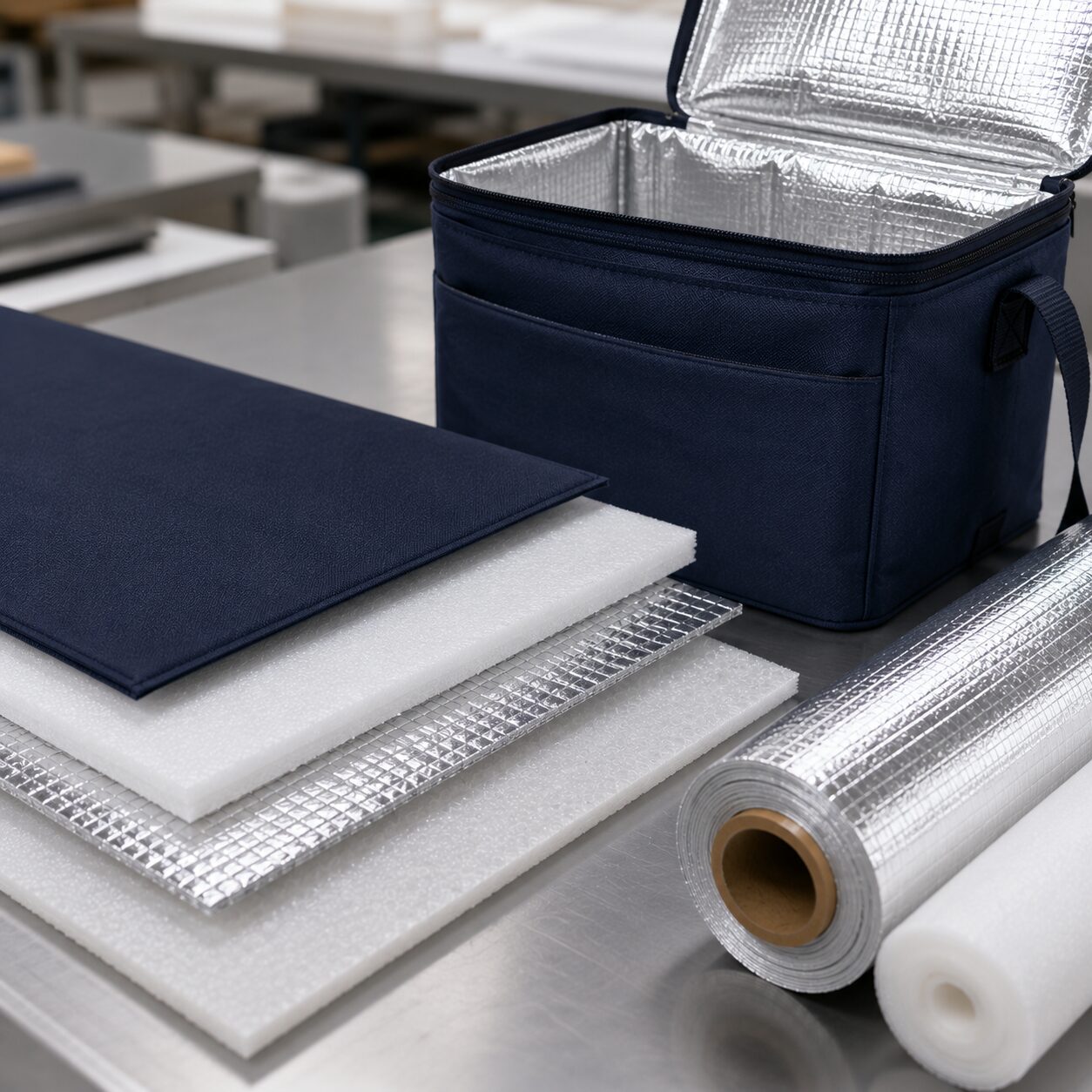
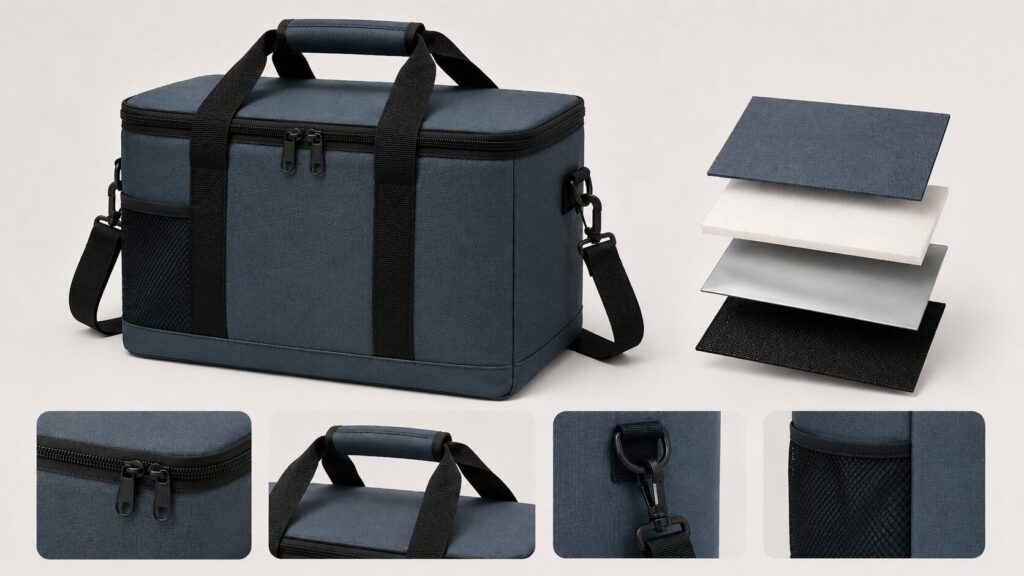
Cooler bags may use Oxford fabric or PU outside, 3/5/8/10 mm EPE foam for insulation, and aluminum foil inside. Proper structural selection ensures thermal accessories withstand aggressive daily wear and environmental exposure. High-performance thermal gear requires rigorous textile evaluations to prevent premature tearing. Brand managers must prioritize outer shell durability to guarantee long-term product performance. Our factory integrates advanced material testing to handle maximum friction thresholds safely. Learning how to calculate correct fabric parameters requires evaluating tensile strength against environmental stress. Advanced textile configurations act as primary structural shields against sudden mechanical tearing.
Reinforced backing layers and high-density weaves prevent sagging and block moisture in every durable cooler bag for ice, while strict material inspection protocols, precise panel alignment, and extreme stress testing ensure structural rigidity and eliminate liability risks.
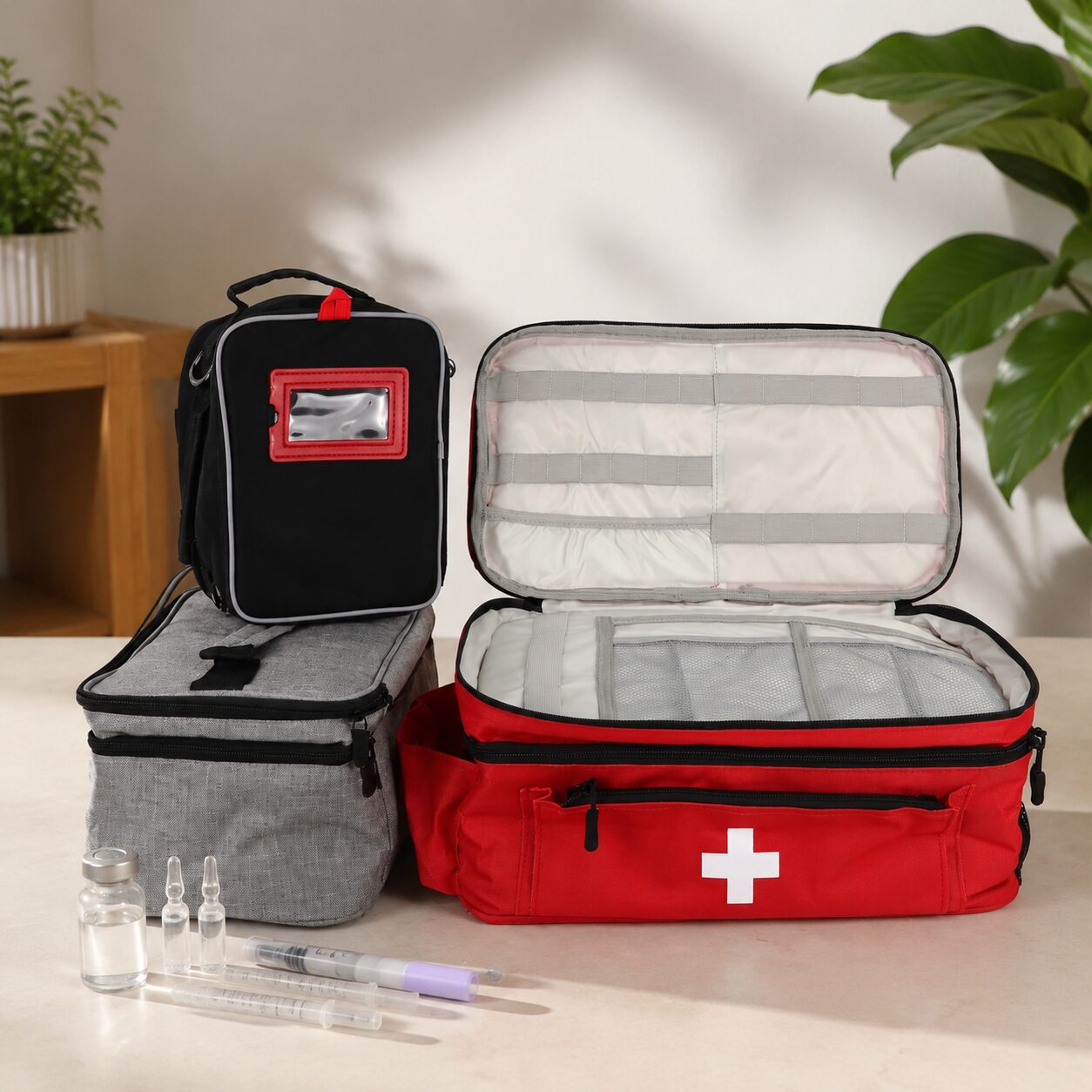
- 20 mm EPE foam is commonly used for medical bags to maintain extreme temperature control.
- Reference insulation time is 8–10 hours in summer, 10–12 hours in winter, and 8–10 hours at room temperature.
- Outdoor thermal gear faces constant friction against rocks and rough terrain during daily use.
- Quality control teams inspect thousands of units daily for lamination defects and seam integrity.
3. The Root Cause: Why Stitched Aluminum Foils Tear and Leak
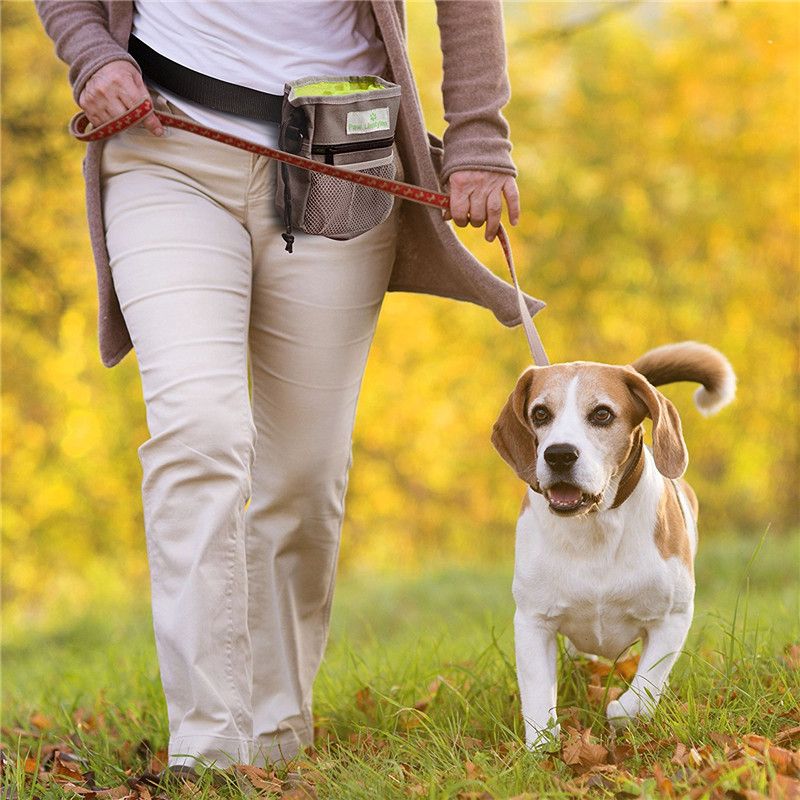
Composite aluminum foil with 3 mm high-density EPE slashes production time, though stitched or embossed liners can sometimes tear around needle holes and lack full heat-sealing capabilities. To get around this, specialized pet accessories and custom storage solutions undergo strict batch inspections, verifying pocket placement, elastic retention, and structural load capacity to meet professional manufacturing standards.
Automated inspection systems catch assembly errors instantly during high-volume manufacturing, helping deliver flawless cooler bag for ice items that build strong brand loyalty. By running rigorous evaluations—such as internal divider reinforcement tests, mesh pocket durability checks, modular attachment assessments, and bulk packaging audits—specialized quality control protects corporate brand equity and maximizes the retail value of every cooler bag for ice.
- Stitched foil liners tear easily near needle holes when subjected to shifting ice pressure.
- Embossed aluminum sheets fail to undergo complete thermal welding along corner seams.
- Thin insulation composites accelerate heat transfer during extended outdoor excursions.
- Poor seam sealing causes premature water leakage during standard melting cycles.
4. Waterproof Superiority: Heat-Welded PEVA vs. Traditional Stitching
For bags carrying loose ice, heat-welded PEVA is more suitable because it is flexible and can create a 100% waterproof, leakproof liner when properly sealed. Proper structural load-bearing design ensures item safety and cargo integrity during commercial transport. High-performance travel gear requires rigorous engineering standards to prevent sudden structural failure. Brand managers must prioritize weight distribution protocols to guarantee long-term product performance. Our factory integrates advanced reinforcement techniques to handle maximum dynamic load thresholds safely. Learning how to calculate correct load parameters requires evaluating static weight limits against movement. Advanced material configurations act as primary structural shields against sudden tensile stress.
Reinforced webbing and high-density core boards prevent structural tearing and sagging in every cool bag and ice packs setup, while strict factory load-testing, precise panel alignment, and comprehensive user documentation ensure optimal reliability, minimize liability risks, and build absolute consumer confidence under extreme operational stress.
- High-frequency welding melts PEVA sheets together to form a seamless waterproof barrier.
- Flexible PEVA liners accommodate shifting ice blocks without puncturing or tearing.
- Pairing insulated interiors with specialized cool bag and ice packs maximizes thermal retention.
- Seamless heat-welding eliminates all needle punctures along the bag floor and walls.
5. Versatility in Thermal Control: Keeping Items Cold or Warm
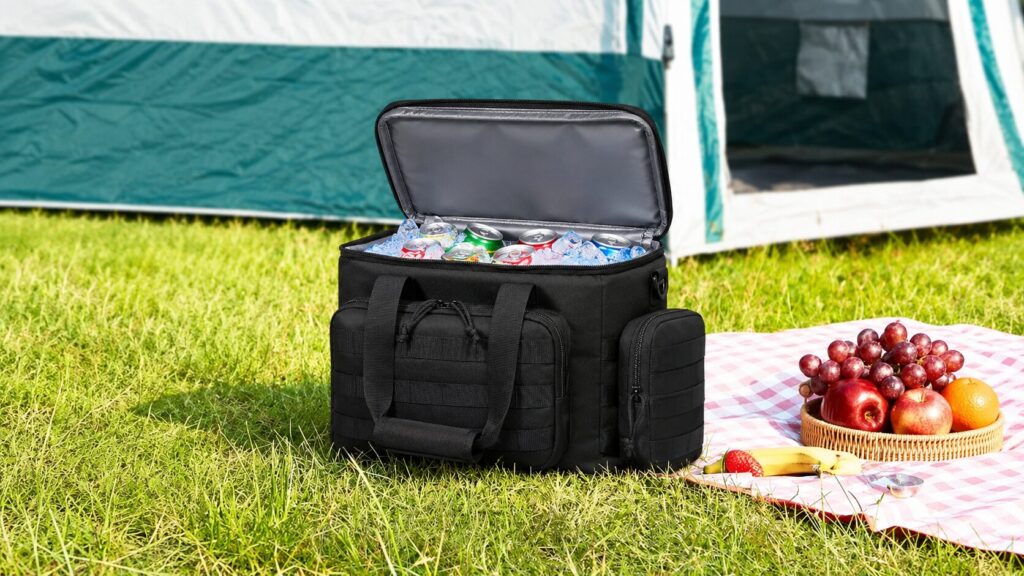
High-performance keep cold bags maintain low internal temperatures through multi-layer thermal insulation, while hardware reliability ensures complete product security during transport, making every keep cold bag dependable for users on the move. To prevent field failures, manufacturers subject zipper tracks to thousands of open-close cycle tests, metal clips and buckles to high-tensile stress evaluations, and certified metal or acetal plastic fastenings to rigorous quality checks—including slider fatigue tests, drop-impact assessments, and salt-spray corrosion resistance trials—guaranteeing smooth, frustration-free operation and protecting brand integrity across global retail channels.
- Multi-layered insulation configurations provide effective solutions for how to keep things warm in a cooler.
- Thick EPE foam barriers block external heat transfer during hot summer conditions.
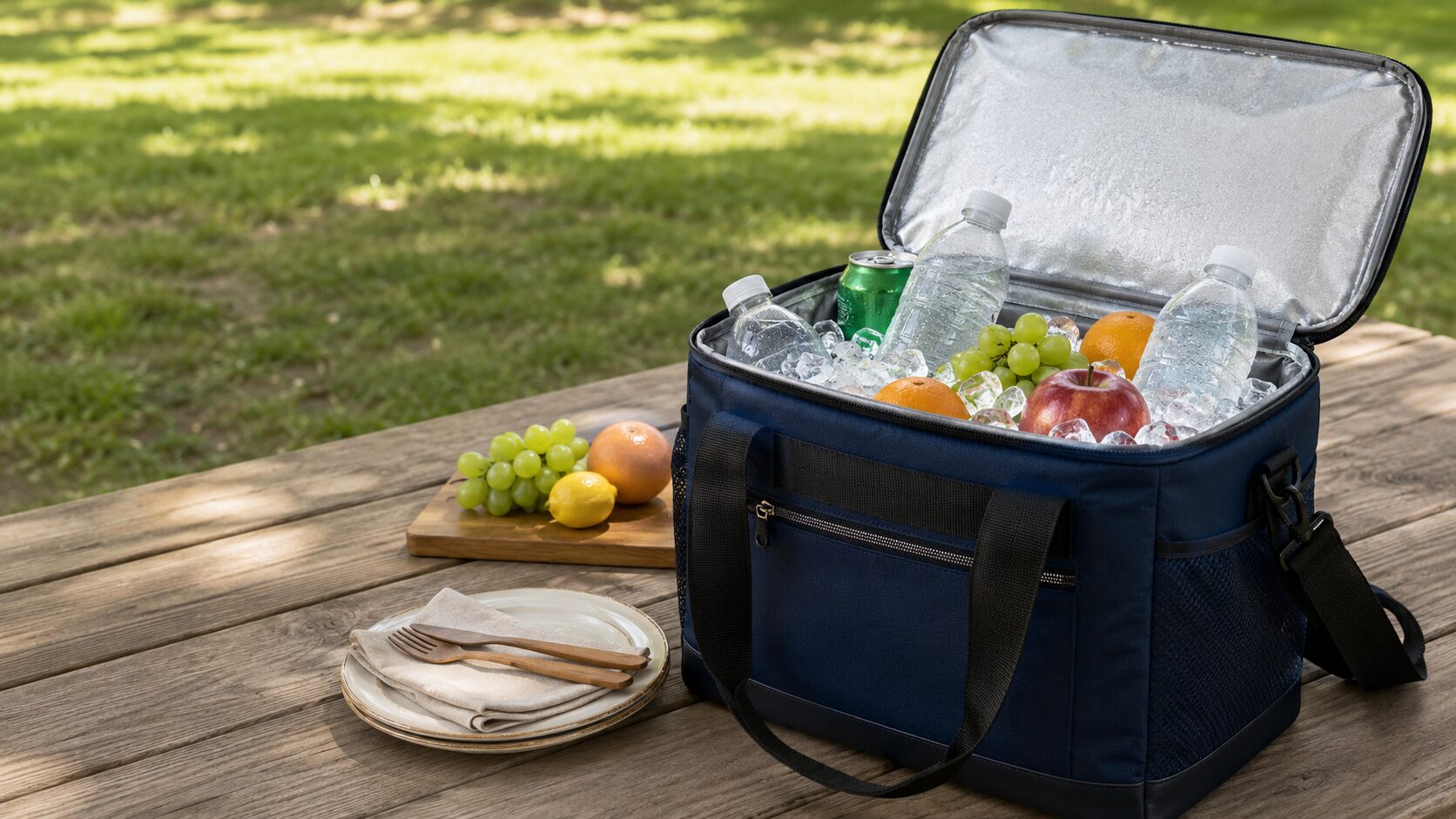
- A reliable keep cold bag maintains optimal beverage temperatures throughout extended trips.
- Proper zipper closure seals internal air currents to preserve thermal efficiency.
6. Specialized Applications: Transporting Bottles and Sensitive Goods
Engineering secure compartments and internal dividers solves how to keep a bottle cold without shifting or puncturing liners. OEM manufacturing requires agile production workflows to meet tight global market deadlines. Brand managers rely on our flexible manufacturing infrastructure for fast inventory replenishment. Light customization of logos and colors is available for every premium thermal bag. Custom orders are produced and shipped in 5–7 days with flexible production arrangements. Advanced laser-cutting technology guarantees precise component dimensions during rapid production runs.
Automated pattern matching ensures flawless aesthetic consistency across customized cooler bag for ice units, while dedicated quality control personnel monitor every manufacturing stage without exception. Comprehensive traceability systems track raw material batches through final assembly, and strategic supply chain partnerships secure stable pricing and uninterrupted material flow for every cooler bag for ice.
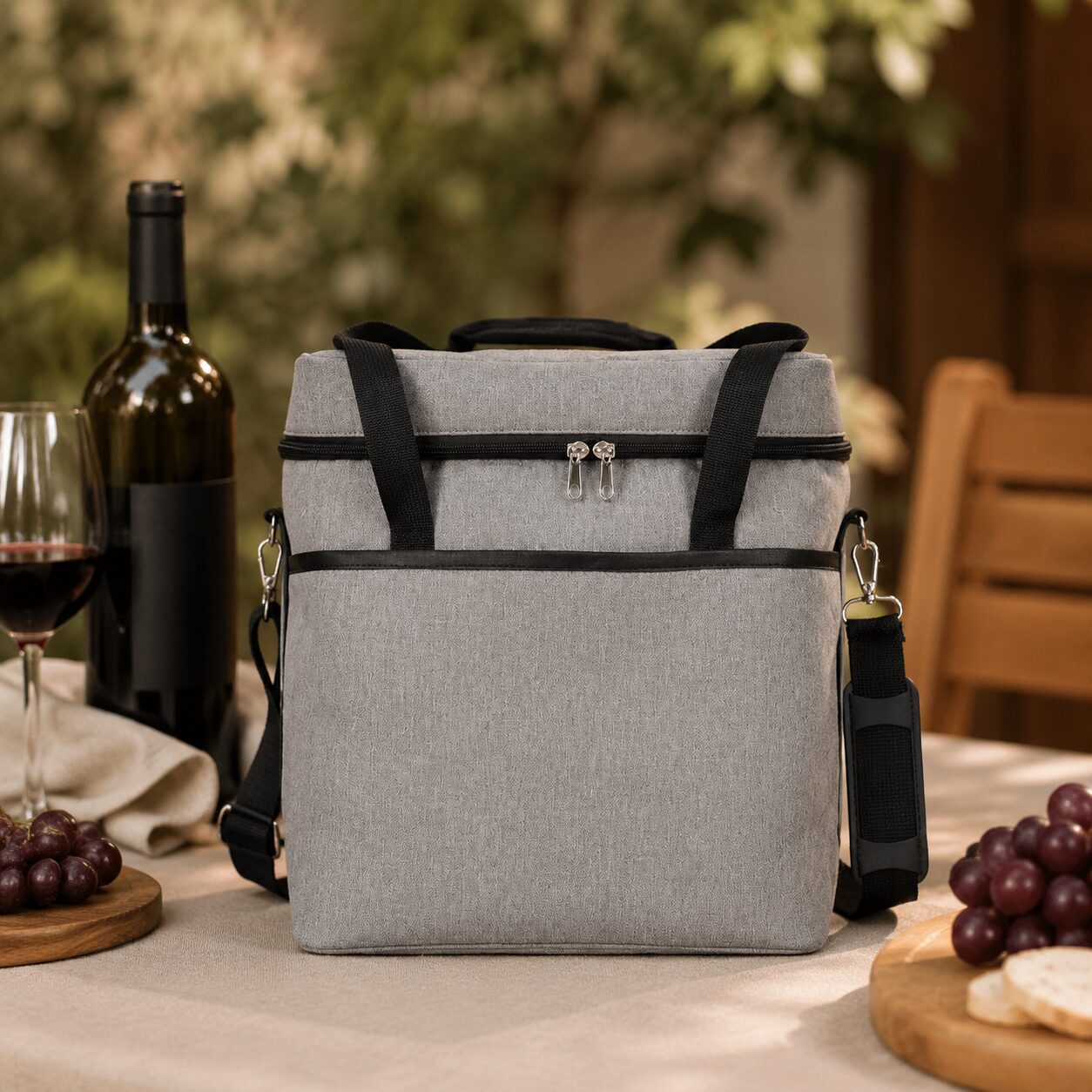
- Custom internal bottle sleeves prevent glass friction and structural liner damage.
- Precision stitching secures vertical dividers to keep beverages upright during transit.
- Engineered base supports distribute heavy liquid weights evenly across the chassis.
- Strict dimensional audits ensure perfect fitment for specialized retail product lines.
7. The Aimazing Advantage: Engineering Excellence in Thermal Solutions
Aimazing Bag operates as a trusted OEM manufacturer with decades of industry expertise. Every versatile thermal bag reflects our strict commitment to uncompromising quality control across production lines. Brand managers rely on our rigorous testing protocols for reliable global supply execution. We proudly support 100+ clients for over 10 years, 500+ for over 5 years, and 200+ for 3+ years.